
I’m the oldest of three sisters. I’m not married and don’t have kids, so my sisters are the closest family I’ll ever have. Every year or two we go on a sister vacation someplace warm. We sit on the beach, talk, and laugh. We laugh a lot. Our last trip was to Key West, Florida two years ago.
Earlier this year, instead of planning our 2018 trip, I uploaded my sister Jenny’s picture to a website that recently launched. It’s an innovative crowd-sourced map created by Jeremiah Lindemann called “Celebrating Lost Loved Ones to the Opioid Epidemic.” Jenny died last year.
My sister was a college educated, middle-class suburban mom. She never went to rehab. She didn’t have any interventions. We didn’t even know Jenny had substance use disorder, so we were blindsided when she died.
I often click on the map near Buffalo, NY, where we grew up and Jenny lived her whole life. I look through the photos and read the stories. It’s heartbreaking, but it reminds me I’m not alone. Every day 175 Americans die of an overdose; more than half from opioids. Sadly, most Americans know someone who has died or is struggling with addiction: 21 million Americans have substance use disorder, but just 10% receive treatment! My sister was part of the majority who never got the treatment she needed.
Our family’s story isn’t unique. It isn’t the saddest story. But it’s a chilling example about how silence and denial render families helpless in this epidemic.
I experienced the entirety of my sister’s addiction, struggle, and death in just six days in July 2017 (My Introduction to Narcan). I got a call on a Sunday telling me to come home, that Jenny was in the hospital and had just been revived with Narcan (a drug used to reverse overdoses of heroin and prescription opioids). I arrived at Kenmore Mercy hospital the next day, impatient to get my sister discharged. I assumed we were at the beginning of a long and difficult recovery, not a rapidly accelerating end.
Jenny never left the hospital. My sister Colleen and I slept in her room every night. After three days, Jenny was moved to a hospice room down the hall where she died. Just one week after I’d arrived in Buffalo, I headed back to Washington, D.C. in disbelief.
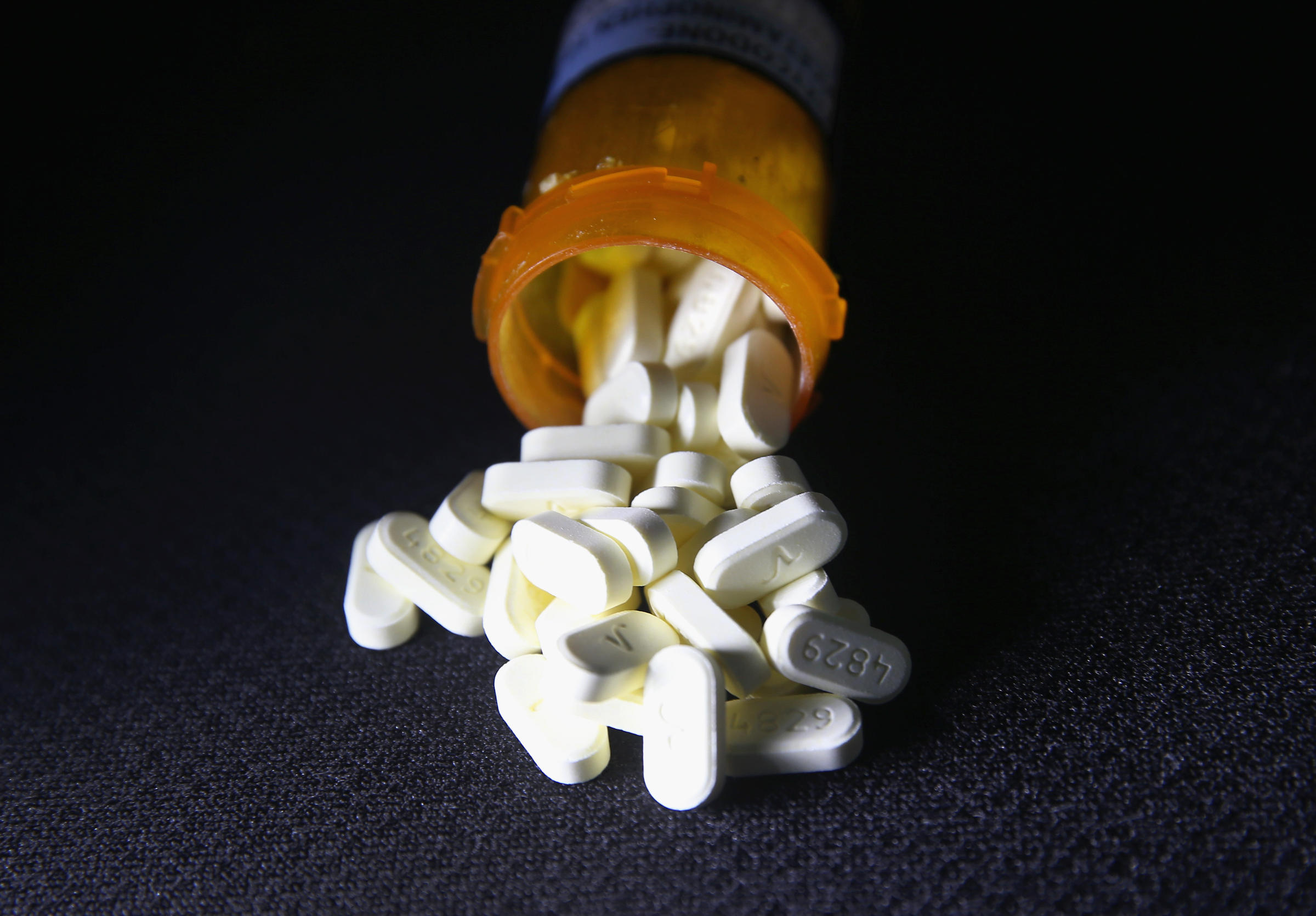
In reality, Jenny had been dying for a long time right in front of us. She lied to us for years. She’d been drinking and taking prescription medications (following a surgery a few years ago) from the “best doctors in Buffalo” for years, culminating with frequent trips to her local emergency room for generous doses of Dilaudid, a synthetic opioid.
And while my heart is broken, I’m so angry.
Mostly, I’m angry with Jenny for not asking for help. I would have done anything for my sister, but she never asked. I’m ashamed of myself for not being more educated about addiction. I’m apoplectic at her doctors, and I continue to not understand the segregated and broken health care system for people with substance use disorder in this country.
My sister might have lived if she received evidenced-based care that was integrated into her primary health care: routine drug screenings, medication-assisted treatment, and disease management services—the exact National Principles of Care that medical experts now evangelize. She might have lived if our family rallied around her and talked honestly about her illness. These are scenarios I obsess about every day as I’m walking to work, sitting in a restaurant, or trying to keep up in a spin class. I imagine others who have lost someone they love to addiction anguish over the same haunting “if only” reflections.
I click on the map to see my sister’s picture often. I want to show it to her and see what she thinks because it’s such a pretty picture. Her photo triggers happy memories of our lives, but they are punctuated with vivid, gruesome images of those last days in the hospital—a nightmare I wish I could unsee.
The map makes me sad because all the stories seem avoidable or fixable just like ours was at one point in time. But it’s also hopeful because people are talking honestly about substance use disorder, and maybe other families won’t make the same mistakes we did.
The opioid crisis is a manufactured problem (and a profitable one for some people!), but it’s also solvable if thoughtful committed citizens demand that our elected officials take action to support patient-centered solutions, not powerful special interests.
We already know how to fix this. More than 200 recommendations have been documented in multiple reports from the Surgeon General, Johns Hopkins Bloomberg School of Public Health, the Clinton Foundation, and the President’s Commission on Opioids. Disparate recommendations can be organized into an actionable “phase 1” plan using the $3.3 billion recently passed in the omnibus bill. This initial funding can go a long way using proven management methods developed by the technology industry, such as focusing on “minimum viable products” that deliver results quickly and enable feedback from patients and healthcare providers.
This type of “fail fast” approach means that if one state tries something that doesn’t work, the other 49 states don’t waste time and money repeating it. Moreover, it prevents large investments in long-term, untested “big bang” type of solutions. Innovative organizations like Baltimore’s Concerted Care Group are already using methods from the tech industry to lead the way in fixing this crisis and delivering patient-centered solutions!
As friends and family members, we need to get educated about substance use disorder and opioids. Check out the map. Read the stories. Keep names of people you love off it.
Disclaimer: The views and opinions expressed here are those of the author and do not necessarily reflect the editorial position of The Globe Post.