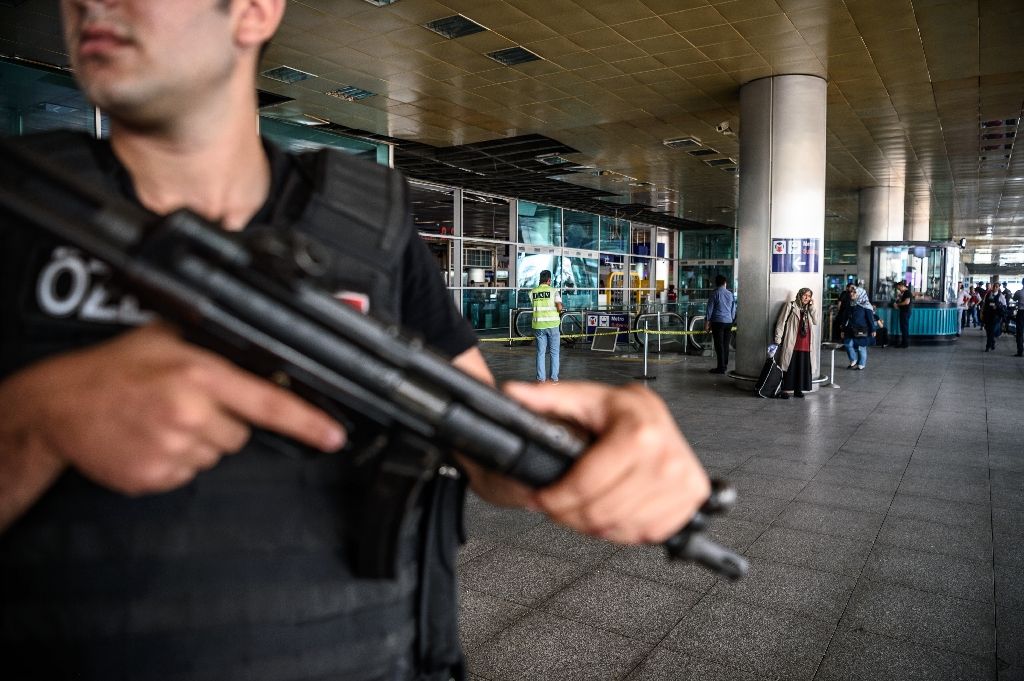


As Turkey still reels from the horror unleashed by a gunman at a famous nightclub on the shores of Bosporus in Istanbul at early hours of 2017, the authorities are left with an arduous task of pinpointing the roots of radical violence that has engulfed Turkey over the past two years.
The carnage at Reina, a well-known hotspot for partygoers, athletes, celebrities and young people from all corners of the region, not just Istanbul, just came after weeks-long campaign again New Year’s Eve celebrations in Turkey from religious segments of the society, especially Turkey’s top religious body. The scale of violence gave them a pause and led authorities to do damage control over belligerent rhetoric against lifestyles of secular people in Turkey, a country fragmented socially and politically as ever.
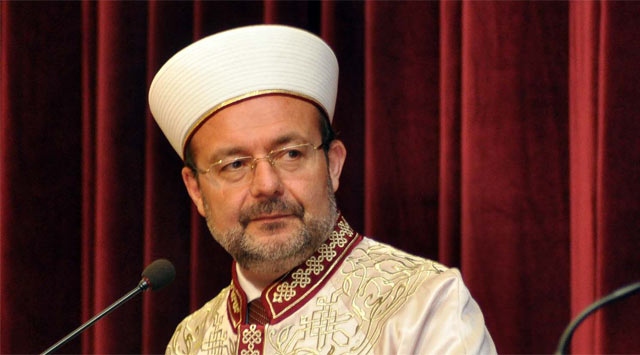
In Friday’s sermon, instructed by Directorate of Religious Affairs (Diyanet), religious officials and imams presented their best oratory skills to persuade fellow Muslims about the “damaging impact” and implications of New Year’s Eve celebrations, which are “incompatible with core values of Muslims’ religion.” Many critics said the text read by imams contained inflammatory language and provocative sentiments that fuel anti-secularist tide in Turkey.
Pro-government journalists talked on TVs against New Year’s Eve celebrations, finger-pointed secular venues as legitimate targets. One of them, Serdar Arseven, from conservative Milat daily, even went to an extent to defend a physical attack against such places that host celebrations. That was before the attack. When a gunman with an automatic rifle went on a rampage against New Year’s Eve revelers at Reina nightclub, shooting down scores of people less than 10 minutes in an attack that rattled the nation, those journalists and Diyanet immediately rushed for a damage control. Diyanet slammed the attack and said killing innocent people “whether in a mosque or an entertainment place” is unacceptable.
But an avalanche of social media lynching against government critics in the immediate aftermath of the attack reveals a far serious problem that reflects the profound social and political divisions in Turkey. A pro-government journalist said the Reina massacre was carried out by the U.S. and planned by Washington-based Turkish journalist Amberin Zaman, and actor Mehmet Ali Alabora.
Instead of dismissing that brazen claim, the majority of government supporters, including journalists, appeared on the frontline for full-fledged smear campaign against Zaman and Alabora in yet latest attempt to intimidate, target and terrorize government critics.
Zaman even received death threats through the social media as atmosphere in Turkey turns out more toxic and dangerous for independent-minded journalists and critics. Came with that the recent sweeping crackdown by the Turkish government on the social media as investigations have been launched against more than 10,000 social media users over their comments on Twitter and Facebook. In 2nd half of the last year, more than 1,600 people got prison sentence over charges of “insulting president,” a term that frequently used as a legal weapon to stifle critical voices on the social media.
The Reina incident has sent waves of ripples across the region given the different nationalities of victims. Majority of the victims were foreigners, and many of them were Arabs who picked Istanbul for their New Year vacation. What started as a promising holiday for many turned to unspeakable horror and tragedy that wrenched families and friends.
While the Turkish police have launched a nationwide manhunt for the fugitive attacker, Turkey has again found itself wondering how it has appeared to be so inept, vulnerable and hapless in the face of unabated attacks that wreak havoc across the country more frequent than ever.
Turkey’s palpable inability points to an acute security problem exacerbated by endless purges led by the government within security apparatus. The end result is a paralyzed security forces, a collapse of intelligence structure within the police after purges of experienced counter-terrorism officials. Add to that a demoralized army with half of its generals in prison at a time when Turkey is locked in a two-front war with the Kurdish insurgents and Islamic State militants both at home and abroad.
Erdogan’s long-sought bid for the presidential system seemed to have placed all other issues, including deadly terrorist attacks, on the sidelines of political agenda of the government. The fear of purge within the police and the military, a deadlock in the brutal war against Kurdistan Workers’ Party (PKK) throughout the southeast and signs of the quagmire in Syria inflict a debilitating damage to the capability of Turkey to cope with the menace of radical terrorism. What is worse is the fact that the ISIS threat and creeping radicalism inside Turkey have yet to take priority for Turkish authorities.
The failure of grasping the urgency of the matter only worsens the situation on the ground. In late December, an off-duty police officer killed Russian Ambassador Andrei Karlov in an act of revenge over Russian involvement in Aleppo siege. The assassination rattled Russia and caught Turkey off guard as both countries recently cultivated cordial relations after a diplomatic rapprochement that came after months of strained and tense relations. What irked Turkey and Russia, more than the murder of the envoy, is the unpleasant fact that a police officer went through a radicalization process after joining police corps.
The fallout of the Syrian conflict has become much closer and visible with every new attack. Turkey’s deep entanglement, first by backing and arming various rebel groups, then directly through a military incursion, in Syria has created a puzzling quandary for Ankara. ISIS has brought the war with Turkey to the Turkish cities in an asymmetric fighting. But what impedes Turkey’s efforts to deal with this threat is the fact of emerging a radical, militant anti-secular discourse among Turkish politicians and pro-government media.
After the Reina tragedy, the Turkish authorities are spending tremendous efforts for damage control over their weeks-long campaign against New Year’s Eve celebrations. What government does, however, belies such efforts. Government-sponsored hate campaign only fuels radicalism and creeping culture of intolerance toward cultural and social diversity.
The mob lynching of outspoken fashion designer Barbaros Sansal is a case in point, provides a cautionary tale about government’s pledge to contain intolerant rhetoric. He shared a video of himself mocking New Year’s Eve celebrations at a time when Turkey turned into a “shithole.” Turkish Cyprus, where Sansal stayed, detained the designer and extradited to Turkey. Upon his arrival in Istanbul, a mob of angry people attacked him at the Istanbul airport. Turkish authorities arrested him pending trial.
Ankara Mayor Melih Gokcek, CNN Turk presenter Beste Uyanik and journalist Cemil Barlas all supported some sort of lynching of Sansal for his critical remarks about the dismal conditions in the country. The state-run Anadolu news agency even released information about the exact date, time and location of his landing in Istanbul.
Aysegul Basar and Hamid Diskaya, members of civil society group linked with the main opposition Republican People’s Party (CHP), have been arrested in Istanbul after they distributed pamphlets about the need for secularism after Reina attack. Their arrest came after Interior Ministry targeted them with a tweet on Twitter, CHP lawmaker Baris Yarkadas said on Monday.