
• About Us
  • Who Are We
  • Work With Us
Sunday, November 8, 2026
No Result
View All Result
The Globe Post
39 °f
New York
44 ° Fri
46 ° Sat
40 ° Sun
41 ° Mon
  • National
  • World
  • Business
  • Interviews
  • Lifestyle
  • Democracy at Risk
    • Media Freedom
  • Opinion
    • Editorials
    • Columns
    • Book Reviews
    • Stage
  • Submit Op-ed
  • National
  • World
  • Business
  • Interviews
  • Lifestyle
  • Democracy at Risk
    • Media Freedom
  • Opinion
    • Editorials
    • Columns
    • Book Reviews
    • Stage
  • Submit Op-ed
No Result
View All Result
The Globe Post
No Result
View All Result
Home Featured

Erdogan Came Close Losing His Most Powerful Weapon — Polls

Mahir Zeynalov by Mahir Zeynalov
04/21/17
in Featured, Middle East
Photo: EPA

Photo: EPA

Share on FacebookShare on Twitter

In Ankara’s Sihhiye Square in 2007, nearly 300,000 supporters of Prime Minister Recep Tayyip Erdogan gathered to show support for an embattled politician who just defied Turkey’s strong military.

As I was wandering around the crowd of mostly Anatolian, conservative supporters, Ankara Mayor Melih Gokcek, Foreign Minister Abdullah Gul, Chief EU negotiator Ali Babacan and Prime Minister Recep Tayyip Erdogan paraded on the stage to inflame the government’s most fervent supporters. The central theme of their talk was how previous governments emptied 19 banks, profited of rampant corruption and led Turkey down the precipice. The AKP government, on the other hand, represented stability.

Two months before this rally, the Turkish military issued a damning statement on its web-site, a memorandum widely billed as another military intervention into politics. A day after, the Constitutional Court ruled that 367 lawmakers were needed to elect a president in Parliament, effectively blocking Mr. Gul, whose wife was wearing an Islamic veil, from acquiring a seat once occupied by the founder of Turkey, Mustafa Kemal Ataturk. Facing a stalemate, and sniffing rising popularity for the government, Mr. Erdogan called for early elections.

In July 2007 elections, Mr. Erdogan significantly increased his party’s votes, thanks to the adversarial military, as millions cast their ballots to approve AKP’s policies and reject military’s encroachment.

A similar scenario played out in 2011 elections, too. Mr. Erdogan’s nationalist rhetoric just months before the elections escalated violence in the Southeast, where the Kurdish rebel group PKK has been waging war against the Turkish state. Mr. Erdogan promised that the peace would prevail in Turkey if he is re-elected and vowed to draft a brand new Constitution with freedoms protected for all. Peace never came. The Constitution was not re-written.

In 2015, Mr. Erdogan asked the Turkish people to elect 400 lawmakers — basically to empower the government with a necessary number of votes to single-handedly introduce any bill and change the Constitution. In one of his speeches before the cheering crowd, Mr. Erdogan issued a veiled threat: “Give 400 [lawmakers] and let this thing be resolved in peace.” In another speech, Prime Minister Ahmet Davutoglu asked for votes if they don’t want “White Toros” cars to be back again, referring to white Renault cars widely used to kidnap Kurdish dissidents and dissolve them in acid wells.

Last week, Turkey had another poll (5th poll in 3 years) to partially amend the Constitution. The referendum gave vast powers to Mr. Erdogan, weaken checks and balances and transferred the center of power from Parliament to the Presidency. The election rhetoric was the same: Mr. Erdogan said the constitutional changes were an answer to a series of bombing attacks, sagging economy and the necessary purge of non-loyalists from bureaucracy and the private sector.

Mr. Erdogan has already learned that Turks would vote for him again and again as long as he delivers the central campaign promise: political and economic stability. Turkish people elected him as a cure for the chaos that spread across Turkey in the 1990s — two devastating economic crises, nearly a dozen failed governments and a raging war in the Southeast. They do know that Mr. Erdogan is a thin skinned strongman who has no tolerance to an alternative view. But political stability and economic stability trumps other concerns.

The massive support Mr. Erdogan receives in polls has also become the major source of legitimacy for the president, allowing him to do whatever he wants. “We the people” is his favorite way to start his speeches. The idea that “we are outnumbered” is the primary driving force for him and his fan base.

The referendum last week was the first time Mr. Erdogan came close to losing that single source of legitimacy. Since the opposition rejects the outcome, citing massive irregularities and ballot stuffing, it won’t be as easy for the president as it was in the past to claim that he represents the majority.

The leader of the secular opposition CHP, Kemal Kilicdaroglu, failed to deliver a forceful critique of the referendum, missing the chance to lead at a time when the opposition needs him the most.

********

This article was possible thanks to your donations. Please keep supporting us here.
ShareTweet
Mahir Zeynalov

Mahir Zeynalov

Related Posts

The Fnideq (Morocco) - Ceuta (Spain) fence, located in northern Africa, is one of the main borders used by people on the continent to try to immigrate to the European Union. In September 2024, a massive attempt to cross the fence occurs, and the Moroccan police push back hundreds of people who head towards the Spanish exclave. In 2024, Spain receives 46,000 migrants.
Featured

Thousands Cross Into Spain’s North Africa Enclave in New Migrant Crisis

by Staff Writer with AFP
July 31, 2026
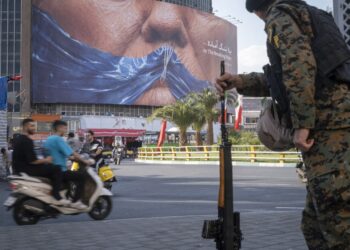
An armed Iranian police officer holding a rifle monitors the area as motorcyclists ride beneath a billboard depicting an AI-generated image of the Strait of Hormuz and an effigy of US President Donald Trump, displayed on the wall of a state building in downtown Tehran, Iran, on May 3, 2026.
Featured

US, Saudi Strike Iraq Alliance in Expanding War

by Staff Writer with AFP
July 29, 2026
Germany, Berlin, 26 july 2026, Gathering in tribute to the victims and all those affected by the attack on the 2026 CSD (Christopher Street Day/Pride) event, held at Pariser Platz.
Featured

Berlin LGBTQ Community Fears Far-Right ‘Exploitation’ of Pride Attack

by Staff Writer with AFP
July 27, 2026
AI chatbot applications.
Featured

Trump Under Pressure From All Sides Over Chinese AI Surge

by Staff Writer with AFP
July 24, 2026
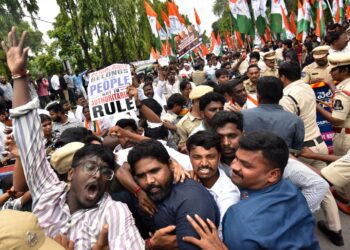
Protesters gathered to condemn the detention of opposition leader of parliament, Rahul Gandhi, during a protest in New Delhi.
Featured

India Student Protests Keep Up Pressure on Modi Government

by Staff Writer with AFP
July 22, 2026
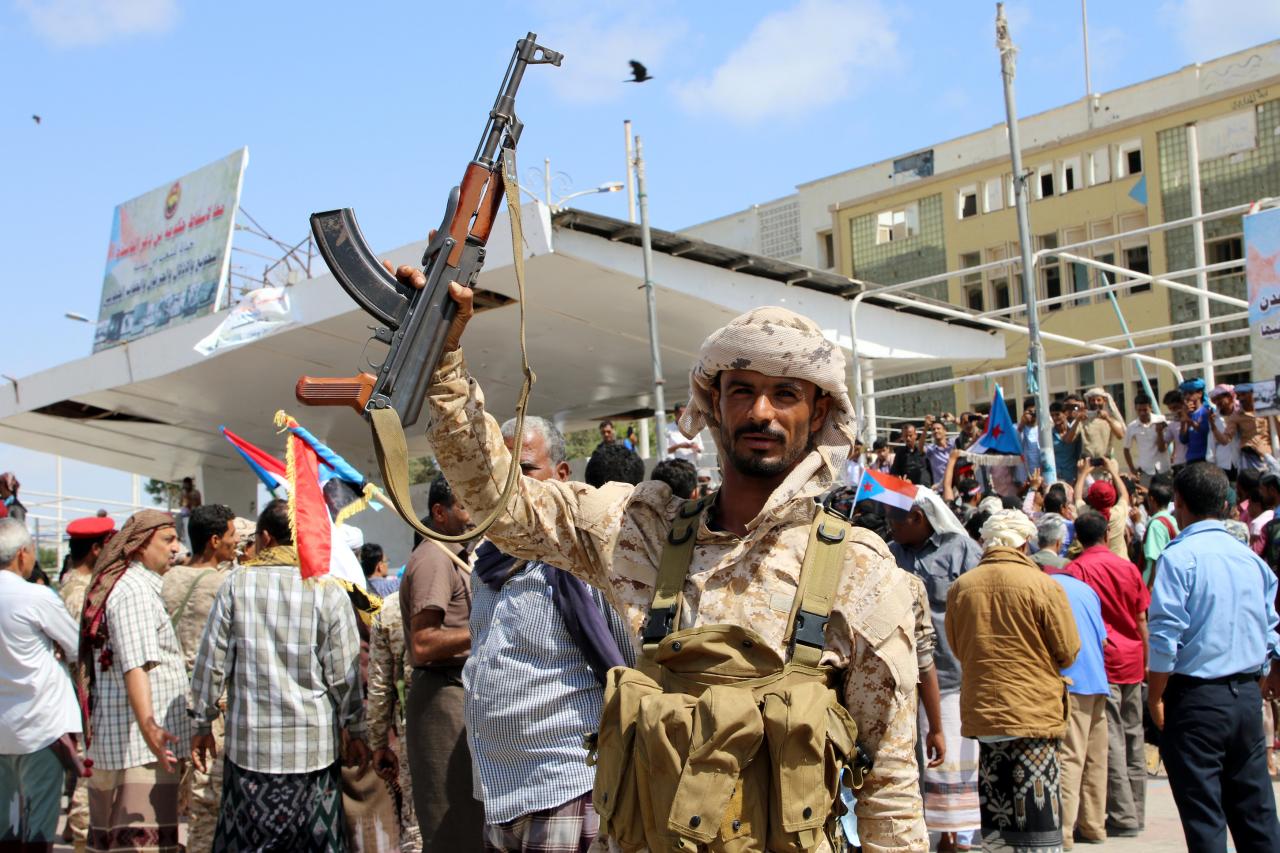
A southern Yemeni separatist fighter waves his rifle at the site of an anti-government protest in the port city of Aden, Yemen January 30, 2018.
Featured

Yemen’s Iran-Backed Houthis Announce Maritime Blockade of Saudi Arabia

by Staff Writer with AFP
July 20, 2026
Next Post

3 Fake Things In Turkey -- Cartoon/Latuff

Turkey's Witch Hunters Turn Fire Against Each Other

Please login to join discussion

Recommended

The Fnideq (Morocco) - Ceuta (Spain) fence, located in northern Africa, is one of the main borders used by people on the continent to try to immigrate to the European Union. In September 2024, a massive attempt to cross the fence occurs, and the Moroccan police push back hundreds of people who head towards the Spanish exclave. In 2024, Spain receives 46,000 migrants.

Thousands Cross Into Spain’s North Africa Enclave in New Migrant Crisis

July 31, 2026
An armed Iranian police officer holding a rifle monitors the area as motorcyclists ride beneath a billboard depicting an AI-generated image of the Strait of Hormuz and an effigy of US President Donald Trump, displayed on the wall of a state building in downtown Tehran, Iran, on May 3, 2026.

US, Saudi Strike Iraq Alliance in Expanding War

July 29, 2026
Germany, Berlin, 26 july 2026, Gathering in tribute to the victims and all those affected by the attack on the 2026 CSD (Christopher Street Day/Pride) event, held at Pariser Platz.

Berlin LGBTQ Community Fears Far-Right ‘Exploitation’ of Pride Attack

July 27, 2026
AI chatbot applications.

Trump Under Pressure From All Sides Over Chinese AI Surge

July 24, 2026
Protesters gathered to condemn the detention of opposition leader of parliament, Rahul Gandhi, during a protest in New Delhi.

India Student Protests Keep Up Pressure on Modi Government

July 22, 2026
A southern Yemeni separatist fighter waves his rifle at the site of an anti-government protest in the port city of Aden, Yemen January 30, 2018.

Yemen’s Iran-Backed Houthis Announce Maritime Blockade of Saudi Arabia

July 20, 2026

Opinion

A Cuban street with a flag

Cuba Through a Pulse: Intimacy, Poverty, and the Shadow of Revolution

March 10, 2026
An Iranian walking in front of a wall painting of the Iranian flag in Tehran

Iran Can’t Dominate the Middle East Without Iraq

January 13, 2026
US President Donald Trump

Vladimir Trump and Blood for Oil

January 5, 2026
A trial COVID-19 vaccine

America’s Global Health Retreat Is a Gift to Its Rivals

November 12, 2025
Israeli Prime Minister Benjamin Netanyahu

UN Might Tolerate Netanyahu, and White House Might Welcome Him, But He’s Still Guilty of Genocide

September 30, 2025
Former President Donald Trump speaks at a Fox News Town Hall

Cruelties Are US

August 25, 2025
Facebook Twitter

Newsletter

Do you like our reporting?
SUBSCRIBE

About Us

The Globe Post

The Globe Post is part of Globe Post Media, a U.S. digital news organization that is publishing the world's best targeted news sites.

submit oped

© 2018 The Globe Post

No Result
View All Result
  • National
  • World
  • Business
  • Interviews
  • Lifestyle
  • Democracy at Risk
    • Media Freedom
  • Opinion
    • Editorials
    • Columns
    • Book Reviews
    • Stage
  • Submit Op-ed

© 2018 The Globe Post