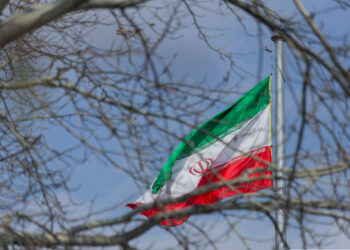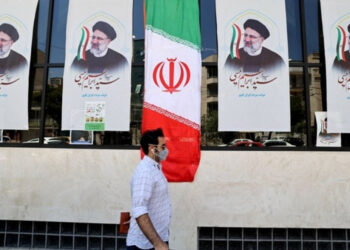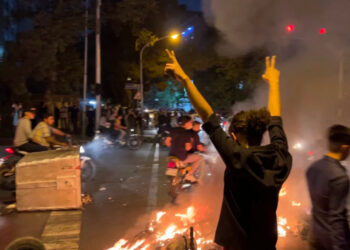


President Donald J. Trump, in a White House statement released on June 7, expressed sympathy with the victims of the terrorist attack on Iran’s parliament. Yet, his message suggested that Iranians deserved the attack.
Such a response to a tragic incident combined with the Californian congressman, Dana Rohrabacher, proposing to support ISIS and other Sunni groups to launch further attacks on the Shiite state, once again, recalls the misguided US stated goal of ushering in an American style of democracy in specific Middle Eastern countries including Iran.
First, it should be noted that dialing up a diplomatic tone is not peculiar to President Trump. His predecessors, in fact, did a lot more. Former Secretary of State Hillary Clinton used the term ‘rogue state’ in his foreign policy rhetoric to refer to Iran, Iraq, North Korea and Libya and enforced toughest of economic sanctions particularly on Iran.
Former President George W. Bush in his 2002 State of the Union Address declared a ‘War on Terror’ and mentioned that states like Iran, Iraq, and North Korea constitute an ‘Axis of Evil’ as they sponsor terrorism worldwide. Mr. Bush emphasized that the axis of evil should be denied any opportunity to destabilize the world as such. The same year, then-Undersecretary of State, John Bolton, in his ‘Beyond the Axis of Evil’ speech, added Cuba, Libya, and Syria to the list.
U.S. foreign policy actions towards these countries have exposed the American misperception of democratization processes and state-building strategies in the Middle East since Cold War. Using controversial means for promoting democracy, on the one hand, attests to U.S. anti-terror posturing, and on the other hand, betrays the contrary. Fundamentalist groups and terrorist organizations such as Taliban and Al-Qaeda emerged following U.S. support of extremist groups who were fighting the pro-Soviet government in Afghanistan in the 1980s.
Likewise, providing unrestricted military support to Syrian opposition groups to topple Syrian President Bashar al-Assad in the hope of establishing a democracy has resulted in the expansion of various armed, and quite radical, groups since 2011.
In the case of Iran, perhaps the most infamous U.S. foreign policy move, which significantly undermined Iranians’ quest for democracy, was the 1953 coup that led to subversive actors toppling the democratically elected Prime Minister Mohammad Mossadegh. Since 1979 Islamic revolution in Iran, U.S., in accordance with its democratization strategies, has officially continued to support insurgencies, ethnic minority groups, terrorist organizations, and belligerents to sabotage the Iranian state power. The U.S. has always picked up groups that subscribed to either fundamentalist ideologies, separatist ideas, or extreme political notions so that they could be easily mobilized against Iranian ruling power. In pursuing such a foreign policy towards Iran, U.S. has also involved Iran’s regional adversaries.
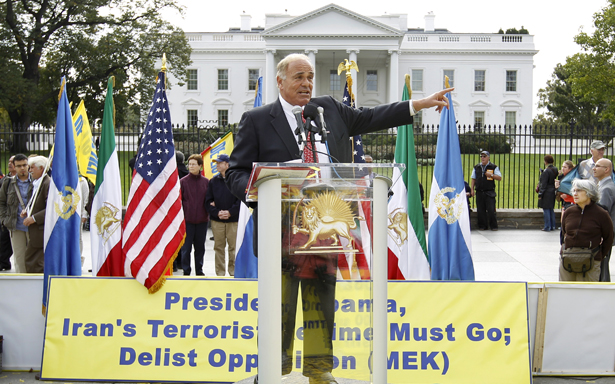
A prime example is the terrorist organization Mujahedin-E-Khalq (MEK). By running bombing campaigns and terror attacks in Iran, MEK has not only victimized Iranian civilians but also targeted Americans since the 1970s. Considering MEK as a viable alternative to the current Iranian government, the U.S. has been providing financial support, training, and weapons to this group to generate leverage against Iran.
Several U.S. officials, including members of the U.S. Congress, former directors of the CIA and the FBI pushed for delisting this designated terrorist group back in 2012. After Mrs. Clinton removed this group from the list of terrorist organizations, U.S. officials, along with representatives from their regional allies such as Saudi Arabia, publicly expressed their explicit support and endorsement of MEK.
In a letter to the President-elect Trump, former U.S. officials made strong recommendations to continue to support MEK in order to establish a secular democratic republic in Iran. In addition to MEK, the U.S., collaborating with Saudi Arabia and Israel, had an ongoing program to destabilize the Iranian theocracy via Jundallah, an extremist Sunni group which was made up of members of the Baluchi tribe in the southeast of Iran.
Only in 2010, the U.S. Department of State designated Jundallah as a terrorist organization after this group had killed scores of Iranian civilians as well as government officials in terror attacks since its inception in 2003. Similarly, several Kurdish separatist groups such as PAK and PEJAK, which have staged multiple terrorist attacks in Iran, have received support from U.S. under the rubric of democratization.
As the former congressman, Dennis Kucinich, noted in 2006, it is hard to imagine how terrorist groups such as PEJAK and MEK might have cut a swath of terror across Iran without at least the tacit approval, if not explicit support, by the U.S. It should be highlighted that the U.S. complicity or direct involvement in fomenting opposition and supporting military operations in Iran among violent proxy groups such as MEK is, in fact, incongruent with the objectives of the ‘War on Terror’ if not against the core values upheld by liberal democracies.
Disclaimer: The views and opinions expressed here are those of the author and do not necessarily reflect the editorial position of The Globe Post.