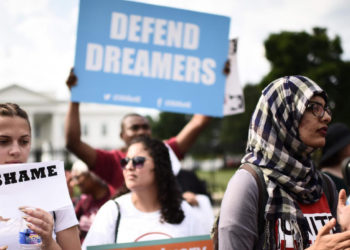


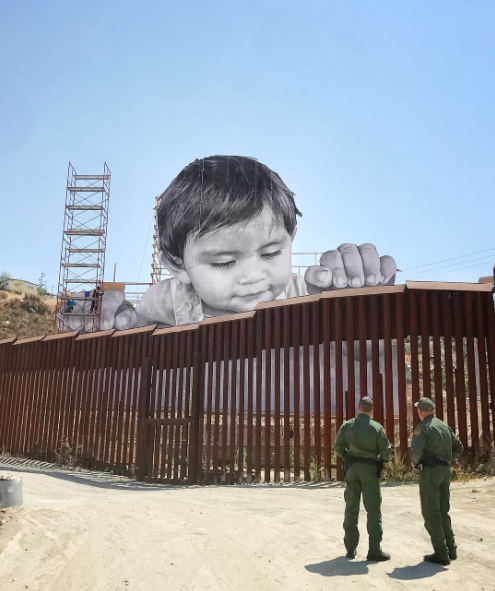
Attorney General Jeff Sessions espoused various claims to back the rescindment of Deferred Action for Childhood Arrivals (DACA) last week. Among them was that the two-year reprieve from deportation and work permit, “among other things contributed to a surge of minors at the southern border that yielded terrible humanitarian consequences.” This is a longstanding misrepresentation and it willfully ignores the more relevant Trafficking Victim Protection Reauthorization Act brought into law under a republican administration in 2008, which protects migrant children from any countries other than Mexico and Canada who enter the US alone from deportation.
Conflating long-settled ‘Dreamers’ with children of the 2014 minor migrant border crisis decontextualizes the very different experiences that have brought these two groups of immigrant youth to the US. DACA-qualifying youth tend to be high-achieving students, unknowingly brought to the US by their parents, and who have participated in schools and local communities in traditional enough ways to allow feelings of indistinguishability from their US-born peers. Conversely, the unaccompanied migrant youth of the 2014 surge left their homes fleeing extreme violence and poverty. The persistence of home country conditions, rather than rumors of a 2-year deportation reprieve and work permit, will sustain unaccompanied minor migration.
While the reasons for migration and conditions of arrival vastly differ, my research with long-settled, undocumented young adults, now aged 18 to 31, who arrived in the US as unaccompanied minors between the ages of 11 and 17, provides a window into how the absence of legal protection for immigrant youth can converge the outcomes of these two groups to experiences of exploitation, poverty, and marginality in US society as they come of age.
Linked fates
Since 2012, I have conducted in-depth research with hundreds of undocumented Central American and Mexican youth and young adults who arrived in the US as unaccompanied minors. These young people crossed the southern border undetected and without a parent to receive them in the US. They entered the workforce as minors, taking up jobs in manufacturing, domestic or janitorial work, and in restaurants or distribution warehouses to survive in cities like Los Angeles, Chicago, or New York.
I have written extensively on the conditions that plague the workplaces that undocumented, unaccompanied youth workers occupy. In the downtown Los Angeles garment industry, this includes sewing and pressing clothes over hot and boisterous machinery on dimly lit factory floors with little ventilation. Workers are denied the right to stamp their own timecards as to keep private the gross underpayment of overtime work. Lunch hours turn to minutes during peak production seasons. Garment working youth can make between $85 and $430 for over 60 hours of labor per week. In various downtown Los Angeles restaurants, likewise, unaccompanied youth wash dishes and prep meals for less than $6 per hour for up to 10 hours per day. Unaccompanied minors’ wage theft cases can run as high as $8000 withheld in a one-year time span. Undocumented immigrants employed under these conditions report physical injury, aches and pains throughout their bodies, migraines from anxiety and stress, depression, and hopelessness for the future.
Many of the children of the 2014 surge of unaccompanied minor migration are too young to work or have a designated sponsor that is responsible to ensuring full-time school enrollment rather than employment to secure the success of their asylum cases. They can anticipate joining the workforce in the years to come.
On the other hand, one of the primary benefits of DACA is the provision of a work permit that grants immigrant youth access to upwardly mobile occupations, protects workers’ rights, and holds employers accountable to fair schedules and wages. A survey of DACA recipients reported that nine tenths of respondents had jobs—of which 56% of respondents reported better work conditions and 69% reported an increase in income. Another 72% of those surveyed were enrolled in institutions of higher education.
One million lives at risk
About 800,000 undocumented immigrant youth are recipients of DACA—approaching the 1.2 million that were projected to qualify for DACA at its launch. Since 2013, nearly 113,000 unaccompanied children have been placed with sponsors throughout the US. Unknown still is the number of unaccompanied youth who crossed the southern border undetected but who are active in work, schools, and their communities throughout the country.
This is to say, there are at least some 1 million undocumented youth and young-adults who are living in insecurity. Removing legal protections for immigrant youth and young-adult workers, risks further increasing the exploitation of immigrants in the workplace, as well as poverty and marginality in their communities.
Granted, DACA was by no means the remedy to the absence of immigration reform policies. A select group of youths, excluding unaccompanied minors of 2014 and on, qualified for the program, which contains specific time of arrival, length of stay, and education qualifications. Indeed, unaccompanied minors are deported to their home countries as this debate plays out. What the rescindment of DACA, however, does is place these two groups— one of which showed promise of positive integration— on an equally vulnerable playing field.
We can anticipate “terrible humanitarian consequences” in the months and years to come at the hands of a failed immigration system, absence of an immigrant integration policy, and an administration that continues to withdraw social safety nets. The Trump administration should evaluate what is at stake for multiple segments of the child migrant population in rescinding one of the few opportunities this nation grants undocumented immigrants to live in the US lawfully.
Immigrant rights advocates—policy makers, scholars, researchers, activists and organizers— at local levels and outside of government should continue to support one another. The children are watching.
Disclaimer: The views and opinions expressed here are those of the author and do not necessarily reflect the editorial position of The Globe Post.