


What is the best way to stand up for your principles?
It is a question that conscientious advocates must struggle with, and that moralizing politicians must balance against their own personal ambitions for power and influence. It is a struggle, because inevitably there are imperfect trade-offs. Push too hard in that critical meeting or discussion, and the inevitable pushback could topple the whole moral enterprise; push too little, and always be left wondering whether you had done enough for the cause.
The international politics of human rights works in exactly this way in the halls of power. Should a country seek to spread their values abroad and champion human rights, and if so, how forcible should their efforts be? Should the strategy be boycott or engagement?
President Jimmy Carter was famous for bringing his own moral framework of human rights to the practice of American foreign policy and diplomacy, and who struggled the most publicly with the practical ambiguity in how to best effect positive change.
It was in Carter’s commencement address at the University of Notre Dame in 1977 that he most fully articulated his vision:
“I believe we can have a foreign policy that is democratic, that is based on fundamental values, and that uses power and influence, which we have, for humane purposes. … we [the United States] have reaffirmed America’s commitment to human rights as a fundamental tenet of our foreign policy.
This does not mean that we can conduct our foreign policy by rigid moral maxims. We live in a world that is imperfect and which will always be imperfect –- a world that is complex and confused and which will always be complex and confused.”
In practice, Carter struggled to balance conflicting priorities in his pursuit of human rights. For example, although Carter made personal representations on human rights to the Shah of Iran during his Presidency, his administration also continued to supply arms to the Shah’s violent and repressive regime in order to help anchor Iran in the fight against the perceived greater moral threat of communism.
Similarly, Carter’s administration chose to wind back its persistent criticisms of the Soviet Union’s human rights record when Soviet leader Leonid Brezhnev threatened to shut down talks on arms control.
Other American examples help to illustrate the limits of moral grandstanding. The role of U.S. government-funded Radio Free Europe in encouraging the Hungarian Revolution, in which the United States then chose not to intervene lest they spark off a major armed conflict with the Soviet Union, is a moral tale of mixed conclusions. Former President Barack Obama’s delay in speaking out in support of the pro-democratic elements of the Tahrir Square Revolution in Egypt, no doubt with an eye to the lives and safety of thousands of Egyptians filling the streets, provides a contrasting example which demonstrates the complexity of being an effective human rights advocate.
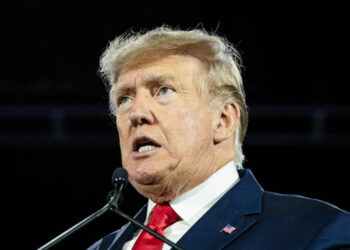
Fast-forwarding to today, President Donald J. Trump has just returned from his 12-day trip to Asia, during which he visited Japan, South Korea, China, Vietnam and the Philippines.
There he met with leaders across the Asia-Pacific, some with a dreadful record on human rights.
Philippine President Rodrigo Duterte conducts a war on drugs that has resulted in extra-judicial killings and the mass murder of thousands, all whilst boasting of the men he has personally killed.
Both Chinese President Xi Jinping and the Vietnamese politburo preside over authoritarian states responsible for the routine use of torture, suppression of freedom of expression and association, and violent repression of ethnic and religious minorities.
Mr. Trump’s approach to human rights with such leaders has taken form as type of ‘inverse-Carterism.’ Instead of actively advocating for rights and attempting to reconcile the practical ambiguities of moral priorities, Mr. Trump has sought to praise, or at best ignore, the dubious moral leadership of those who have presided over human rights abuses in stomach-churning displays of reverse-narcissism.
For example, a spokesperson for Mr. Duterte described that in the meeting between the leaders, Mr. Trump “seemed to be appreciative of [Duterte’s] efforts” in the war on drugs.
This is in stark contrast with the human rights-raising approach taken by other democratic leaders such as Canadian Prime Minister Justin Trudeau, and New Zealand’s Prime Minister Jacinda Ardern.
It is true that the moral authority of President Trump is highly contested, and that he may not be the best American ambassador in advocating for human rights abroad.
However, raising human rights only when international diplomacy makes it convenient is one thing, but uncritical and effusive sycophancy of those who preside over abuses is another. This is worse than a wasted opportunity.
We are again reminded of Mr. Trump’s moral bankruptcy in that he is willing to not only abdicate America’s historic responsibility as the ‘light on the hill’, but that he is willing to toady it to the highest bidder in return for some fleeting public affection.
Mindful of the consequences, but regardless of their ultimate efficacy, which can never be fully determined in advance, efforts must be made by the leaders of the free world to stand up for human rights across the globe. This is because words are not meaningless; they form the basis of our values, and send signals about what behaviors our societies should and will affirm or oppose. They strike at the heart of who we are as a people.
We can only hope that the next President hews closer to President Carter’s creed, whose commencement address continued:
“I understand fully the limits of moral suasion. We have no illusion that changes will come easily or soon. But I also believe that it is a mistake to undervalue the power of words and of the ideas that words embody…
I believe it is incumbent on us in [the United States] to keep that discussion, that debate, that contention alive. No other country is as well-qualified as we to set an example…”
No country indeed.
Disclaimer: The views and opinions expressed here are those of the author and do not necessarily reflect the editorial position of The Globe Post.