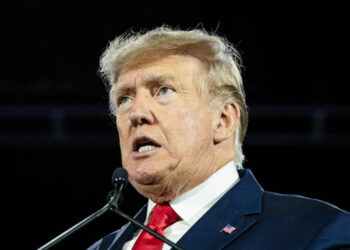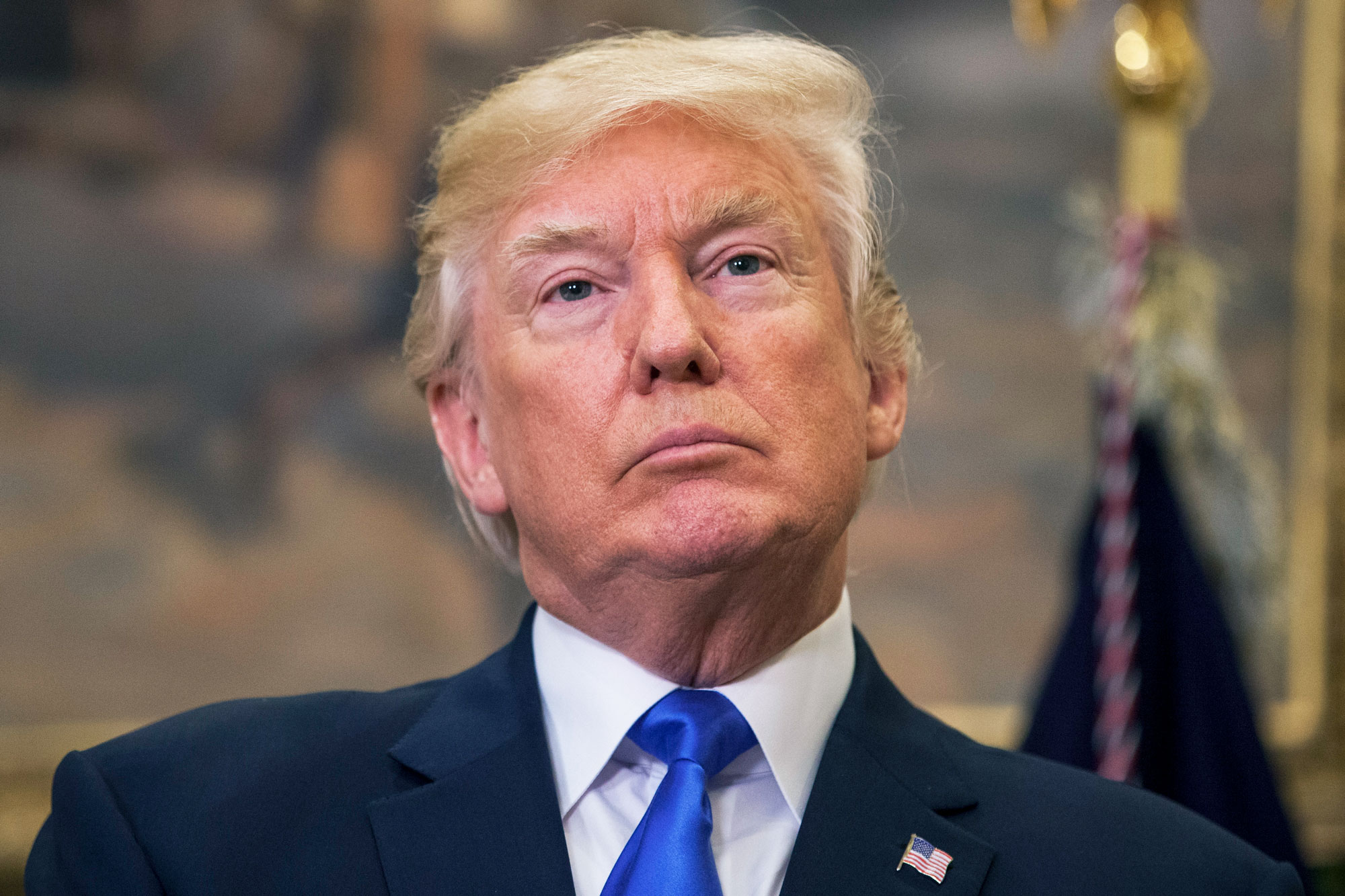


On January 11, 2018, President Donald J. Trump reputedly denigrated migrants to the United States of African, Caribbean, and Latin descent by asking why the U.S. would want to permit persons coming from so-called “shithole countries” to enter America. It goes without saying that these words are morally repugnant and belie our nation’s invitation to receive “your tired, your poor, your huddled masses, yearning to breathe free.”
Whether stated exactly as reported or in some other similarly disparaging form, Trump’s insults poured salt in the wounds from which Haitians are still healing after a succession of natural and human-authored disasters.
Eight years ago, on January 12, 2010, Haiti suffered an earthquake that killed between 220,000 and 300,000 people, displaced more than a million people, destroyed much of the capital’s infrastructure, and leveled the gains the country had recently made economically and politically. Political upheaval (1991-1994, 2004-2006), devastating floods and mudslides (1998, 2004), and resulting food shortages and food riots (2008) hampered the Haitian government’s efforts to secure democracy and economic security and deepened the nation’s dependence on international governmental and nongovernmental humanitarian and development aid.
In many cases, however, humanitarian relief worsened Haiti’s recovery. The aid that was to reach Haitians to repair these devastating environmental, economic, and political conditions did not arrive or was largely appropriated by the humanitarians that raised money from Haitians’ suffering. So-called humanitarians also introduced a devastating infectious disease that had not been seen in the country for more than a century. Beginning in 2010, when U.N. peacekeeping forces failed to prevent their own human waste from leaching into a major river in the Artibonite region, cholera was reintroduced in Haiti from Nepal. Since then the disease has killed 10,000 people and infected nearly one-tenth of the population. The U.N. has never accepted responsibility for its fault, nor has it provided reparations to victims who still struggle with the aftermath of disease.
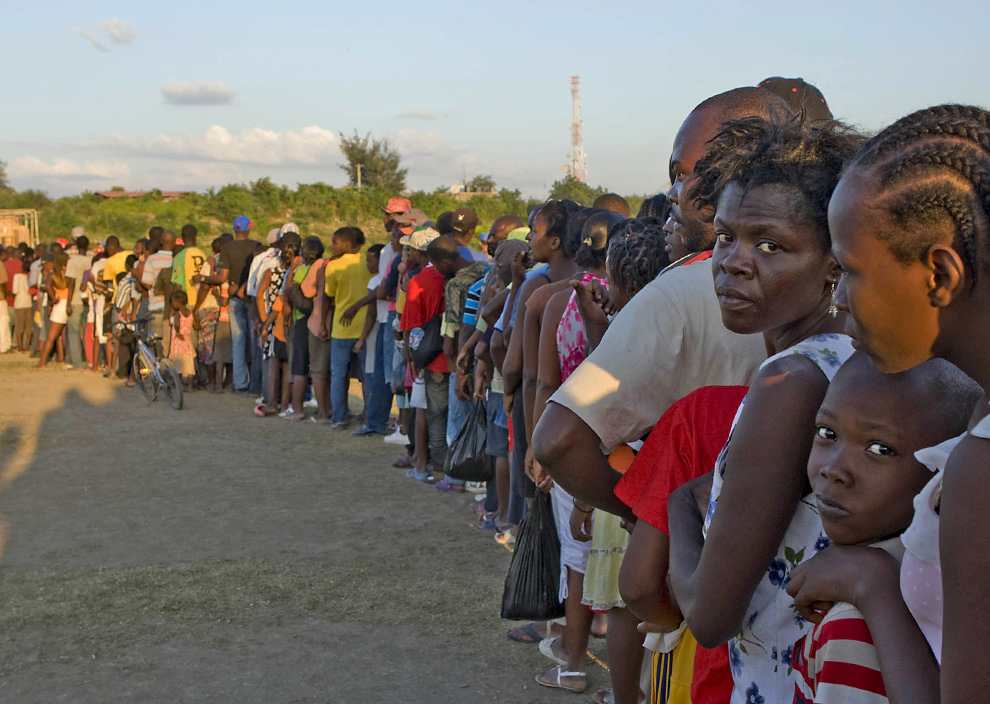
Tens of thousands of Haitians still reside in makeshift camps since the earthquake leveled their homes. In 2016, Hurricane Matthew devastated agricultural production and damaged infrastructure in the south. The aftermath of the storm overburdened health facilities still struggling to meet the needs of Haiti’s people.
Although international governmental and non-governmental development organizations continue to provide aid to Haiti, the structure of assistance, largely filtered through private for- and not-for-profit organizations, has produced a nation now known as the “Republic of NGOs” (non-governmental organizations).
Instead, as Trump’s reputed words remind us, Haitians have long been held at fault for cataclysms not of their own making. Conservative American religious leader Pat Robertson called the 2010 earthquake divine retribution for Haitian’s reputed “pact with the Devil” to achieve independence from France. The New York Times reported recently that Trump castigated all Haitians seeking to migrate to the U.S. as having AIDS. The accusation thereby justified a revocation of the Temporary Protected Status that permitted Haitians to apply for entrance to the U.S. since 2010, especially given the humanitarian emergency in Haiti. Trump’s revival of an erroneous assertion from the CDC (made in 1982) that Haitians were vectors of HIV is a painful evocation of the negative stereotypes that have been directed toward Haiti and Haitians since the nation’s independence from colonial France in 1804.
Despite their achievement as the first black republic, whose defeat of Napoleon’s forces precipitated the Louisiana Purchase, the fledgling democracy was not celebrated at a time when the United States continued to profit from chattel slavery. Although Haitians fought in the Battle of Savannah (1779) to help Americans gain independence from Britain, in the 19th century, they were excluded from the emerging international community as embodiments of the “cancer” of black liberty.
In 1825, independent “Hayti” was forced to agree to pay reparations of 150 million gold francs to French colonists for the loss of their property or face continued foreign military incursions to re-acquire the “pearl of the Antilles.” Although reduced in 1838 to 90 million gold francs, Haiti’s payment took more than a century and was equivalent to more than U.S. $20 billion.
The U.S. military occupation of Haiti from 1915-1934, a violent intervention intended to secure American military and business interests in the nation and the region, left few infrastructural improvements. The intervention did leave behind a U.S.-trained Haitian military force that would later be mobilized in predatory ways against the Haitian people, most notably by the infamous Duvalier dictators who ruled between 1957 and 1986.
During this period, the Duvaliers (François “Papa Doc” and son Jean-Claude) would accumulate external debt and extract wealth from the nation with tacit support from the U.S. and other nations. After the ouster of Jean-Claude, Duvalierist cronies attacked the pro-democracy sector and on September 30, 1991, deposed the nation’s first democratically elected president (former priest Jean-Bertrand Aristide).
Haitians will readily admit that their democracy has been hobbled by these internal forces, including the inadequacy and corruption of many of their leaders, challenges with promoting democracy and upholding the rule of law, and an educational system that has privileged instruction in a language (French) that the majority of the nation does not speak. But Haitians have continued working to build their own nation with the support of their compatriots in the United States (and other nations) whose labor and entrepreneurship support our economy.
That Trump rejects Haitians’ accomplishments and their nations’ unique history is in part a failure of History as a discipline. But with heads held high and seemingly endless endurance, the dignity, faith, and generosity of the Haitian people have much to offer the world at a time of such inhospitality and incivility.
Disclaimer: The views and opinions expressed here are those of the author and do not necessarily reflect the editorial position of The Globe Post.