

Punta Gorda is one of the most beautiful beaches in Belize. The small Central American country has been able to attracted thousands of tourists to its pristine seashore.
Lyndon Rodney, a native of Punta Gorda, is proud of town’s beautiful beaches and crystal blue waters. So proud that he joined the Belize Fisheries Department to enforce laws to protect the oceans.
“Unlike our neighbors in Central America our inspectors can make arrests and to prosecute illegal, unreported, and unregulated fishing,” he says.
Given his powers and position, he is used to solving problems. However, in recent years Rodney and his constituents are facing an issue they can’t deal with — plastic pollution.
“In the past years, we have been having massive amounts of sargassum [seaweed] wash on the beach. We used to just give it to farmers for fertilizer but, now…there is too much plastic intermingled with it to be any used for crops,” he says adjusting the navy blue tie that is part of his uniform.
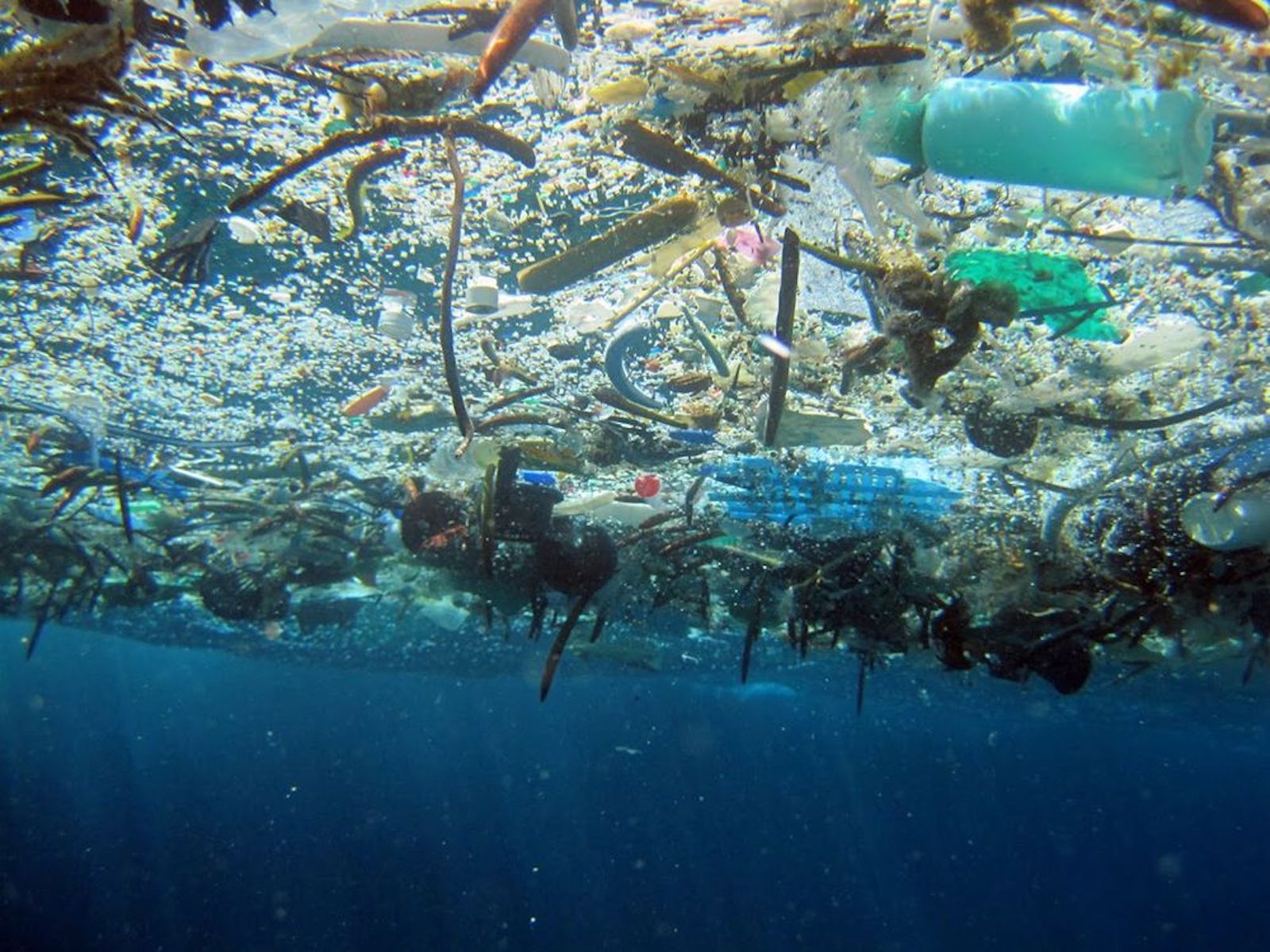
Plastic bags, straws, and other rubbish which wash up on Belize’s shores are now a source of pollution in all of the world’s bodies of water, even in the Mariana Trench, a narrow geological gash in the floor of the Pacific Ocean which is the deepest part of the world’s deepest ocean.
Scientists have long known that a plastic bottle can take as much as 450 years to break down and biodegrade. Plastic pollution around the globe is increasing, and in the long-term, it could impact the life of more than just sea. Sea turtles and bird species often mistake plastic for safe food. Humans might face a similar problem.
A recent survey by Plymouth University found plastic in a third of U.K.-caught fish, including cod, haddock, mackerel, and shellfish.
Plastic in the Kitchen
A growing movement of food industry professionals is starting to do something about the problem. Some 40 percent of the world’s virgin plastic production is used in packaging, much of it in food.
Skye Gyngell, one of Britain’s most acclaimed chefs, thinks the world is addicted to plastic and the food industry can play an important role in leading change. Gyngell has worked in some of the world’s best restaurants from her native Australia to Paris and now operates Spring, located in Somerset House in central London.
“We quit plastic cold-turkey,” Gyngell said at a recent salon event held in her restaurant to discuss ways to reduce plastic consumption.
Her restaurant stopped using straws last year, leading a growing movement to cut down on plastic use within the food industry. Until last November, Spring was serving its customers 6,000 straws per annum. That’s a total of 1.2km of plastic straws set-end-to-end a year.
Spring isn’t the only one. Some food chains have announced similar moves. This year the iconic Wimbledon tennis tournament has announced no plastic straws will be served. Last year, some 400,000 straws were used during the tournament. In the United States, studies suggest 172 million straws (unlike 500 million straws) each day.
While many restaurants are cutting straws, Gyngell has gone even further taking other measures to reduce the plastic waster and overall environmental impact of her restaurant by 2019.
In 2017, her restaurant used 260 rolls of cling film. With each roll being 300 meters in length, she calculated that the restaurant had used 90,000 meters per year or 360,000 meters since opening. Plastic wrap was washed and hung-up to dry each evening. She was surprised that the “paper” cups she served were actually plastic and they were soon nixed to replaced by ceramic cups.
The return to ceramic is oddly fitting. Gyngell’s restaurant sits in a restored 19th-century drawing room that was once part of a former Tudor palace along the Thames. The building, which opened in 1776, served meals for well over a century, mostly one imagines in ceramic. Until quite recently most of the food process from farm to table was plastic free.
“When you talk to older people about this, they get it right away; they remember when all meals were essentially plastic free,” she says.
Gyngell has long been passionate about sustainability and uses food, and her restaurant serves a scratch breakfast to avoid food waste. She plans to hold a meeting with other gourmet restaurants in London to share best practices and looking at other ways to reduce plastic.
Gyngell also recently hosted an event at her restaurant, part of her regular Salon Series to highlight the issue. One of those spoke was Sian Sutherland whose NGO, A Plastic Planet, seeks to end plastic pollution in the ocean and is encouraged by Gyngell’s efforts.
“I think people would be amazed to know how much plastic we are ingesting in shellfish and fish,” Sutherland told The Globe Post. “A 100 percent of oysters and mussels caught in the north of France test positive for plastic. We have no idea [about] the impact on human health.”
The impact on human health from consuming foods that have been stored in plastic for a considerable amount of time is also not well-established. In country’s like the United Kingdom where ready-made meals frequently sit for days before being served is a potential issue for concern.
A Growing Problem
Ellen MacArthur Foundation predicts that by 2050, there will be more plastic in the oceans by weight than marine life, and some countries have announced plans to reduce the amount of single-use plastic in circulation. At present, some products, such as a specialist medical goods, require plastic.
“The world is creating 330 tons of plastic a year…and if we focus on food and drink that is 40 percent of plastic that is made for packaging,” Sutherland said. She thinks people should be a catalyst for environmental change, not national governments. However, some governments have pledged to greatly reduce their plastic consumption.
Theresa May has pledged to end all plastic waste in the United Kingdom by 2042. As a step toward that long-term goal, all plastic straws and cotton earbuds could be banned next year. For those who enjoy their milkshakes, a number of alternatives have emerged.
When Ted’s Montana Grill, the American steakhouse chain owned by media mogul Ted Turner, sought to use paper straws in its steakhouses, it led to the first paper straw production in the United States since 1970.
In Central America, Costa Rica is angling to the be the first country to ban single-use plastic entirely.
Belize, the country of roughly half a million people that relies on tourism for roughly a quarter of its GDP, has also decided to act. In March, authorities announced a plan to ban single-use plastic products including shopping bags, certain food-packaging, utensils and straws by the middle of next year. The law is slated to come into effect on April 22 – Earth Day.