

Some kids never live to become adults because they don’t have access to health care and their parents don’t know how to get them medical help. That could have been the story of my brother.
Werkneh was born in a small hut in Ethiopia with no access to medical care and a disease that nearly killed him. As a victim of structural violence at the age of just four, the boy who I now call my brother began battling the inequalities of health care.
Through applying my knowledge of patient suffering and health disparities to international inequalities in health care, I propose the idea that prevention does not only lie in the hands of doctors but in the hands of individuals as well, primarily in those of government officials.
As an undergraduate who has travelled on fifteen medical mission trips to developing countries, I have gained knowledge on the suffering of medically needy non-American children who face great disparities between nation’s health care resources. I strongly believe that everyone deserves equal access to medical care regardless of race, socio-economic standing or age and that governments are responsible for providing such access.
Governmental corruption, primarily in underdeveloped countries, has greatly exacerbated the presence of structural violence and health disparities around the world. For example, in 1995, Congo’s dictator Mobutu Seko had stolen billions of dollars from the nation for personal gain, resulting in the nation’s public health and medical infrastructure existing in name only.
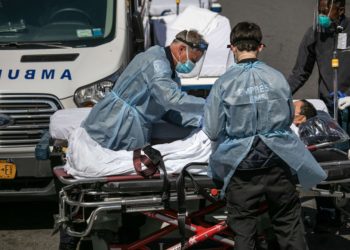
Such corruption affects not merely Ebola-stricken areas but also people like my brother Werkneh, who walked three hours to the capital for health care but was refused treatment for lack of funding. The lack of basic access to medical supplies such as soap, gear and safe water has intensified not only the spread of Ebola but also thwarts general access to proper medical care.
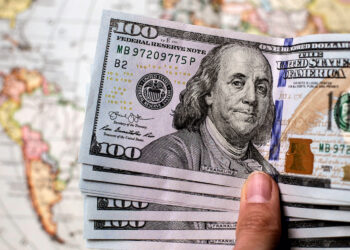
To procure such supplies and provide patients with their fundamental right to health care as stated in the Universal Declaration of Human Rights (UDHR), Congo’s government has to stop pocketing international funding but allocate it where it is due. According to science journalist Laurie Garrett “authoritarianism and corruption may not have spawned the Ebola virus, they certainly created a formidably fertile ground for its spread.” The Congolese had no hope of receiving adequate aid, with a government that spent only $32 on health care per capita in 2014. For comparison: the U.S. spent $9,403 per capita in the same year, almost 300 times the amount Congo’s government invested.
I believe that in order to provide proper care for those who suffer from life threatening diseases, we must first establish ethical leaders and government systems in countries such as Congo, to lessen disparities between nation’s health care resources.
Congo’s dictator Motubu Seko fell from power in 1997. Unfortunately, the rule of the current leader Joseph Kabala has been even more autocratic and violent than his predecessor’s. In most developing countries, such presence of corruption, the lack of monetary funds and the lack of basic resources act in direct opposition to Article 25 of the UDHR: “Everyone has the right to a standard of living adequate for the health and well-being of himself and of his family.”
While the U.S. government spends thousands of dollars per capita on medical care, and governments in countries like Congo pay only cents in comparison, we naively question why the death toll of conditions like Ebola are so high. Congo ranks 161 out of 180 surveyed in the 2017 corruption perception index, and only a small portion of international aid donated to the country has reached the hospitals.
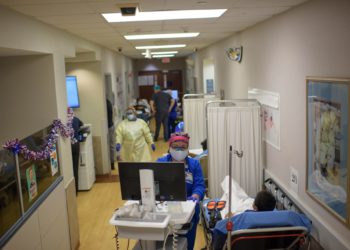
Despite the amount of money allocated to such objectives, corruption and disparity has left Congo grossly undersupplied and understaffed with only 0.091 doctors per every 1,000 people. This results in extreme wait times and incorrect triage of patients which leads to patients like my brother Werkneh being neglected and sent to palliative care centers.
Until countries like Congo call for drastic changes to their governmental organization, the amount of money allocated to the medical care will be futile.
The first step towards providing adequate health care and eradicating diseases such as Ebola must be assuring that medicals have access to proper resources. We must also assure that governments are not corrupt and do not “prey” on their own citizens, by stealing health budgets.
Secondly, we must equalize the difference in health care expenditures per capita in order to provide equal access to health care regardless of race, socio-economic standing, age or social class. By creating a plan of action that does not only funnel money into developing countries but assures that patients receive equal access to the supplies provided, we will start to see positive change.
Until we take action, the effects of structural violence, governmental corruption and disparities between nation’s health care resources will stop people like my brother Werkneh from their chance to live.
Disclaimer: The views and opinions expressed here are those of the author and do not necessarily reflect the editorial position of The Globe Post.