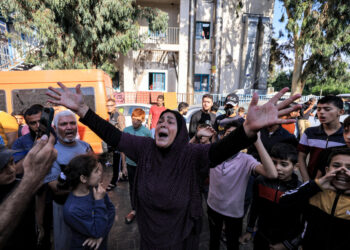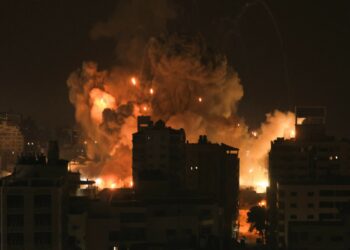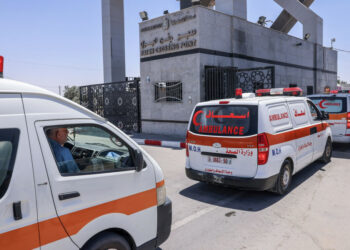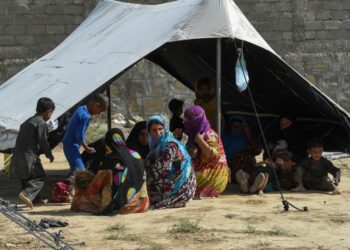


As the world’s attention has once again turned to the festival of football unfolding across Russia, Israel has escalated its unchecked violence against Palestinians living in the much-maligned Gaza Strip.
Gaza remains one of the most densely populated areas of land in the world. The Palestinian Central Bureau of Statistics (PCBS) and the United Nations Office for the Coordination of Humanitarian Affairs (UNOCHA) note that around 1,899,291 people live in the Gaza Strip, an area of land that is 365 square kilometres big, amounting to 5,203 people per square kilometer. Almost half of the people living in Gaza are under the age of 18. A 2015 U.N. report noted that, if the current issues in Gaza are not addressed, the Strip would be uninhabitable by 2020.
Data gathered by the Israeli NGO B’tselem and by the PCBS highlight that only 1 in 10 people in Gaza have access to clean and safe drinking water. Approximately 47 percent have limited access to a reliable source of nutrition. Those in Gaza able to afford a television to watch the World Cup, will often miss large chunks of the game due to the constant power cuts and electricity shortages that have become an everyday fact of life.
In other words: Gaza is being slowly, brutally, and illegally strangled.
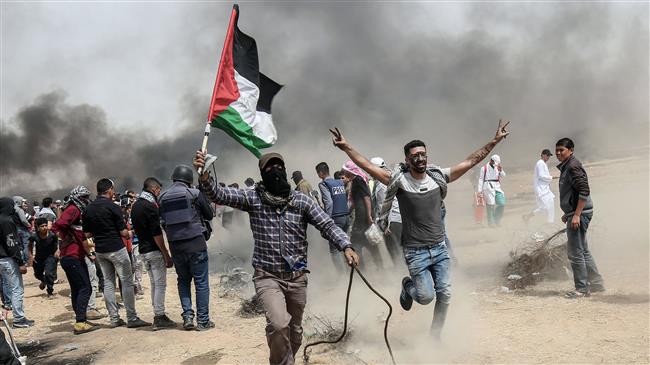
In recent times, Gazans have sought to shine a light on their situation and to call for international pressure to be brought to bear on Israel. A concerted campaign of marching – peacefully and under the banner of non-violence, to the fence that divides the Strip from Israel – has been the chosen mode of resistance. These protests have been met with deadly force.
Since the beginning of what has been dubbed the “Great March of Return” on Yom Al Ard (Land Day, March 30th, 2018), Israel has reportedly killed 132 Palestinian protestors and wounded in excess of 13,000. The head of the International Committee of the Red Cross (ICRC) in the region, Robert Mardini, recently referred to the current escalation of violence against the Palestinians as “a crisis of unprecedented magnitude.”
It was during a conversation with a colleague and friend about the situation unfolding in Gaza that the term “The World Cup Effect” was put to me. It is an interesting and equally harrowing concept. Whilst the world is engrossed in the spectacle of rival fans coming together under the auspices of carnival, applauding the “shots” of their footballing heroes, a major world superpower – the recipient of in excess of $30 billion in U.S. military aid since 2009 – uses this World Cup distraction to excessively and illegally fire “shots” of its own.
Israel has form. In 2014 when the eyes of the world were focussed on festivities in Brazil, Israel was preparing its troops for an unprecedented assault on the Strip, pursuing what has been referred to rather crudely as a “mowing the grass” strategy. The 2014 attack left 2,104 Palestinians dead and some 10,000 wounded, according to UNOCHA and B’tselem. Figures released recently by the ICRC put the number of those wounded in the current 2018 crisis to be more than those injured during the 2014 war.
When we look at the financial cost of staging a major sporting event versus the cost of rebuilding a society destroyed by war, the disparity is particularly galling. Following the 2014 Gaza War, the Palestinian Authority noted that it would cost $7.8 billion to rebuild the infrastructure that had been destroyed or damaged. At the time donors pledged to provide just under half of what was sought (roughly $ 3.5 billion).
However, since the 2014 Cairo conference, less than half of what was pledged has been provided. When one considers that Russia has invested approximately $14.2 billion in the World Cup, and Brazil $15 billion before (a cumulative total of approximately $30 billion), the world’s painful indifference to the plight of those living in the Gaza Strip is more clear than ever.
As if yet another evocative imagery is needed; while the 2018 World Cup was preparing to get underway in Russia, Palestinians in Gaza were staging their own version of the tournament on the same spot where the “Great March of Return” had established a permanent presence. However, like everything in the region, those taking part were missing something – a lower limb. Further evidence of just how far from “normal” the lives of those living in the Gaza Strip are.
So, while we sit and enjoy the spectacle that is the World Cup, the raw passion and unabashed nationalist fervor, we should spare a thought for those in Gaza, those who are at risk of what my colleague referenced as the “World Cup Effect.”
Disclaimer: The views and opinions expressed here are those of the author and do not necessarily reflect the editorial position of The Globe Post.