
After removing the United States from the Iran Nuclear Agreement and reimposing a litany of sanctions against Tehran, President Donald J. Trump and his administration have launched a campaign to undermine support for the regime in Iran.
Trump lashed out at the Iranian government on Twitter on Sunday, threatening in all caps that Iran would “suffer consequences the likes of which few throughout history have ever suffered.”
Later that day, Secretary of State Mike Pompeo gave a speech in which he promised support for unnamed opponents of the Iranian government and announced the U.S. would launch “pressure campaign” against the regime.
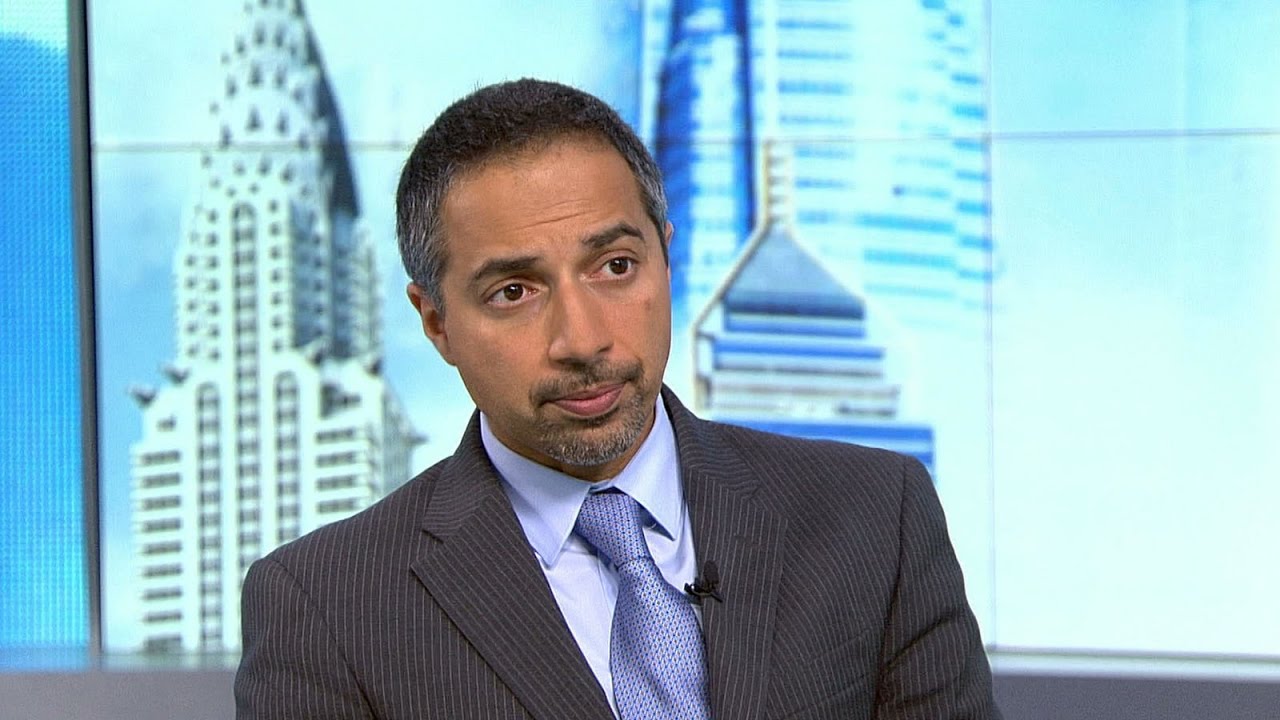
This week, we spoke to Trita Parsi, the founder and president of the National Iranian American Council about the Trump administration’s calls for regime change in Iran and whether such efforts are helpful to Iranians yearning for democratic reforms.
Q. Secretary of State Mike Pompeo gave a speech Sunday titled “supporting Iranian voices” that was ostensibly meant to demonstrate support the efforts of Iranians and Iranian-Americans seeking democratic reforms. Do you think this support is genuine or do you think the Trump administration has ulterior motives using this kind of rhetoric?
Parsi: Not only would I say that it does have an insidious element in the sense that they’re trying to use Iranian-Americans as props to give the impression that the community backs Trump’s very belligerent policies, but beyond that, I think it really backfired.
Talking to people in the community, I think it’s quite clear that once they actually saw what the Trump administration’s stance was, they realized that however much they disagree with and are very frustrated with the government in Iran and are very much opposed to it, Pompeo had the chance to present Trump as the answer to those problems and he did not do a convincing job. During the Q and A he was even asked about the Muslim ban and he continued to defend it on the grounds of security.
So, I think those who hoped that Trump would come forward with some big plan and everyone could jump on board and the days of the regime would be numbered walked away quite disappointed. Those who felt like this is a bad idea —that this administration is not really concerned about Iranians and the U.S. doesn’t have much of a positive track record of doing positive regime change in the Middle East anyway — I think they felt quite vindicated by Pompeo’s bad performance.
Q. The travel ban that you just alluded to continues to bar the majority of Iranian nationals from entering the United States. When it was initially rolled out, there were many Iranians who live and work in the United States whose lives were thrown into turmoil because of the ban. There didn’t seem to be much concern in the Trump administration then about “Iranian voices.” In light of that, do you think it’s hypocritical for the administration to now all of a sudden say it’s concerned about the Iranian people?
Parsi: Absolutely, and I think if this had happened a couple of weeks after the travel ban, I don’t think the administration would have dared to come to an Iranian-American audience under those circumstances.
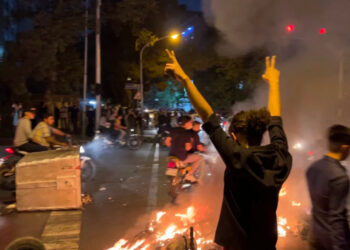
But, even further, for the last couple of months I think people have been primarily upset with what’s going on inside of Iran — protests, corruption, political repression — and that gave the Trump administration, in there minds at least, a small opening to see if they could translate the frustration that the Iranian-American community has with the Iranian government and turn it into support for Trump. And I think they failed abysmally because their message and the language they used defending the Muslim ban clearly reminded people why they were quite skeptical about the Trump administration in the first place.
I think the majority of Iranian-Americans think that Trump is undermining democracy in the United States. If he’s undermining democracy in the United States, on what basis do you think that he’s the answer to the lack of democracy in Iran?
Q: Even if the Trump administration were sincere in its expressed concern for the well being of the Iranian people, do you think vocal U.S. support for and involvement opposition and reform movements in Iran is strategically helpful given America’s history in Iran?
Parsi: The track record has been quite clear, it does backfire. It’s not a positive thing for Iranians and I think a lot of folks are quite aware of this. Even if they’re frustrated with the government of Iran, even if they start believing that change from within is not within reach, there is nevertheless the sentiment that the United States simply has an abysmal record when it comes to this and that foreign intervention in Iran invariably has actually set back the Iranian people’s aspirations for democracy.
So again, the community is frustrated. Trump believed that he could take advantage of it and turn their frustrations and anger against the Iranian government and translate it into support for Trump and I think he really failed.
Q: In May, Trump’s national security advisor John Bolton gave a speech to the MEK, a controversial Iranian opposition group considered by many to be a terrorist organization. In that speech, he said “before 2019, we here will celebrate in Tehran!” How provocative is a statement like that and does that kind of statement hurt internal movements for democracy and reform in Iran?
Parsi: I do believe statements of that kind tend to backfire and that legitimate organizations in Iran feel that it’s very unhelpful when the United States essentially puts itself in the middle of this because these opposition groups do want to move Iran in a democratic direction and it doesn’t help them if it appears as if they are supported by the United States. I mean, the experience Iran had with the American overthrow of the Mossadeq government in 1953 made the Iranian experience very different from other Middle Eastern countries.
Other Middle Eastern countries may oppose the idea of foreign intervention, but 1953 made Iranians particularly sensitive about American intervention. And as a result, in the political landscape of Iran, it’s as bad to be seen as being endorsed by the United States as it would be for an American presidential candidate to appear as if he were endorsed by the Iranians.
Q: President Trump pulled the United States out of the Iran nuclear agreement that was reached under the Obama administration. Hardliners in both Iran and the U.S. were bitterly opposed to the agreement, in part perhaps because it would have somewhat normalized relations between the two countries. In your view, has removing the U.S. from the agreement emboldened hardliners in Iran?
Parsi: I think that’s already clear. We see the Rouhani government is more embattled now as a result of what the U.S. is doing. We see that the [Islamic Revolutionary Guard Corps] has managed to increase its influence and the plan that Rouhani had to diminish the IRGC’s influence has now been put on hold because these elements cannot afford to have that degree of infighting while under pressure from the United States.
So, the immediate victim of Trump doing this was actually the moderates inside of Iran. One way for Trump to reject this idea is by rejecting the very idea that there are any moderates in Iran to begin with and Pompeo said in his speech that there’s no difference between Rouhani and the others. The idea that there’s no difference between Rouhani and Ahmadinejad frankly is preposterous.
Q: Beyond pulling the U.S. out of the nuclear deal, the Trump administration is now trying to convince other nations to adopt sanctions and boycott Iranian oil. Is that sort of behavior also having an effect on politics within Iran?
Parsi: Certainly. Because the economy will suffer as a result of this and the hardliners say ‘see, Rouhani and the moderates are just a bunch of naive people who don’t know how to handle things.’ Because they ended up trusting the Americans, striking a deal with them. And what did Iran end up getting for it? More sanctions and more efforts from the United States to take Iran’s oil off of the market. So, these things have a very negative effect and a very immediate negative effect on the folks inside of Iran who actually want to move Iran in a more moderate direction.
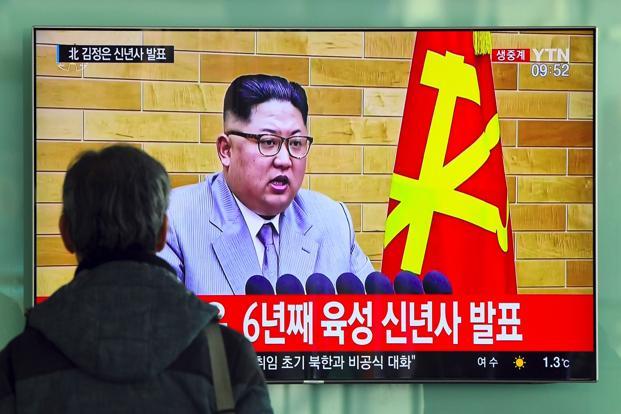
Q: President Trump has taken a very aggressive posture on Iran, particularly recently. He’s tweeted out threats, making many nervous that a war could break out. Does the president’s rhetoric actually incentivize Iran to move in a nuclear direction? Gaddafi in Libya, for example, abandoned his nuclear program only to be overthrown with the support of the West. Kim Jong Un in North Korea, on the other hand, has nuclear weapons and has so far been unscathed by American intervention. If the goal of the U.S. is to prevent Iran from obtaining nuclear weapons, does this kind of aggressive rhetoric from the president help?
Parsi: I think that particularly what Trump is doing with North Korea, I fear, risks increasing the likelihood of Iranians concluding that their main mistake was actually not having nuclear weapons before they agreed to negotiate with the United States. That if they had nuclear weapons, they’d be in a better situation today. I think that’s one of the main conclusions that I fear that they will draw.
It’s not entirely clear whether they have drawn it yet. We have no indications yet that elite opinion has shifted in favor of building a weapon. But I think that it’s quite likely that that could happen if the United States continues on a very belligerent path. And that is a very dangerous thing because ultimately it’s not a good thing if more countries have nuclear weapons.
Q. But whether or not it’s a good thing, do you think they would be right to draw that conclusion?
Parsi: Ultimately I don’t think that nuclear weapons will bring security to anyone. I think it’s an outdated weapons system. But I do understand that they’re going to have an easier time selling the idea to the Iranian public and there will be a lot of people that will be under the impression that it’s the right thing.
Q. To what extent to do you think Iran is a misunderstood nation in the United States? And in what ways would you say American policymakers have made strategic blunders in dealing with Iran?
Parsi: I think Iran is both genuinely misunderstood and deliberately misunderstood. I think there’s a part of this that’s a responsibility of the Iranian government itself. It is not inviting American think tankers to Tehran. It’s not interacting enough with people so that they can better understand what the strategic considerations of Iran are. And they are of course also doing a lot of problematic things at the end of the day.
The other part of it though is that those who want to see a very aggressive American policy vis-a-vis Iran also have an interest in making sure that our understanding of Iran is more of a caricature of what Iran’s actual policies are than to see it to be fully understood. The more you grasp it, the more you actually understand their calculations and then you figure out ways of dealing with it. If you don’t understand Iran, the more threatening Iran will appear and the more likely you are to be inclined to pursue a hawkish policy.