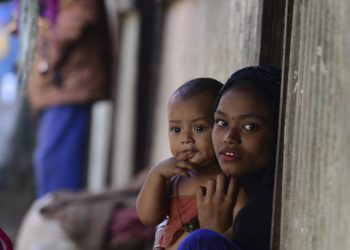



As the debate surrounding the world refugee crisis continues to intensify, some of the poorest countries were forced to house asylum seekers with just a few resources that could support incomers. Today, developing countries host 84 percent of the world’s refugees, according to a 2017 report by UNHCR.
It has proved to be challenging to properly document all asylum seekers and their reasons for leaving home countries. The Egyptian Foundation of Refugee Rights argued, however, that immigration is triggered by ethnic, religious, gender, or racial discrimination that often lead to violence.
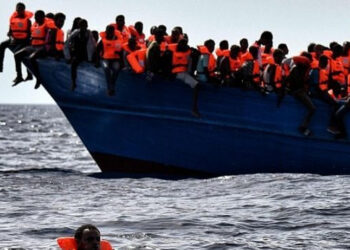
In an effort to address challenges of the growing crisis, the European Union has called upon MENA countries on June 28 to build asylum centers for refugees who try to cross the Mediterranean Sea. At these centers refugees would be classified as eligible or ineligible to access Europe or other destinations. In return, the E.U. was going to provide the countries with a grant worth about 180,000 euros.
The idea that seemed beneficial to the E.U. did not resonate with the MENA states: Tunisia, Morocco, Algeria, and Egypt all rejected the deal.
Egypt urged for alternatives suitable for transit countries, according to a statement released by the Ministry of Foreign Affairs.
“It is necessary to come up with solutions that involve a solid cooperation between transit countries and refugees’ countries of origin in dealing with refugee crisis,” the statement said.
Susan M. Akram, Clinical Professor and Director International Human Rights at Boston University School of Law, told The Globe Post that “It is not economically or logistically feasible for most countries to engage in large-scale detention of asylum-seekers, nor does such policies comply with international law.”
Akram argued that developing countries provide temporary asylum to at least 6.7 million people, while developed countries have excelled to put measures in place – or “containment paradigm” – in which funds are provided to ensure that the majority of world refugees remain in developing countries.
She noted that Egypt, like other MENA countries, has a memorandum of understanding with the U.N. Refugee Agency (UNHCR) that requires the organization to commit to resettling those recognized as refugees within a limited period of time.
“However, since only 1 percent of the global refugee population is resettled by western countries, the UNHCR cannot meet this commitment, and millions of refugees in Egypt, Jordan and Lebanon remain in these countries without a solution to their situation,” she elaborated.
Economically and logistically speaking, E.U. countries are imposing a great burden on states such as Egypt who owns neither the facilities nor the administrative capacity to manage large-scale detention of a population seeking asylum, she said.
Many asylum seekers would want to see countries like Egypt only as a temporary refuge.
"My deepest wish is for my children to grow up in our house in #Syria. My youngest daughter doesn’t know anything about her home country,” Dalal, mother of five & Syrian refugee in Egypt told us as she unveiled pictures of her old living room.#WithRefugees pic.twitter.com/GlwWScFcRD
— UNHCR Egypt (@UNHCREgypt) August 14, 2018
“Nobody wants to be in Egypt neither in camps nor in the city due to several reasons,” a former asylum seeker who came from Eretria to Cairo six years ago, told The Globe Post.
The asylum seeker, who asked to remain anonymous, mentioned that refugees are not treated well in the country, and in most cases they don’t expect to receive a good treatment in camps either.
Since Egypt is struggling economically, the country’s refusal to build reception centers was supported by the head of Egyptian House of Representatives, Ali Abdel Aal, who told the German newspaper Welt am Sonntag on July 2 that the E.U.’s call would violate Egyptian laws and the Constitution.
In June, Egypt registered 228,941 refugees from 58 different countries, compared to 50,228 refugees it received in 2017, a UNHCR fact sheet has shown.
Registered refugees came from Syria, Sudan, Iraq, Yemen, Eretria, Somalia, and Ethiopia and are comprised of 52 percent males and 48 percent females, according to state-owned newspaper Ahram Online.
There is no data on the number of unregistered refugees and illegal immigrants in Egypt, however. Egyptian President Abdel Fattah al-Sisi stated in 2016 that Egypt was hosting five million refugees regardless of its economic instability.
Egyptian Ministry of Foreign Affairs (MFA) spokesman Ahmed Abu Zeid has mentioned in a statement that despite the country’s recent decision to reject the building of refugee centers, Egypt was working on integrating refugees into society and providing them with basic services.
Abu Zeid emphasized the importance of bearing the responsibility in dealing with suggestions such as the E.U. proposal, highlighting that it was crucial to research other solutions.
Abu Zeid reiterated his stance to The Globe Post. However, he declined to give further comments.
As the influx of refugees continues, Egypt has been struggling economically. A UNDP report said the country currently has a high rate of unemployment that stands at 13 percent. Meanwhile, despite economic reforms, many Egyptians who are employed work in low-paying and unstable jobs.
Around 40 percent of Egypt’s citizens work in informal economy that allows them to generate a steady income to be able to catch up with rising prices. At the same time, more than 26 percent of Egyptians live below the poverty line.
Living as a refugee in Egypt
Around 57 percent of refugees registered in Egypt, according to UNHCR report released in January, are aged between 18 and 59 years. Cairo alone hosts around 35 percent- 77,665 – of the registered refugees.
Speaking about his resettlement process, the Eritrean asylum seeker mentioned that during his six years in Egypt, he stayed unemployed for one year. During that time, he worked in such fields as cleaning houses, but he had to quit those jobs due to salary reductions.
When he arrived in Egypt, he didn’t have a visa and left his passport at the airport. He sought help from a friend who was able to schedule an interview for him with UNHCR, where he started the process of seeking asylum applying as a refugee.
A year after his application, the agency notified him of his first interview.
“No one cared to get back to me earlier, and I appealed to have an earlier appointment so that I can have a blue card as a refugee that enables me to work, but the appeal has been rejected at the time,” the refugee said.
The agency appointed him for a second interview in 2013, and after that he received his card within four months.
“I didn’t plan to stay in Egypt for long, but unfortunately I did, residing in Cairo. It was really a hard city to live in. I will stay here, until I resettle elsewhere. But not many think like that. Most try to find a route to Europe illegally, but it is risky and they perish without a trace,” he explained.
He started singing at age 4.
He became a refugee at age 34.“Art is all that’s left for us” https://t.co/Pzj9Q82GLc
— UNHCR, the UN Refugee Agency (@Refugees) August 19, 2018
The refugee pointed out that not all asylum seekers in Egypt are educated, and the language barrier remains among the greatest obstacles they face today.
“They don’t have good knowledge of the Egyptian community, and they can’t fit into the society which makes them easy to be spotted as refugees,” he said
For example, many refugees have been reluctant to file complaints at Egyptian police stations in case of harassment, he said, noting high levels of discrimination.
A local news program aired a video in July, highlighting challenges refugees face.
“Egyptians tend to run after us and beat us for no reason; they also call us names and ask us to go back to our “filthy” country and I just run and never stop,” a Sudanese girl, “Erada,” was shown as saying along with a number of other Sudanese children.
New Tax Hits Egyptian Food Cart Owners Struggling to Make Ends Meet