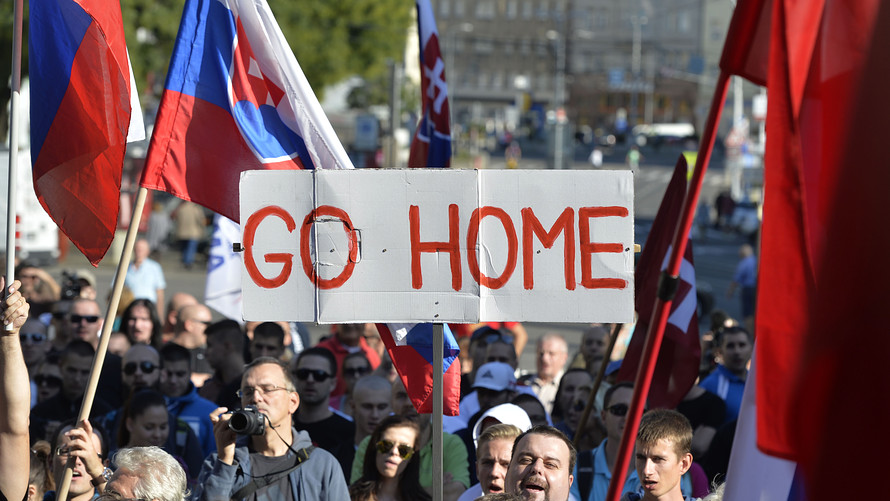


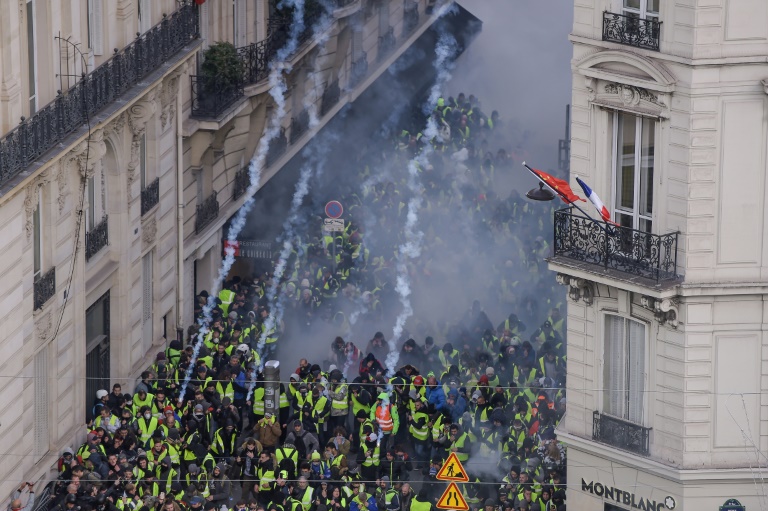
La grogne is the term for the rumbling discontent that always seems to be just below the surface of political and social relations in France and which has, over the last month, erupted in the shape of the gilets jaunes (yellow jackets) movement. As readers probably know by now, it’s compulsory in France for all drivers to have a yellow jacket to wear if they break down and leave their vehicle at the roadside. Using the jacket as a symbol of protest first emerged back in 2014 over changes to the school calendar (the Peillon-Hamon decrees), and they have reappeared on several occasions since. But not until now with such a universal and obvious appeal.
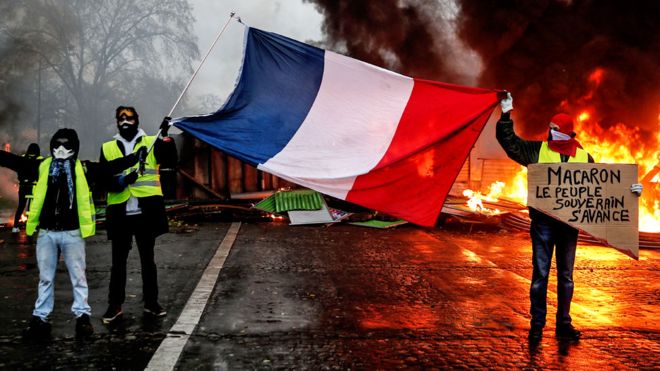
The movement this time got off the ground largely as a protest against the impact of the government’s carbon tax on France’s rural population. The protest was not just about the price of diesel at the pump either. A very large proportion of the French population outside of its cities and towns relies on fuel oil for heating, and there the price has risen by 30 percent over the last 12 months. Add to that a reliance on the car to get to and from work, and that the carbon tax hits diesel users harder – in a country where 60 percent of vehicles are diesel – and you get an idea of the impact.
What Fuels Yellow Jackets Movement?
There is, of course, much more to the protests than a rise in the price of fuel. On the one hand, you have France’s “left behind” or those that feel they have been. These people are living on or just above the minimum wage of 1200 euros a month ($1370), but paying maybe one-sixth of that already in fuel costs while struggling with the rising cost of living – the real source of the problem.
Throw in the abolition of wealth tax for the better off, reforms of French labor laws, the dearth of GPs out in the French countryside, the complexity of the introduction of income tax being taken at source, a rise on the contribution made by pensioners to the CSG social tax, and you have a lot of disgruntled people. Small wonder that nearly three-quarters of the population say they approve of the movement. It’s got something for everyone.
How is this Movement Different?
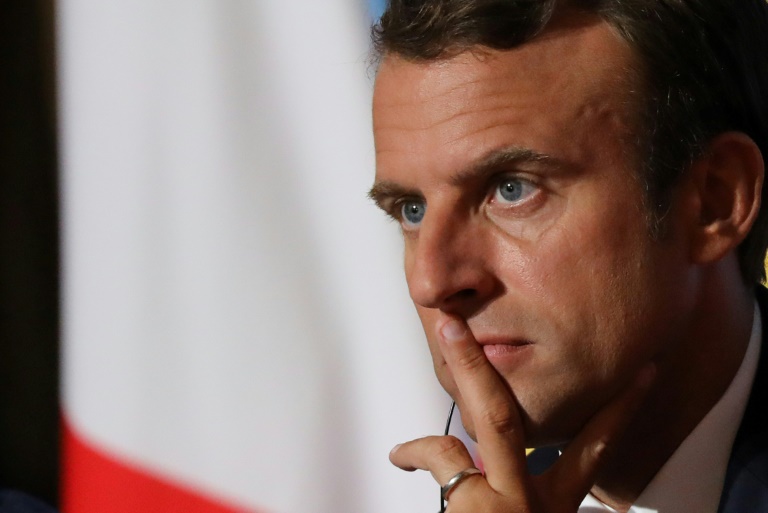
Where the yellow jackets are different from other protest movements, then, is that they are capturing a whole raft of discontents. The French daily Le Monde describes 48 demands the yellow jackets have made and plotted them against the electoral programs of the major candidates at last year’s presidential election. Of course, we are not comparing like-for-like, but it gives an interesting overview of the demands and where they fit. Not surprisingly, very few of them match the promises made by Emmanuel Macron, the so-called président des riches.
Broadly speaking, the yellow jackets demands fit best into the far-left program of Jean-Luc Melenchon and the far-right of Marine Le Pen. In essence, populist national/nationalist protectionism, a good drop of anti-immigrant rhetoric (Le Pen, not Melenchon) but also plenty of state. And therein lies one of the contradictions of this fundamentally diffused movement – that its supporters, as researcher Emile Chabal has pointed out, amongst others, want simultaneously more and less state.
And yet, on the ground and when you listen to the discourse of the apparent but self-appointed leaders of the movement, it’s clear that its agenda is driven by the desire by right and far-right voters frustrated at the defeat of their candidates (Francois Fillon and Le Pen) last May.
This explains why they failed to mobilize last year when the trade unions were fighting Macron’s reform to the labor code or earlier this year over railway reforms. It also explains why the national associations of France’s 36,000 mayors have called on their members to open their offices, exceptionally, last Saturday for citizens to go and express their concerns. It will be no surprise to discover that local government is at loggerheads with the state over restructuring and cuts to funding or that the national associations are dominated by… the right.
Blaming the Violence
With regard to the violence we have seen in Paris and some other locations (not all of them urban by any means), both the government and the yellow jackets have been quick to blame that on the ultraright, on the anarchist Black Blocks or on, well, just troublemakers and looters up from the sticks. Throwing objects through shop windows, arson, and car-burning are now standard accompaniments to any mass demonstration, and without the trade unions own security services to keep protestors in order, the capacity for trouble is limited only to what the police can contain.
But that won’t wash for the attack on the prefecture building in Le Puy-en-Velay in south-central France, a very direct attack on an organ of the state, nor for the regular burnings of motorway toll plazas. In France, the privatized motorway companies are regarded as the ultimate capitalist evil, mostly by other greater or lesser capitalists. The oppressed poor take trunk roads instead.
https://twitter.com/RestitutorOrien/status/1068942053260869633
The violence against state buildings and monuments has also been matched by a virulent strain of violence against one man: President Emmanuel Macron. Returning from the G20 summit in Argentina last weekend, on Sunday, December 2 he held an emergency meeting of the cabinet and security advisers. By Monday, Prime Minister Edouard Philippe was meeting leaders of political parties and trade unions, to no great effect. None of them was going to pull the government’s iron from the fire. By Tuesday, Philippe was announcing a moratorium on the new taxes and the opening of a dialogue on fiscal reform. Still, the response was muted.
A point appeared to be turned, however, on the evening of Wednesday, December 5, during a televised debate between two government ministers and representatives of the yellow jackets. At one point Eric Drouet, one of the yellow jackets leaders, declared that the protest would head for the Elysée Palace and, if necessary, force its way in. While he backtracked on his meaning the day after, the threat was clear. And by Friday, the moderates in the movement, the gilet jaunes libres, were calling on supporters to avoid Paris on Saturday.
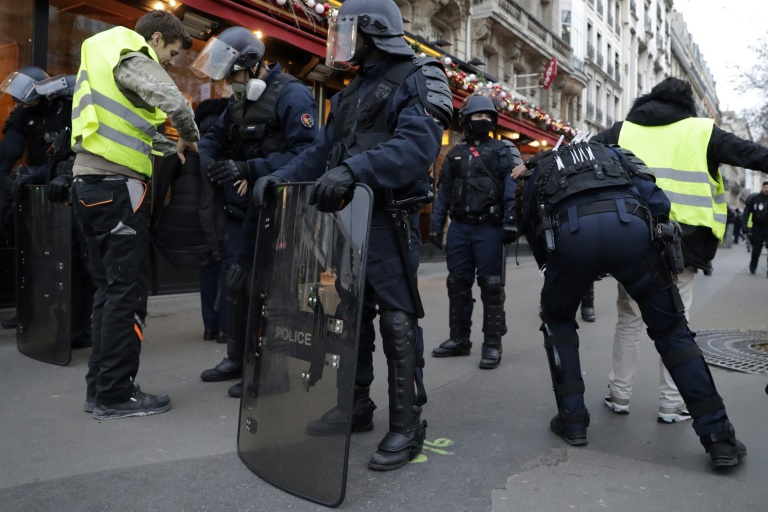
If Saturday, December 8 – Act 4 of the gilet jaunes affair – turned out to be less violent than the previous week, that was only because of the doubling of the police presence in the capital and pre-emptive stop and search patrols seizing all manner of weapons, including metal pétanque boules, bags of marbles and, in one instance, an underwater fishing harpoon. While the 136,000 protestors the authorities claimed took part in demonstrations did so peacefully, beyond the capital there was violence in Marseilles and Bordeaux.
At the time of writing – the morning of Monday, December 10 – the country is waiting to be addressed by the president. Other political figures have been generous with both their criticisms and advice. It remains to be seen if Macron can say enough and in the right way to bring enough of the moderate yellow jackets back.
Disclaimer: The views and opinions expressed here are those of the author and do not necessarily reflect the editorial position of The Globe Post.