


It’s no secret that private, for-profit prison corporations have accumulated substantial wealth from the U.S. criminal justice system. But another, relatively unknown, aspect of their reach is their role in immigration detention in the U.S.
The Department of Homeland Security (DHS) operates the largest immigration detention system in the world, according to a report from the National Immigrant Justice Center. Additionally, the federal government spends more on immigration enforcement than on any other federal enforcement agency in the country.
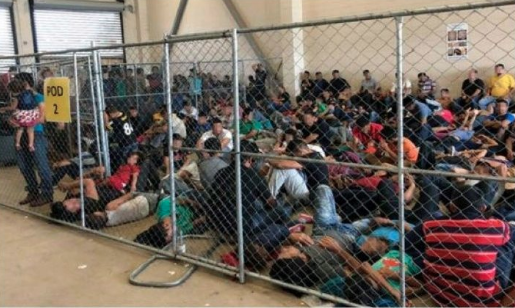
A report that investigated four immigrant detention centers in 2018 was released earlier this year from the DHS inspector general. The report described “egregious” conditions at these facilities last year, but the situation at the U.S.-Mexico border is still getting worse.
CoreCivic and GeoGroup (GEO) have acquired billions of dollars in revenue from the for-profit prison and detention center systems in the U.S. and abroad since the 1980s.
CoreCivic, founded in 1983 and formerly known as Corrections Corporation of America, is the largest private prison corporation in the world. The company owns and operates over 100 correctional and detention centers across the country.
Additionally, CoreCivic was the first company to design, build and operate a migrant detention facility in the U.S.
GEO, the second largest private prison organization in the world, is a Florida-based company specializing in privatized corrections, detentions and mental health treatment. It also operates both prisons and migrant detention centers in the U.S. and abroad.
Both companies are currently contracted by Immigration and Customs Enforcement (ICE) to build, design and operate migrant detention facilities across the country.
A Breakdown of Their Profits
ICE heavily depends on the private sector in most aspects of immigrant detention.
The agency told reporters from U.S. News that 72 percent of beds for migrant detention were in privately run facilities in 2016, up from 49 percent in 2009.
According to USA Spending, since President Donald Trump took office, ICE has awarded over $480 million in federal funds to GEO and over $331 million to CoreCivic.
An analysis from Bloomberg Government found the total fiscal spending in 2018 on immigration detention was $7.4 billion, a $2.1 billion increase since 2014.
CoreCivic and GEO received boosts in total profit of $85 million and $121 million over that period, respectively.
In 2018, CoreCivic reported $1.83 billion in revenue, almost half of which came from federal contracts with U.S. Marshals, the Bureau of Prisons — which also holds detained immigrants — and ICE. Contracts between CoreCivic and ICE account for 27 percent of the company’s revenue, according to a financial report by the company earlier this year.
As of this year, Geo runs 14 ICE detention centers with a combined capacity of 14,966 people. In 2017, GEO surpassed CoreCivic to become the largest operator of ICE facilities in the U.S., receiving over $500 million in contracts from ICE that year.
Political Influence
According to documents provided to The Globe Post by GEO executive vice president of corporate relations Pablo Paez, GEO does not “play a role in passing criminal justice or immigration laws,” the document went on to say that GEO has “never advocated for or against criminal justice or immigration enforcement policies.”
A 2016 study from researchers at the entitled The Central European Journal of International and Security Studies (CEJISS), however, found considerable links between private prisons companies and immigration policies in the U.S. An example highlighted in the study is Arizona, where at least two private prison companies, CoreCivic and GEO, appeared to play a role in crafting immigration policy in Arizona.
Arizona’s Senate Bill 1070 (SB1070) is aimed at preventing illegal immigration into the U.S. from the Arizona border to Mexico. Passed in 2010, SB1070, officially named Support Our Law Enforcement and Safe Neighborhoods Act, requires law enforcement officials to check the immigration status of a person they have “reasonable suspicion” of being undocumented.
Thirty of the 36 co-sponsors of the bill had received political contributions from the private prison industry, including from GEO and Core Civic.
The law drew criticism from activists because of its resemblance to “stop and frisk,” and the provision allowed officers to search individuals without a warrant based on “probable cause of unlawful presence.”
When SB1070 was drafted, both CoreCivic and GEO were involved with the American Legislative Exchange Council (ALEC), an organization that directly works with corporations to draft legislation at the state level.
Arizona State Sen. Russell Pearce originally drafted a proposal for SB1070. According to NPR, he took his idea to an ALEC meeting at the Grand Hyatt in Washington D.C. in 2009.
When Pearce gave his presentation on SB1070, an estimated 50 people were in the conference room, including officials from CoreCivic.
Similar versions of the bill were passed in 36 other states across the U.S. according to the study.
A Supreme Court ruling in 2012 and a settlement in 2016 have effectively gutted the law.
More broadly, the private prison industry has accrued significant political influence by investing heavily in funding the campaigns of candidates from both sides of the aisle. Big names in politics have accepted thousands of dollars from the companies.
Prominent Senators Ted Cruz (R-TX) and Lindsey Graham (R-SC), for example, received thousands of dollars from CoreCivic in 2018 alone.
The private prison industry has also devoted significant resources towards state and federal lobbying efforts. According to the CEJISS study, “Five separate iterations of the Private Prison Information Act have been introduced in Congress since 2005, and each bill has been defeated by vigorous lobbying efforts on behalf of the private corrections industry.”
The Private Prison Information Act proposed in 2017 would have allowed for more transparency and oversight into how private prisons across the U.S. are managed.
It was referred to the House Subcommittee on Crime, Terrorism, Homeland Security and Investigations, but has not advanced to the floor for a vote since.
Several Democrats, including 2020 presidential candidate Sen. Amy Klobuchar have rejected or returned campaign contributions from GEO Group in 2018.
Problems with Privatizing Detention
Reports of inhumane conditions at migrant camps and immigrant detention centers have caused outrage nationwide. Many of the facilities that have come under fire are operated by CoreCivic and GEO, such as GEO’s Aurora ICE Detention Center in Colorado and CoreCivic’s Stewart Detention Center in Georgia.
Detained immigrants have been subject to poor living conditions which has lead to sickness and even death while in ICE’s custody in CoreCivic and GEO owned centers, according to a report from the American Immigration Lawyers Association (AILA).
Allen Orr, president of the AILA, explained that for-profit detention centers have contracts with the federal government, specifically ICE, that include a mandatory headcount quota in the detention centers.
Additionally, most immigrants held in detention centers do not have easy access to immigration lawyers, according to Orr.
“Most of the people who are in detention centers are unrepresented, which is part of the problem,” explained Orr. “Most of the lawyers are provided for [detained immigrants] once they move to a family center.”
“Senators aren’t even allowed [in immigration centers], so lawyers are definitely not allowed in,” said Orr.
“As a service provider to the federal government, GEO has no involvement in the decisions related to who is assigned to our care, how long they are assigned to our care,” said Paez.
Who Else is Profiting from Detention?
CoreCivic and GEO have shareholders that profit from these corporations’ success. Though WellsFargo no longer loans to CoreCivic, the banking company still owns a large number of shares in CoreCivic.
The five biggest shareholders of CoreCivic are The Vanguard Group, Fidelity/FMR LLC, State Street Corp., Blackrock and Prudential Financial Inc.
Additionally, banking company JP Morgan no longer loans to either company, but financial titan still owns approximately 2.25 percent of GEO, owning over a million shares in both CoreCivic and GEO.
According to the company’s 2018 filings with the Securities Exchange Commission (SEC), JP Morgan owns 202,953,903 shares in CoreCivic and 2,975,344 shares in GEO.
Though private prison corporations make the most money from immigrant detention, other companies in the U.S. have received contracts from ICE as well.
Wayfair, the furniture company based in Boston, has been under fire recently since reports surfaced of the company providing bedroom furniture to immigration detention centers across the U.S.
547 Wayfair employees walked out of work once these reports came out. The workers signed a letter requesting that the company cancel their order for bedroom furniture and make a donation to RAICES, an organization that provides inexpensive or free services to immigrant children and refugees.
Wayfair’s CEO refused the demands, but did make a donation to the American Red Cross, an organization that does not actually provide support to migrants detained at the border.
BCFS is another company that has been protested by workers as well. The company has received at least $179 million in federal contracts from ICE since 2015.
These contracts, according to a 2018 report from The New York Times, were awarded to the company under the government’s “unaccompanied alien children program,” which was designed to handle migrant children that come to the U.S. without a parent.
According to reports from the Baltimore Sun, Johns Hopkins University currently has three contracts with ICE that totals over $1.7 million. Each contract is set to expire this year. The purpose of the contracts is to “provide educational programs that provide emergency medical training and leadership education.”
Students at the university have organized protests on campus in an effort to urge the university to cut ties with ICE.
Southwest Key is another company that receives hundreds of billions of dollars in contracts from ICE. The New York Times reported that the company was awarded over $955 million in federal contracts since 2015 to run shelters and provide services to immigrant children in federal custody.
Southwest Key’s facility for migrant boys at a former Walmart in Southern Texas has been the target of scrutiny since reports were released that the former supercenter has held almost 1,500 migrant children.
Other companies that have contracts with ICE include Amazon, Microsoft, Salesforce, The Nakamoto Group, Deloitte, MVM Inc., CSI Aviation and Bethany Christian Services.
Driven by Fear
According to some analysts, the boom in for-profit migrant detention has been made possible by a widespread fear of immigrants prevalent in American society.
“I think that it’s driven by fear,” stated Byron E. Price, professor of public policy at the City University of New York. He went on to say that Americans are likely less inclined to concern themselves with problems in detention centers because of that fear.
“President Trump talks a lot about crime [immigrants] bring in,” Price continued. “I think a lot of fear is driving immigrant detention because of how … the president characterized immigrants that were coming [to the U.S.].”
It is this fear-mongering and racist rhetoric that leads activists and experts alike to lose hope in fixing the problems within these centers.
“I think when it becomes a problem and it starts to affect the white population in [the U.S.], then we’ll begin to see changes in our policy,” Price stated.
More on the Subject
Jewish, Latinx Activists Lead Fight to Close US Migrant Detention Camps