
• About Us
  • Who Are We
  • Work With Us
Sunday, November 15, 2026
No Result
View All Result
The Globe Post
39 °f
New York
44 ° Fri
46 ° Sat
40 ° Sun
41 ° Mon
  • National
  • World
  • Business
  • Interviews
  • Lifestyle
  • Democracy at Risk
    • Media Freedom
  • Opinion
    • Editorials
    • Columns
    • Book Reviews
    • Stage
  • Submit Op-ed
  • National
  • World
  • Business
  • Interviews
  • Lifestyle
  • Democracy at Risk
    • Media Freedom
  • Opinion
    • Editorials
    • Columns
    • Book Reviews
    • Stage
  • Submit Op-ed
No Result
View All Result
The Globe Post
No Result
View All Result
Home Opinion

It’s Time for Scientists to Rebel and Demand Climate Action

Claire Wordley and Charlie Gardner by Claire Wordley and Charlie Gardner
09/04/19
in Opinion
Young people urge politicians to take action on climate change

Photo: Emmanuel Dunan, AFP

Share on FacebookShare on Twitter

The time has come for scientists to break the law. In the scientific journal Nature Ecology and Evolution, we recently explained why we – as conservation scientists – are risking arrest to protest inaction on environmental disasters. We hope our colleagues will join us.

Scientists have spent decades trying to warn the world of worsening climate and ecological crises, and offering alternative pathways for humanity. Unfortunately, this has not slowed our trajectory, let alone turned it around; climate breakdown is happening even faster than predicted. Scientists have been out-spent and out-maneuvered – while we have written policy briefs, fossil fuel companies have splashed the cash to lobby governments. The playing field that scientists have been allowed onto is far from level.

Perhaps our last chance to avert the worst catastrophes is people power – collective action where we join with others to demand change. Gandhi, Martin Luther King, and others used civil disobedience as a tool to drive profound political changes; non-violent resistance has proven effective before and could work again.

Civil Resistance

Many of our scientist colleagues are frustrated with the lack of government action and have spent years trying to engage “the public” in environmental issues. But now that popular environmental movements are here, we see too few scientists at activist meetings or in blockades. Thousands of scientists supported civil disobedience by schoolchildren, but most have been slower to act themselves. Engaging in civil resistance is a huge leap outside our comfort zones – but there is an exciting moment in history happening right now, and we think that we, as scientists, should be part of it.

Scientists have told people the facts, and we must now stand with those people worried about what we’ve told them. By joining protests, we can raise the credibility of people trying to make a difference; people who are routinely smeared by dark-money funded think-tanks and media groups with ties to big oil. If scientists agree that it is time to rebel, it is far harder to paint concerned citizens as extremists.

To be clear, we are not advocating that all scientists risk arrest; some have more to fear from the police than others. But all of us can support activism. We can speak at protests and in town halls, tell the media we support civil disobedience movements, and ensure fellow activists are well versed in science. And white scientists in the Global North, who will suffer very little for their actions, can use their privilege on behalf of others.

Objectivity and Facts

Our colleagues often worry that if they engage in advocacy or activism, they will no longer be seen as objective. But studies show that advocating for a position does not reduce scientists’ credibility or affect how science is viewed, although it might make them less popular in some quarters. And, if we think about it, do we really want to be so objective that we won’t take a position on the destruction of most life on this planet?
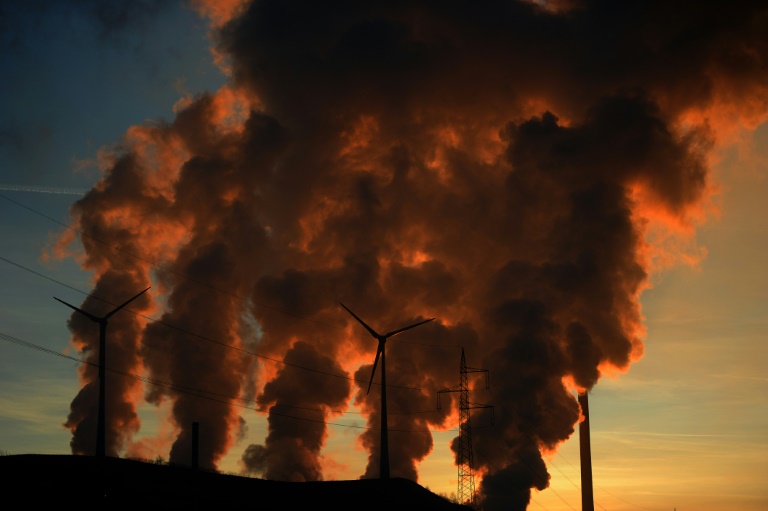
Smokes rising from stacks adding carbon dioxide (CO2) in the earth’s atmosphere and contributing to global warming and climate change.
Carbon dioxide is a key factor in global warming. Photo: AFP, Patrik Stollarz

Some also worry about whether activist movements are “science-based enough.” But most groups are well versed in the key facts; even Extinction Rebellion’s 2025 zero emissions target, which has been a topic of heated debate, is supported by a recent briefing paper. While of course there will be diverse views and interpretations in any mass movement, so long as we agree with the main thrust of a group, we don’t think it is necessary to argue over details. Many activist groups have also done their homework on social science, and some have even studied the impact of their messaging and tactics as they’ve gone along. If you want to geek out over statistics and impact evaluation, you’ll find plenty of activists joining in.

Time to Rebel

Civil resistance works. It has not yet turned the tide on emissions, but its impacts have already been felt. During the Extinction Rebellion actions in April, the environment shot up to become the third most important issue for British voters, and after the rebellion, the public showed increased support for civil disobedience.

Protesters’ urgent messaging has shifted the political discourse faster in months than it has moved in decades. The U.K. Parliament declared a “Climate Emergency” soon after the civil disobedience in London, along with other national parliaments and almost a thousand local councils in 18 countries. The U.K.’s opposition Labour party is considering aiming for net-zero carbon by 2030 – unthinkable this time last year.

I declared a climate emergency and am working to make London zero-carbon by 2050. London is a hub of expertise in finding ways of cutting carbon emissions and adapting to the impact of climate change. We brought these experts together for Climate Action Week earlier this month. pic.twitter.com/VhBGkmOm4m

— Mayor of London (@MayorofLondon) July 21, 2019

If we emotionally accept what climate breakdown and ecological collapse mean for our own lives, and for all life on Earth, then what can we do but rebel against those keeping us on the highway to hell? Will our next paper really do more to change things than taking to the streets to make our frustration clear? Governments and corporations have read our scientific papers and heard our pleas for decades.

For many of us, other scientists were pleading on our behalf before we were even born. We can let those in power continue to ignore us, or we can rebel.
ShareTweet
Claire Wordley and Charlie Gardner

Claire Wordley and Charlie Gardner

Wordley is a postdoctoral research associate at the University of Cambridge. Gardner is Lecturer, Conservation Biology, University of Kent

Related Posts

A flooded road in Batu Berendam in Malaysia's southern coastal state of Malacca
World

‘Dangerous New Era’: Climate Change Spurs Disaster in 2024

by Staff Writer with AFP
December 27, 2024
climate change
Opinion

To Be the Climate Leader We Need, Harris Must Prioritize Phasing Out Fossil Fuels

by Dana Fisher and Alice Hu
September 19, 2024
US President Joe Biden delivers a speech on stage during a meeting at the COP26 UN Climate Change Conference
Environment

Three Apocalyptic Truths About Climate Change and the 2024 US Election

by Dana R. Fisher
February 14, 2024
Vehicles and homes burn during a fire in Viña del Mar, Chile
Environment

Wildfires Scorch Central Chile, Death Toll Tops 110

by Staff Writer with AFP
February 5, 2024
People march against climate change in Bordeaux, southwestern France, on October 13, 2018.
Environment

Earth to Warm Up to 2.9C Even With Current Climate Pledges: UN

by Staff Writer
November 20, 2023
Striated surgeonfish and royal angelfish swim by a coral reef along Egypt’s southern Red Sea coast
Environment

Countries Pledge to Raise $12B to Help Coral

by Staff Writer
October 3, 2023
Next Post
Rohingya refugees

Bangladesh Bans Two Aid Agencies from Rohingya Refugee Camps

US President Donald Trump and China's President Xi Jinping in Beijing

Trade War Cited as Cause for 10,000 US Job Layoffs in August: Report

Recommended

The Fnideq (Morocco) - Ceuta (Spain) fence, located in northern Africa, is one of the main borders used by people on the continent to try to immigrate to the European Union. In September 2024, a massive attempt to cross the fence occurs, and the Moroccan police push back hundreds of people who head towards the Spanish exclave. In 2024, Spain receives 46,000 migrants.

Thousands Cross Into Spain’s North Africa Enclave in New Migrant Crisis

July 31, 2026
An armed Iranian police officer holding a rifle monitors the area as motorcyclists ride beneath a billboard depicting an AI-generated image of the Strait of Hormuz and an effigy of US President Donald Trump, displayed on the wall of a state building in downtown Tehran, Iran, on May 3, 2026.

US, Saudi Strike Iraq Alliance in Expanding War

July 29, 2026
Germany, Berlin, 26 july 2026, Gathering in tribute to the victims and all those affected by the attack on the 2026 CSD (Christopher Street Day/Pride) event, held at Pariser Platz.

Berlin LGBTQ Community Fears Far-Right ‘Exploitation’ of Pride Attack

July 27, 2026
AI chatbot applications.

Trump Under Pressure From All Sides Over Chinese AI Surge

July 24, 2026
Protesters gathered to condemn the detention of opposition leader of parliament, Rahul Gandhi, during a protest in New Delhi.

India Student Protests Keep Up Pressure on Modi Government

July 22, 2026
A southern Yemeni separatist fighter waves his rifle at the site of an anti-government protest in the port city of Aden, Yemen January 30, 2018.

Yemen’s Iran-Backed Houthis Announce Maritime Blockade of Saudi Arabia

July 20, 2026

Opinion

A Cuban street with a flag

Cuba Through a Pulse: Intimacy, Poverty, and the Shadow of Revolution

March 10, 2026
An Iranian walking in front of a wall painting of the Iranian flag in Tehran

Iran Can’t Dominate the Middle East Without Iraq

January 13, 2026
US President Donald Trump

Vladimir Trump and Blood for Oil

January 5, 2026
A trial COVID-19 vaccine

America’s Global Health Retreat Is a Gift to Its Rivals

November 12, 2025
Israeli Prime Minister Benjamin Netanyahu

UN Might Tolerate Netanyahu, and White House Might Welcome Him, But He’s Still Guilty of Genocide

September 30, 2025
Former President Donald Trump speaks at a Fox News Town Hall

Cruelties Are US

August 25, 2025
Facebook Twitter

Newsletter

Do you like our reporting?
SUBSCRIBE

About Us

The Globe Post

The Globe Post is part of Globe Post Media, a U.S. digital news organization that is publishing the world's best targeted news sites.

submit oped

© 2018 The Globe Post

No Result
View All Result
  • National
  • World
  • Business
  • Interviews
  • Lifestyle
  • Democracy at Risk
    • Media Freedom
  • Opinion
    • Editorials
    • Columns
    • Book Reviews
    • Stage
  • Submit Op-ed

© 2018 The Globe Post