


Following months of fierce campaigning dominated by populism, smearing, fist-pumping, and sexist remarks, Taiwan, an island of 23 million people, will head to the ballot boxes this Saturday to vote for their political leader. As the only place in the Chinese-speaking world that does so, democracy for the Taiwanese has become a core value and a potent arrow in their quiver of public diplomacy.
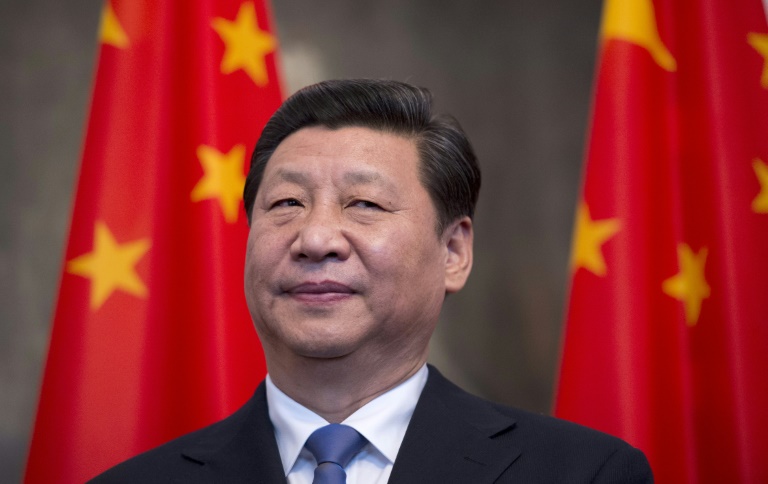
Yet, this achievement is shrouded in darkness as Beijing’s clouds loom large over the island. In Xi Jinping’s 2019 New Year speech, the Chinese president spoke long and loud about his dream to unify Taiwan, stating a clear rationale that would see Taiwan becoming a “special administrative region” of China. Its political institutes would be morphed into subnational bodies, similar to those in Hong Kong. Xi asserted a revised version of the so-called 1992 Consensus, saying, “The two sides of the Strait belong to one China and will work together to seek national unification.”
Tsai Ing-wen, Taiwan’s incumbent president, responded that the only “consensus” is a “Taiwan Consensus,” one where “The vast majority of Taiwanese … resolutely opposes ‘one country, two systems.’” In her 2020 New Year speech, she reiterated this point by arguing that since Taiwan has refused to submit, “We have clearly told the world that Taiwan will not accept ‘one country, two systems.’”
Xi Jinping, on the other hand, said nothing of Taiwan in his 2020 address. Yet, in spite of this, China persists in pressing its diplomatic offensive. Beijing also continues to use military coercion and is unabated in its infiltration of Taiwan’s media and society and its interference in Taiwanese domestic affairs.
To counter this, the government in Taipei, on December 31, signed the Anti-Infiltration Act, a law designed to safeguard and regulate influence from entities deemed “hostile foreign forces” towards Taiwan’s political process.
Taiwan’s Anti-Infiltration Act
Misinformation and fake news are ostensibly the new modus operandi in global politics, and Taiwan is arguably a significant target. A report by V-Dem, a program at the University of Gothenburg in Sweden that assesses democracies, highlighted that Taiwan is subjected to more disinformation from Beijing than any other entity in the world.
China’s strategy is often a mixture of cyber-bullying, social media manipulation, and financial control over domestic media outlets. The poor performance by the Democratic Progressive Party in Taiwan’s local-level elections of 2018 raised concerns regarding the shifting tactics of Chinese interference.
Democracies around the world are working to prevent infiltration from China, & today #Taiwan joined in this effort by passing an anti-infiltration act to defend our democracy. Here on the front lines, we are taking all necessary measures to protect our values & way of life. pic.twitter.com/eUND1wdFG1
— 蔡英文 Tsai Ing-wen (@iingwen) December 31, 2019
The newly installed Act to counter this is not without controversy. Chief among its critics is the opposition Kuomintang (KMT) party and Taiwanese businesses and industry located in China. Their principle complaint is the speed at which it was enacted, becoming law just over a month after its formulation as a bill.
Former president and KMT’s chairperson, Ma Ying-jeou, perhaps a bit un-self-reflectively, went so far as to compare the Act to martial law (Taiwan suffered under KMT-imposed martial law for four decades), stating that President Tsai was both dishonest and autocratic. KMT whip William Tseng described the Act as “green terror,” another audacious comparison to the KMT period of “white terror,” a term closely associated with the decades of martial law.
Tsai responded to this criticism in her 2020 New Year’s Day address by arguing that the people of Taiwan must be cautious of Chinese infiltration and especially of efforts to sow division in all facets of Taiwanese society. Moreover, she argued that the Act does not affect freedom, nor does it infringe upon peoples’ human rights. It only protects Taiwan’s democracy and freedom.
In my New Year’s Address, I reiterated my belief in the “four musts” & “four understandings” & emphasized the significance of the anti-infiltration act’s passage. Full text: https://t.co/1IztJXsasH pic.twitter.com/6Z6uZ0conW
— 蔡英文 Tsai Ing-wen (@iingwen) January 1, 2020
Given the remits of election law in Taiwan, which prevents polling ten days before election day, it is impossible to see whether the enactment of the Anti-Infiltration Act had any effect on Tsai’s poll numbers. The last public polling, held December 29, gave Tsai a 33.3 percent lead over her KMT rival.
Tsai’s persistence and unwavering stance on her “four musts” on ties with Beijing – to call on China to face the reality of Taiwan; to respect the commitment of 23 million people to freedom and democracy; to handle cross-strait differences peacefully and based on equality; and that any negotiations must be engaged in by government or government-authorized agencies – have led to suggestions that this election will be a referendum on the future of cross-strait relations.
Referendum on Future Relations
However, Tsai Ing-wen’s convictions do not remove the fact that she is an advocate of maintaining the status quo, a rational decision. It is arguably the second-most palatable option to the two sides of the strait and not their desired outcome.
Maintaining the status quo is crucial. It anchors Taiwan from the shifting Beijing’s tides in their pursuit towards obtaining their first choice, which remains annexation of the island. Meanwhile, to the Taiwanese, their country remains a de facto independent one in every practical way, lacking only de jure recognition. To them, this week’s elections are not a referendum on future relations across the Taiwan Strait, because it is not Taiwan that is upsetting the balance power. That sin is China’s.
A positive result for Tsai and the Democratic Progressive Party would be a victory for democracy in the face of the growing threats of foreign interference and increased spreading of misinformation.
Conversely, a defeat would be course-changing and a clear signal to China that its efforts have borne fruit and are ready for implementation in democracies farther afield. In this sense, Taiwan’s democracy remains our front line.
Disclaimer: The views and opinions expressed here are those of the author and do not necessarily reflect the editorial position of The Globe Post.