


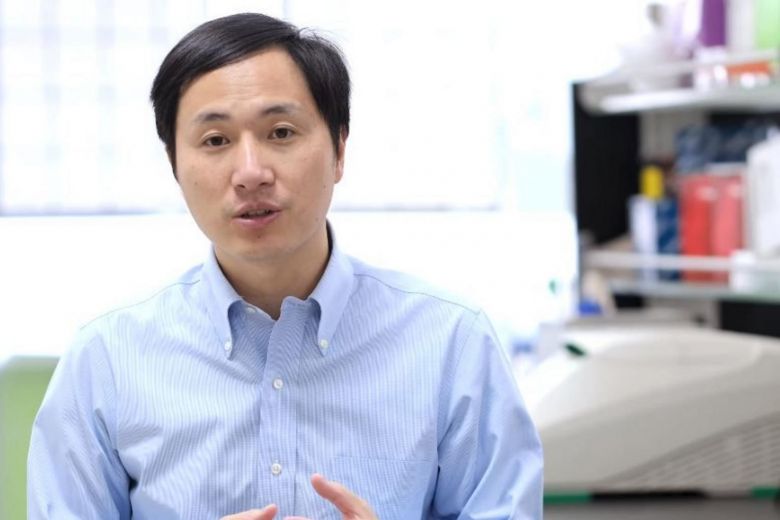
In November 2018, Chinese biophysics researcher He Jiankui made a historic announcement.
Two twin girls – nicknamed Lulu and Nana – had become the world’s first genetically modified human beings.
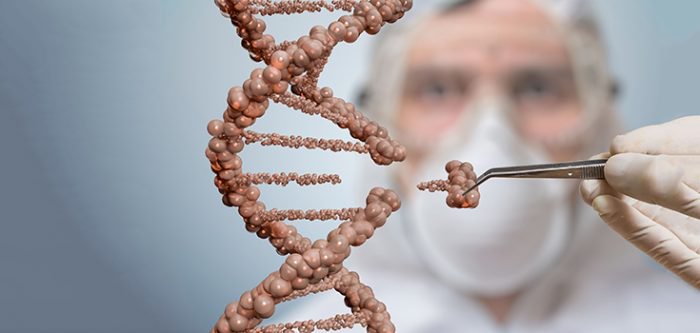
Using a gene-editing technology known as CRISPR, He had manipulated the DNA of the embryos that would become the girls in an effort to make them immune to the HIV virus.
What first seemed like a historic triumph of science, however, quickly became one of the most infamous scandals in medical history.
The researcher was swiftly fired from his university, put under police investigation, and denounced by experts around the world who said he jumped the gun and carried out an experiment that was unsafe and unethical.
In December, He was sentenced to three years in prison for “illegally carrying out human embryo gene-editing intended for reproduction.” It’s unclear whether the experiment caused any genetic damage to Lulu and Nana or if they are even resistant to the HIV virus.
Kiran Musunuru, one of the world’s foremost genetics researchers, was the first expert to publically condemn He’s experiment.
Nonetheless, Musunuru says the birth of the Chinese twins marks the beginning of a new human era, the possibilities of which are boundless.
Potential future implications of gene-editing technology range from preventing genetic diseases to producing “designer babies” with custom traits to creating “superhumans” and “controlling our own evolution.”
With the release of his new book, “The CRISPR Generation: The story of the World’s First Gene-Edited Babies,” The Globe Post‘s Bryan Bowman spoke to Musunuru about where this technology could go from here and what it could mean for the future of humanity.
The following interview is lightly condensed and edited for length and clarity.
Bowman: Could you explain what CRISPR is broadly and how that technology evolved to where it is today?
Musunuru: CRISPR is one type of gene-editing tool. Gene editing is a technology that allows us to make changes to genes in the DNA and in the cells in the body. If we’re talking about human beings, typically we’re talking about changes that are related to health or disease.
There are several types of gene editing tools, but CRISPR is by far the most popular one. CRISPR is interesting because it wasn’t invented. It actually exists naturally in all sorts of bacteria. It evolved as a sort of an immune system that can fight off viral infections. Just like we can get viral infections, it turns out bacteria can get viral infections as well. And so bacteria created a system by which they can fight off viruses. So that’s where CRISPR came from.
Over the past couple of decades, a variety of very talented scientists identified it, discovered it in bacteria, and then were able to adapt it into a gene-editing tool that can now be used in human cells.
What we can do with CRISPR is either turn off genes – and that’s easier to do – or we can make more precise changes to genes such as correcting a mutation that causes disease.
Bowman: Last year, there was the famous – or infamous – case where Dr. He Jiankui in China covertly created the first gene-edited babies. And I understand that you were the first expert to publicly condemn the experiment. What exactly did Dr. He do and why did you feel it was so unethical?
Musunuru: What he was trying to do was use CRISPR to turn off a gene called CCR5. By turning off this gene, he was hoping to make the babies that were born resistant to HIV infection, HIV being the virus that causes AIDS.
There are many people who are naturally born with this chain turned off and they’re resistant to HIV. So the rationale was, well, “I’m going to try to create babies who have the same trait.”
What he did was problematic for two reasons. One, it was, to put it lightly, a scientific disaster. Everything you worry about going badly with CRISPR actually did happen. Any technology has a potential for a lot of good with the potential for bad. I compare it to fire. It can be very useful. But if you’re not careful, it can cause wildfires and a lot of damage and hurt a lot of people. It’s the same with CRISPR. It can do a lot of good. It can help patients who have bad diseases. But if you’re irresponsible with it, it could actually cause unintended genetic damage.
It’s not clear whether these kids that were born – they were twin girls nicknamed Lulu and Nana – it’s not clear whether they’re actually protected against HIV infection. It’s not clear whether they might have suffered some genetic damage that might have health consequences for them. It’s not clear whether the genetic damage – if it did occur – could get passed down to their children and affect future generations.
So scientifically, there are a lot of problems with it. The work was very premature. I would say that if we were ever going to do this in a reasonable, rational, safe way, we’re years away from doing it. But he went ahead and just did it anyway. You can call him a rogue scientist, as cliché as it is. And he did it in conditions of secrecy. There was essentially no oversight. And potentially these twins and future generations might suffer the consequences.
The other problem is a problem of ethics. The way in which he did it basically violated every principle of ethical medical research in the textbook. Basically, everything that you could do wrong, he did it wrong.
Whenever we do an experimental procedure, we hope that the benefits greatly outweigh the risks. What he was trying to do was protect these kids from HIV. But the truth is, they were in no particular danger of getting HIV compared to the average person. In China, the prevalence of HIV is about 0.1 percent. So there wasn’t really much for them to gain. Even if they did somehow during their lifetime get the HIV infection, we have good treatments to prevent it from proceeding to full-blown AIDS.
So what was the benefit of doing this procedure? You have to balance that against the harms. And the genetic damage that’s possible – that raises risks of things like cancer and heart disease and other diseases. When you have those risks and very little benefit, then it’s just not a favorable ratio. And that’s intrinsically unethical.
Bowman: Seeing as you said that we’re years away from doing something like this in a more responsible and ethical way, what are the greatest challenges to getting to a point where parents will have the option to go forth with a gene-editing procedure that might prevent their children from suffering from some kind of genetic disease?
Musunuru: There are really two aspects to this. One is a scientific or medical aspect. Can we get to a place where gene-editing of embryos is well-controlled? Where we know that what we’re doing is truly safe and appropriate from that perspective?
The second issue is really a decision more for broader society. Is this something that we should be doing, something we want to be doing? This is less about the science and more about ethics and morality and legality and religious values and all sorts of other things. Reasonable people can disagree on what’s appropriate and what’s not appropriate. What complicates things here is that it’s not really an all or nothing decision. There are different scenarios where you could see parents using gene-editing on behalf of their unborn children.
I like to break it down is three scenarios. The first scenario is with parents who have medical issues that make it so that there’s no way they can have natural biological children or healthy babies if they both have a bad disease and they’re going to pass it on to all of their kids unless you do something like editing. These are unusual situations, but they do exist.
The second scenario is one where parents might want to – quite understandably – reduce the risk of their child having some serious illness at some point in their lifetime. I’m talking about things that are fairly common, like Alzheimer’s disease or breast cancer or heart disease or whatnot. There’s no guarantee that the editing will eliminate that risk. But you can see how parents might want to stack the odds in their kid’s favor. It’s still medical, but it’s not perhaps as severe a situation with a kid who’s definitely going to get the disease unless you do something.
The third scenario would be cases in which parents want to make changes that are not really medical but are more of what we would think of as enhancements. These could be cosmetic changes like hair color, eye color, things like that.
But it could potentially be much more serious things like intelligence or athletic ability or musical talent. Now, to be fair, that’s theoretical. I don’t think we are anywhere near knowing enough about how genes influence these things to be able to do it anytime soon. You might actually have to change hundreds of genes in order to make those changes. But you can imagine how certain parents might want to do that, might want to advance their children in the ways that they feel personally are desirable.
Bowman: Can gene editing only be performed on embryos or is it possible to edit genes in later stages of pregnancy or even post-birth?
Musunuru: There’s actually a lot of exciting work going on using gene editing to help patients, whether it’s adults or children. Right now it’s been focused mostly on adults who have terrible diseases and it’s really being used as a treatment to alleviate their suffering or potentially cure the diseases.
Just recently, we got the exciting news that two patients – one in the U.S. and one in Europe – were participating in a clinical trial. They each had a severe blood disorder. One of them had sickle cell disease. The other had a disease called beta-thalassemia. Earlier this year, they got a CRISPR-based treatment. And what’s very exciting is that it looks like not only have their conditions improved significantly, it looks like they might actually be cured.
If that bears out, it would really be historic because these are diseases that affect millions of people around the world and were previously incurable. This treatment is also being explored for things ranging from cancer to liver disease to heart disease.
So there’s enormous potential for benefit for living people who have serious diseases. But it’s a very different situation than editing embryos because you’re talking about a person who is in front of you. We are trying to alleviate their suffering. That patient has the ability to freely give consent to the procedure, to weigh the benefits and risks and come up with a decision.
Bowman: How does that work? Is it some kind of cell transplant where the new cells then replicate throughout the rest of the body?
Musunuru: Yeah. It depends on the situation. I mentioned those two patients with the blood disorders. The way it worked there was the medical team used bone marrow stem cells. They basically took bone marrow as if they were going to do a transplant and then edited blood stem cells in a dish outside of the body to fix the genetic problem. And then they took those edited stem cells and put them back into the same patient. Those cells start making the blood cells that are now corrected or repaired. And by doing that, to cure the disease.
Another potential implementation is – I work on heart disease. And what we’d like to be able to do is turn off cholesterol genes in the liver. So what I envision is that a patient with heart disease would get a single treatment and it would deliver CRISPR into the liver and just the liver. It would turn off genes that produce cholesterol in the liver. The effect of that is permanent reduction of cholesterol levels and lifelong protection against heart disease.
This actually works really well in mice. I’ve been working on this in my own laboratory for six, almost seven years now experimenting with it in monkeys. And if looks like it works – and I’m pretty confident that it will work – we could be looking at clinical trials in a few years where we’re taking patients who have really bad heart disease or a very high risk for heart disease and actually giving them the single treatment within their own bodies that would turn off these cholesterol genes.
Bowman: In terms of more cosmetic applications, there’s this popular idea that “designer babies” will be a reality at some point in the future. But how feasible would it be to use gene-editing for something very basic like choosing eye color or hair color? Are there many genes involved in determining traits like that? Are we close to being able to do that if we choose to?
Musunuru: Well, eye color, hair color, those actually turned out to be fairly simple. There’s only a small number of genes that control those. So in theory, if you wanted to do it, it wouldn’t be that difficult.
Personally, my point of view is that’s a trivial thing. Like why would you go through all that trouble? Do I care if your kid has blue eyes versus green eyes versus brown eyes? Maybe some parents feel that that’s very important. So I think simple things like hair color, like eye color, it could be done fairly readily. I just don’t see it as serious enough to warrant doing it.
The more complex things like intelligence, gosh, that’s going to be so challenging. I mean, intelligence is just such a complex phenomenon. There’s some genetics involved in it, but there are so many other factors that come into that like upbringing and environment. We’re not even getting close to an understanding of how someone’s intelligence comes about, to be perfectly honest about it.
I will point out that even though some of these things are simpler, in general, the vast majority of people are very, very uncomfortable with the idea of using gene editing of embryos for enhancements.
And I think this reflects a couple of things. I think this reflects the fact that people are more sympathetic if something like this is being used for medical purposes and much less comfortable if it’s being done to give a child an advantage in a way that’s not medical.
It brings to mind the recent scandal where wealthy parents were trying to get their kids into good colleges by actively bribing admissions officers, faking test scores, fabricating resumés. That kind of thing makes people very uncomfortable – that certain people, particularly wealthy people, might try to use this technology to an extreme to advantage their children.
There’s an economic aspect to that. Wealthy parents might have better access to this technology than those who are not as wealthy. And what does that mean? If wealthy parents are somehow able to make “designer babies” who somehow are advantaged and other people are not, does that exacerbate socio-economic inequalities in our society?
So I think there are a few reasons why people are uncomfortable with the idea of enhancement, whereas on the whole, the majority seem to be at least somewhat open to the idea that there might be good medical uses.
Bowman: I’m really happy that you brought up that socio-economic inequality aspect because I was going to ask you about that. But if we table those concerns for a moment and go way out there, there’s this notion you write about that we could ultimately, theoretically, control our own evolution.
I’ve heard it suggested that it could be theoretically possible to incorporate traits from other organisms that could be advantageous into our own DNA and essentially enter a new post-human stage of evolution. Is that total science fiction or do you think we’re entering a period where that is increasingly possible?
Musunuru: Well, with the way things are going with this technology. I mean, we’ve taken a step towards that. But there are many, many, many, many steps that would need to be taken to actually get to that point. But I think you’re right. You see the path. We have the technology. Then it’s a question of perfecting the technology. A question of learning more about what genes from other species might be advantageous.
The cat’s out of the bag. The technology is here. Whether it’s five years from now or 10 years from now or 50 years from now or 100 years from now, these sorts of things will inevitably start to happen. And I’m not sure there’s much that those who would like to not see that happen will be able to do to stop it in the long run.
More on the Subject