• About Us
  • Who Are We
  • Work With Us
Tuesday, March 17, 2026
No Result
View All Result
The Globe Post
39 °f
New York
44 ° Fri
46 ° Sat
40 ° Sun
41 ° Mon
No Result
View All Result
The Globe Post
No Result
View All Result
Home Refugees

Thousands Go Without Aid Due to Covid-19 Restrictions

Monique Davis by Monique Davis
03/25/20
in Refugees, World
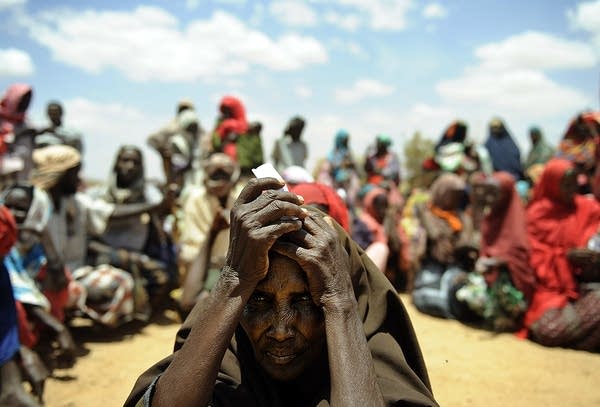
A newly arrived elderly Somali woman waits with other new arrivals to be registered as refugees in Doolow, south western Somalia. U.N. Photo: AFP

A newly arrived elderly Somali woman waits with other new arrivals to be registered as refugees in Doolow, south western Somalia. U.N. Photo: AFP

Share on FacebookShare on Twitter

The development of new Covid-19 restrictions to globally reduce the movement of people is inadvertently preventing life-saving aid from reaching displaced and refugee communities. Due to not having the resources to aid thousands of people, the Norwegian Refugee Council (NRC) is calling on the government to allow the delivery of humanitarian aid during these challenging times.

Some humanitarian organizations have already suspended their relief programs due to government restrictions causing uncertainty and hardships for families. Across the Middle East, restrictions have impacted the NRC’s ability to reach over 300,000 people who need assistance. 

“While governments are taking tough and much- needed measures to prevent the spread of the coronavirus, millions of refugees and displaced people still depend on humanitarian assistance,” said Jan Egeland, Secretary-General of the Norwegian Refugee Council (NRC).

Aid workers should fall into the same category as medical staff, food retailers or pharmacists. If supermarkets and pharmacies can remain operational during this crisis, then so should the delivery of humanitarian aid.”

"Covid-19 is now reaching places where people live in warzones, cannot easily access clean water and soap, and have no hope of a hospital bed if they fall critically ill." – @UNReliefChief

We call on governments to support the humanitarian response plan: https://t.co/OTrnFepTZn

— Norwegian Refugee Council (@NRC_Norway) March 25, 2020

Humanitarian programs play a significant role in slowing down the spread of diseases. For example, the delivery of aid like clean water, hygiene packets, and soap can prevent the spread of the coronavirus in vulnerable communities.

The NRC is scaling up water and sanitation services in different countries, where it is still possible, and is providing the communities with guidance on good hygiene practice. They are also reviewing how existing programs can help refugees and displaced cope better during the crisis.

"Syrians are very likely to be some of the most vulnerable to the spread of the virus globally," says @NRC_Norway's @RachelSider. https://t.co/CUzKc83gua

— Ole Solvang (@OleSolvang) March 25, 2020

“ Aid workers are taking all possible precautions and we are imposing stringent measures to ensure we do not introduce Covid- 19 to the vulnerable communities we serve,” Egeland added.

The NRC has also issued guidelines to its staff to reduce the risk of spreading the infection when assisting vulnerable communities. The NRC is scaling up assistance as a response to Covid-19 in the following countries: 

  • In Afghanistan, NRC has ramped up awareness raising activities on the spread of the virus and on good hygiene practices. NRC is present at critical border crossings with Iran and Pakistan providing information in settlements.
  • In Burkina Faso, NRC has put in place hand-washing facilities at distribution points, encouraging families to scale-up hand- washing practices and awareness-raising with printed information on prevention.
  • In Iran, NRC has facilitated the distribution of soap and information leaflets to raise awareness on preventive measures among 6,000 households in settlements throughout various provinces. We are also preparing for the distribution of 1,600 hygiene kits to families.
  • In Somalia, NRC is reprogramming $1.13million to construct handwashing basins, soap distribution and awareness campaigns in targeted IDP settlements.
  • In Uganda, NRC is expanding existing programs in water sanitation and hygiene in refugee settlements.
  • In South Sudan, NRC is scaling up distribution of hygiene kits and soap alongside food distribution and is developing new ways to avoid crowding at food distribution sites.
  • In Kenya, NRC is working to ensure the continuity of water supplies in the Kakuma refugee camp.
ShareTweet
Monique Davis

Monique Davis

Related Posts

A migrant boat off the coast of Libya.
Refugees

UN Says 2023 Was Deadliest Year for Migrants in a Decade

by Staff Writer with AFP
March 7, 2024
A general view of the Centers for Disease Control and Prevention (CDC) headquarters in Atlanta, Georgia.
Opinion

An Inspired Choice to Lead the CDC

by Edward C. Halperin
June 13, 2023
Myanmar Rohingya refugees look on in a refugee camp in Teknaf, in Bangladesh's Cox's Bazar, on November 26, 2016
Refugees

US Announces $26M in New Aid for Rohingya

by Staff Writer
March 8, 2023
A woman undergoing COVID test in China
Featured

Soaring Covid Cases Shine Light on China’s Healthcare Gap

by Staff Writer
January 11, 2023
European Medicines Agency
World

EU Watchdog Approves Second Covid Booster for Over 80s

by Staff Writer
April 6, 2022
Ukraine war
Opinion

The Ukrainian Refugee Crisis and the Hierarchies of Western Compassion

by Tazreena Sajjad
April 20, 2022
Next Post
Turkish President Recep Tayyip Erdogan

EU, Turkey, and Migrants: One Way or Another Europe Will Pay Dearly

Dorothy Campbell, 88, visits her 89-year-old husband Gene through a window at Life Care Center in Kirkland. Gene is under quarantine at the Washington state facility.

Coronavirus, Quarantine, and Loneliness: The Next Public Health Crisis?

Recommended

Miguel Diaz-Canel

Trump Says Cuba Wants ‘Deal’ With US

March 16, 2026
Russian President Vladimir Putin

Moscow Pushes US to Ease More Oil Sanctions

March 13, 2026
An Iranian woman walks past an anti-US mural painted on the wall of the former US embassy in Tehran on November 19, 2011

How Is Trump’s ‘Freedom’ War Seen by Those It Aimed to Help?

March 11, 2026
A Cuban street with a flag

Cuba Through a Pulse: Intimacy, Poverty, and the Shadow of Revolution

March 10, 2026
An aerial view of the Beirut port after the explosion. The blast created a 140 meter (460 feet) wide crater that has since filled with sea water. Photo: AFP.

Water Emerges as a Dangerous New War Target

March 9, 2026
Plumes of smoke rise following reported explosions in Tehran on March 1, 2026, after Iran's supreme leader, Ayatollah Ali Khamenei, was killed a day earlier in a large US and Israeli attack, prompting a new wave of retaliatory missile strikes from Iran.

War in the Middle East: Latest Developments

March 5, 2026

Opinion

A Cuban street with a flag

Cuba Through a Pulse: Intimacy, Poverty, and the Shadow of Revolution

March 10, 2026
An Iranian walking in front of a wall painting of the Iranian flag in Tehran

Iran Can’t Dominate the Middle East Without Iraq

January 13, 2026
US President Donald Trump

Vladimir Trump and Blood for Oil

January 5, 2026
A trial COVID-19 vaccine

America’s Global Health Retreat Is a Gift to Its Rivals

November 12, 2025
Israeli Prime Minister Benjamin Netanyahu

UN Might Tolerate Netanyahu, and White House Might Welcome Him, But He’s Still Guilty of Genocide

September 30, 2025
Former President Donald Trump speaks at a Fox News Town Hall

Cruelties Are US

August 25, 2025
Facebook Twitter

Newsletter

Do you like our reporting?
SUBSCRIBE

About Us

The Globe Post

The Globe Post is part of Globe Post Media, a U.S. digital news organization that is publishing the world's best targeted news sites.

submit oped

© 2018 The Globe Post

No Result
View All Result
  • National
  • World
  • Business
  • Interviews
  • Lifestyle
  • Democracy at Risk
    • Media Freedom
  • Opinion
    • Editorials
    • Columns
    • Book Reviews
    • Stage
  • Submit Op-ed

© 2018 The Globe Post