


As attention remains fixed on the mounting death toll and economic disruption caused by the COVID-19 pandemic, the world’s far-right leaders have intensified their efforts to dismantle the environmental protections that help keep us healthy.
This tragedy is particularly stark in the Brazilian Amazon, where coronavirus has ravaged an ill-prepared and under-developed healthcare system, killing higher proportions of the population than elsewhere.
Meanwhile, the wheels of land speculation, illegal logging, and commodity expansion continue to turn, fueling fires and deforestation. These activities are destroying one of the earth’s most diverse and carbon-rich forests and are threatening the precarious existence of isolated indigenous communities.
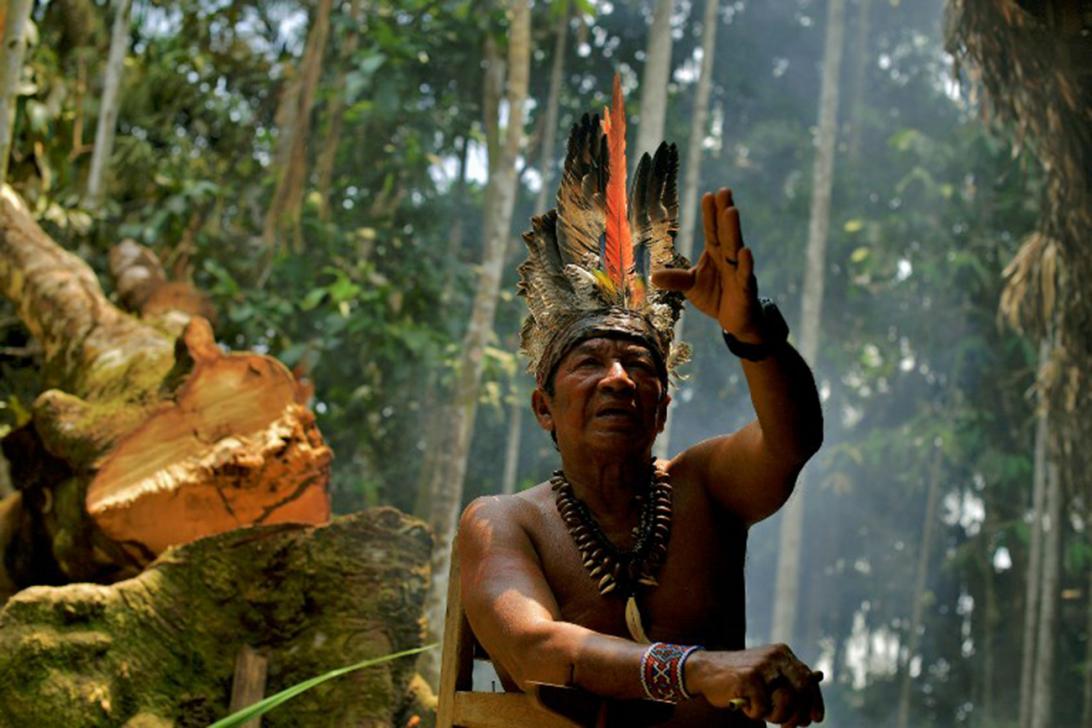
Yet, forest degradation, in Brazil and elsewhere, has been an accelerator of our current pandemic. Degraded forests are unbalanced ecosystems that are responsible for transmitting half of the world’s known infectious diseases such as dengue, malaria, and Zika.
Our fixation on COVID-19, like other symptoms of our collective disease of environmental destruction and growing social inequality, obscures a more productive focus on its causes.
Populist, nationalist leaders like US President Donald Trump and his Brazilian counterpart Jair Bolsonaro willfully promote this misdirection. It feeds their ability to destroy further our planet and the line their supporters’ pockets, instead of working to improve the well-being of the poorest members of society.
Bolsonaro’s War on the Environment
In a remarkably brazen video published on May 22, Brazil’s environmental minister Ricardo Salles instructed cabinet members about how the media’s focus on the virus provides a window of opportunity for the Bolsonaro administration to dismantle environmental regulations further.
During the 2-hour meeting, many ministries and the president took the floor. There was not a single mention about how to mitigate the virus’ spread and better support local hospitals.
Just as Trump began allowing mining in America’s national parks before the pandemic, COVID-19 is not the start of Bolsonaro’s war on the environment. The country’s environmental agency’s anti-deforestation enforcement operations had already been greatly curtailed under a facade of greater military intervention in forest protection.
Gold mining destruction in indigenous lands, time lapse over 3 year period
The face of 'modern' Brazil under Bolsonaro@ECOWARRIORSS https://t.co/PtqVVY3feB— Environment Matters (@enviro_matters) June 7, 2020
But as with the Trump administration, Bolsonaro has used the crisis as an opportunity to double down on the objective of short-term profit based on unsustainable resource extraction, instead of building an economy and society where the majority of the region’s inhabitants can find meaningful work and adequate health and educational services.
Bolsonaro’s anti-environment initiatives are well documented: a law providing amnesty for land grabbers, a de facto moratoria on fines for environmental crimes, and firings and protests against environmental enforcement agents after successful operations.
The effects of these actions are already evident. The deforestation rate has increased by 51 percent in the first trimester of this year compared to the same period of last year, even though it is the rainy season when floods and mud make deforestation more expensive. These signals point in one nefarious direction: last year’s Amazon fires are going to be repeated this year, but on a larger scale.
Amazon Fires
In the fall (a seeming lifetime ago), when fires were a focus of international attention, the Brazilian government attempted to normalize fire events, to portray them as a manifestation of “culture,” a problem of poverty, and a seasonal recurrence. Then in another attempt at misdirection, Bolsonaro proceeded to blame local and international NGOs.
However, research has shown that last year’s Amazon fires were largely the result of increased large-scale deforestation associated with land grabbing. Further, those fires expanded to historically non-flammable forests, which are today vulnerable because of increased degradation by logging and previous fires.
Even though fires are used by poor farmers to manage mostly previously-cleared areas, blaming them for large-scale Amazon fires and deforestation is misleading. Large clearing and logging are not done by the poor, who certainly cannot afford to buy the heavy tractors necessary for clearing large areas of the forest. Yet, in the middle of a recession, sales of this equipment are booming.
Instead, smallholders and indigenous communities face increasing violence and murders due to land conflicts, while the actors perpetrating violence face impunity. COVID-19 is ravaging Amazonian communities, and the upcoming fires and associated haze will further endanger their health and land.
Further dismantling of environmental regulations will not bring any benefit or development to the Amazon people. Rather, it will increase the concentration of land and resources, incentivize violent land conflict, and create unfair competition for the legal agricultural sector in favor of land speculators.
Solidarity
World leaders now face a unique opportunity to use post-COVID-19 economic interventions to transform economies, rebuild health, energy, and transport infrastructure to avoid catastrophic climate change, and create more equal and just societies.
The case of the Brazilian Amazon is no different. Now more than ever, we are at a turning point. The international community should show solidarity with local efforts to improve democracy and human and environmental well-being in the Amazon.
More broadly, we must reject the politics of misdirection and easy solutions that tempt us to focus on COVID-19 or fires as isolated problems. These symptoms of our unhealthy relationship to the planet are related, and overcoming them requires an integrated investment in building more sustainable economies.
If we continue to chase one fire at a time, we will likely not only fail to avoid irreversible harm to the world’s largest remaining forest and its people but also fuel future pandemics.
Disclaimer: The views and opinions expressed here are those of the author and do not necessarily reflect the editorial position of The Globe Post.