It is 10 am in Washington DC, 5 pm in Istanbul, when the Zoom call makes its familiar buzz. Sami answers and his dark eyes and kind face fill the screen. Voices are heard in the background, as gentle music plays. The melodic tune and its cheerful rhythm become louder before fainting. He grins confidently and asks in perfect English: “So, what exactly would you like to know?”
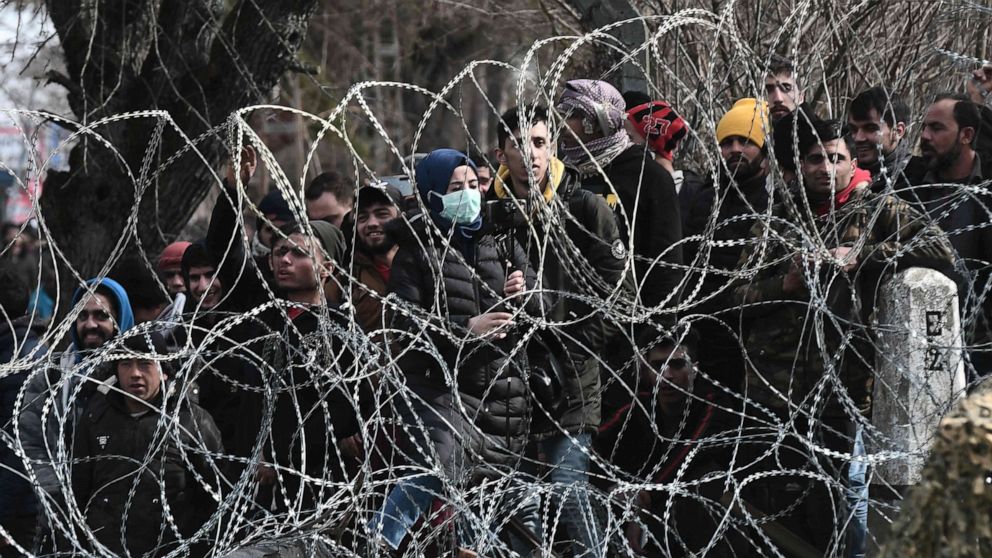
Sami has lived through the war in Iraq during his teenage years before fleeing to Turkey. Now, in his late twenties, he is involved with various human rights organizations that provide aid and relief to refugees. Turkey hosts the largest number of refugees in the world, with about 3.6 million registered Syrian refugees and close to 330,000 refugees from other nationalities.
Sami has had various Zoom meetings throughout the day with volunteers from around the world. They are now working hard to obtain funds to support a project focused on the LGBTQ+ refugee community.
Due to the sensitive nature of his work, Sami is a pseudonym.
The interview has been lightly edited for length and clarity.
The Globe Post: How was your life back in Iraq?
Sami: I grew up with my family in Baghdad. I had a normal life when the war began in 2003. I was in school, I had friends and family. We met for birthday parties, we went out for dinner – my life was a normal life.
Suddenly things changed. We couldn’t go out as much. After 4 pm there were no cars in sight. The area I lived in became dangerous. At only 14 years old, I saw bombs exploding, people getting killed in front of me, dead bodies. I had friends, teachers, neighbors who were killed.
When my own father was threatened, we decided to move neighborhoods. I come from a mixed family. My mom is Palestinian and she is Sunni, and my dad is Iraqi and he is Shia. At first, it was a problem to live where we did due to my father’s background. When we moved into a new neighborhood, it was my mother who got into trouble. The militias didn’t like her because she was uncovered, spoke with a different accent, and she was Sunni.
One day, I woke up and found the police and army surrounding my house. Somebody had invented [a story] and told the militias that my mom kidnapped children. They took her to prison, where she spent 50 days.
I also had trouble in high school. I am an atheist and I am quite outspoken about my opinions about society, religion, and politics. People didn’t like this. Some came up to me saying I shouldn’t be talking like this. I was even told I would be removed from my school if I continued speaking out. My friends stopped hanging out with me, they were afraid to be seen in my company. I was persecuted at various levels in different ways.
The Globe Post: How did it feel to move to Turkey?
Sami: My family and I left Iraq about 10 years ago. We were tired of being persecuted and waiting and hoping for the situation to get better. It just kept getting worse and worse. It was time to leave.
In Turkey, I also faced persecution. This time, for being a refugee. When we wanted to rent a house with my family, we were told that they would not rent the house to us, as they did not lease for refugees. Applying for jobs, we were told they did not hire Iraqis.
Some people may find this hard to believe, but life for me was harder in Turkey than it was in Iraq.
In Iraq, there was war, yes, but you could still do things: you could work, you could see your family, your friends… your father could work, you could go to university, you could then find a job: you had a purpose.
In Turkey, my parents could not get a job, I could not get a job. The law was not accepting us, society was not accepting us. I am not able to work legally. I am not allowed to travel legally. I even need permission from the police to leave the city I live in.
The Globe Post: What would you consider to be the biggest difficulties refugees in Turkey face?
Sami: Finding work and working legally. Refugees do not get papers automatically. Only a small minority of refugees are able to get them.
A company has to apply for a work permit on behalf of refugees, and usually, businesses would rather hire Turkish people to do the job. This is easier than hiring a refugee that does not know the language nor the country.
So, refugees work illegally. They are desperate for work and will accept salaries that are below minimum wage. Sometimes employers might not even pay the worker, or they might delay the payment. People working with no legal authorization have no labor right. Yet, they have no option. They just end up taking anything they can find to survive.
Many refugees can’t find jobs because of discrimination and language barriers. This in turn causes more trouble when it comes to securing housing, and paying rent, bills, and food.
The Globe Post: Do refugees in Turkey receive any kind of support from the government?
Sami: Not really. There is support for families with three children or more if the man in the family is disabled. Then there is the Turkish Red Crescent, which helps refugees with 750 liras (about $130). This is not enough to pay bills and put food on the table. Not even close to enough.
Most families do not have any means of support. Especially in times of COVID-19, refugees are in a more vulnerable position than the rest of the population. The government is implementing support programs, but there are none for refugees.
The Globe Post: You are a human rights activist and have worked with various organizations in Turkey that support refugees. What inspired you to follow this path?
Sami: I’ve witnessed so much injustice, so much persecution. I know what it means to be on the side of the refugee: I know from first-hand experience all of the suffering so many people are going through. I couldn’t let this feeling go; I can’t let this feeling go.
At some point, I felt I wanted to convert my negative experience into something positive. I wanted to be part of the solution.
In 2013, I started volunteering at the Turkish Red Crescent. I taught English to groups of refugees. I then volunteered with another NGO that works with Syrian refugees. There, I found meaning. I met individuals who were similarly minded to me. They did not only accept me despite being a refugee, but they also welcomed and accepted me because of being a refugee. I finally met people who understood my story. People who welcomed me and wanted to support me, spend time with me, be my friends.
Before, I did not like it when people referred to me as a refugee. This was the first time in which I finally accepted that I am a refugee, started calling myself as such, and felt proud to be one.
I developed a sense of community, and it inspired me to work on trying to make a difference.
The Globe Post: You are also a strong activist and supporter of LGBTQ+ refugees. When did you start to focus on helping this specific group?
Sami: I was working in an NGO, basically doing the work of a caseworker. I interviewed refugee families and would find sponsors from the West to help them financially. One of the donors of the NGO was from San Francisco. He asked us what we were doing for the LGBT community. We weren’t doing anything specifically for them. It was then that we realized the special vulnerability and needs of this particular group of refugees and began planning a way to help them.
We started a funding campaign and a shelter. At that time, I was just helping the shelter and working for the other NGO. Then there was a crackdown on international NGOs. We heard of many organizations that were being closed down and people detained and deported. We were registered at that time, yet our manager, who had been an activist for 15 years, became scared and left Turkey.

When the manager quit, we had more than 15 residents at the shelter. I was asked if I wanted to become the manager, and I did. We had the police come to the shelter about three times. We would get very nervous. I was the manager for two years until the shelter’s management body decided to close it down.
However, people kept reaching out for help. I started fundraising as an individual activist to still help them. It was just as an emergency response project to support the needs of the community. So far, we’ve had a 100 percent success rate, for over a year now. What I mean with this is that every time there was an emergency and I asked for funding, people responded and helped out.
The Globe Post: Have you witnessed any kind of harassment during your time at the shelter?
Sami: I’ve witnessed many. When someone is visibly an LGBT refugee, it is almost a fact that they will be attacked and harassed. Being a trans refugee makes you a particularly easy target for bad people.
I remember two trans women at the shelter who were attacked once by ten taxi drivers at Taksin Square. This is a very busy square, at the very center of Istanbul. They were beaten up. When they went to the police that was just standing there, the police responded: “go away, prostitutes.”
A few months ago, another trans woman at the shelter was attacked and stabbed with a knife. The aggressor took her phone. She ended up at the hospital.
Ayda, a trans woman refugee living in Turkey, was attacked on 30 May in Yalova, requiring hospitalisation for her injuries. In response, local LGBTI organisations are calling for solidarity and an end to the silence around such incidents. Ayda is not alone and #MyNameIsAyda!
— ILGA-Europe (@ILGAEurope) June 4, 2018
Another of the residents at the shelter was kidnapped for three days before she managed to escape. During captivity, she was raped by two men.
I was attacked last month. Some men saw me talking with a trans woman and then followed me as I walked down the street. I did not answer and threatened to call the police. They left and reappeared a few minutes later to surround me and hold me by the shoulders. They cornered me and hit me. I was forced to defend myself, hitting back.
There are many more stories I can tell. The worst part of it is that the police do not help. They do not cooperate with LGBT refugees. They imagine that, just because they are visibly LGBT, they must have done something wrong to deserve the harassment.
The Globe Post: Would you like to share some words about the power of activism?
Sami: Activism right now is very important. Governments are not doing nearly enough of what needs to be done. In most cases, they are even the reason for the problem. It is because of governments’ policies, politics, and dynamics between nations that refugees exist in the first place.
NGOs try to help. Yet, sometimes there is corruption, and sometimes money is spent on the wrong things, such as bureaucracy, hiring more people, and renting office space, when this money needs to go to refugees themselves.
The role of activism is now more important than ever. If we all do something, anything… if each of us starts acting, we will see a major change. More people need to get involved. More people need to be engaged, to try and be part of the solution.
The Globe Post: What would you like for your own future?
Sami: I miss my country and I hope that one day I will be able to go back.
But, for now, I can’t. If I did, I would easily be kidnapped or threatened. I could even be killed because of the work I do. Many people I know back in Iraq are aware of my activism and the sensitive nature of the work I am involved in.
Some of my friends have warned me that I should not come back to Iraq. Even my father told me to think of how the work I do, my activism, and the information I share on social media, might affect me.
I dream of starting an NGO or working as an activist to bring change in Iraq. So much needs to be done. There are so many human rights violations going on related to LGBT rights, women’s rights, ethnic minority rights, amongst others. Being from Iraq, I know how badly a change is needed.
Now I dream of going to another country. I want to educate myself more and gain more connections and experience in the field of human rights. I want to become more empowered to bring the change the Middle East needs.