

• About Us
  • Who Are We
  • Work With Us
Saturday, November 7, 2026
No Result
View All Result
The Globe Post
39 °f
New York
44 ° Fri
46 ° Sat
40 ° Sun
41 ° Mon
  • National
  • World
  • Business
  • Interviews
  • Lifestyle
  • Democracy at Risk
    • Media Freedom
  • Opinion
    • Editorials
    • Columns
    • Book Reviews
    • Stage
  • Submit Op-ed
  • National
  • World
  • Business
  • Interviews
  • Lifestyle
  • Democracy at Risk
    • Media Freedom
  • Opinion
    • Editorials
    • Columns
    • Book Reviews
    • Stage
  • Submit Op-ed
No Result
View All Result
The Globe Post
No Result
View All Result
Home Featured

Russia Satellite Destruction Put ISS at Greater Risk: ESA Official

Staff Writer by Staff Writer
11/16/21
in Featured, World
International Space Station

The International Space Station. File photo: NASA/AFP

Share on FacebookShare on Twitter

Russia’s destruction of one of its own satellites generated a cloud of debris near the International Space Station (ISS) and its seven-strong crew.

For Didier Schmitt, a senior figure at the European Space Agency (ESA), Moscow’s action increased the risk of a collision in space.

Question: Was this a close call for the seven astronauts — four US, two Russians and a German – aboard the ISS?

Answer: “It’s difficult to say with hindsight. But what we know is that from now on, according to our sources, the risk of collision could be five times greater in the weeks, even the months ahead.

“The new debris is moving in the same orbit as the Station, which is to around 400 kilometers in altitude, at more than 8 kilometers a second. That’s seven to eight times faster than a rifle bullet! So to avoid them you have to predict a long time in advance: you can raise or lower the ISS a little.

“But to do that, you need a precise cartography of the objects in question, which is not the case because it’s all new. We are a bit blind. It is much to soon to decide whether or not to readjust the Station’s orbit — that could make things even worse. The US radars are in the process of doing the calculations to know.”

Q: In the meantime, what can the astronauts do? Are they scared?

A: “Yesterday (Monday), the only thing to do was to cross their fingers and take shelter in their respective (escape) capsules. Certain objects passed less than one kilometer away!

“Once the Station had made one circuit of Earth and the cloud had passed, they were able to move back in (to the body of the space station).

“Because of the different alignment of the Earth, the ISS shouldn’t pass through the same zone as the debris in the immediate future.

“But obviously the astronauts were scared! They are in a box where the least hole is potentially explosive. And they have no control: it’s as if someone told you at home that there was a potential risk of a break-in or a fire, what would you be able to do?”

Q: Does the debris constitute a growing threat? How do you shelter from it?

A: “The great danger of the debris, is the domino effect. The more debris you have, the more chance you have of hitting satellites, and so to blow others up and so on. At these speeds, any impact can be devastating.

“The ISS was built in the 1990s, there was a lot less at that time. And even though the risk of collision has risen, the original structure of the vessel hasn’t changed.

“The capsules docked to the ISS are a lot better protected by several layers of aluminium, which mitigates the impact. These capsules moreover being smaller than the ISS (which is as large as a football pitch), the risk of collision is diminished.

“In the event of impact with the ISS, it isn’t necessarily the catastrophic scenario of the film Gravity. The Station is equipped with pressure sensors: if an impact causes a hole in one place, you can isolate one of the modules of the station by closing the airlock. And then you can repair the leaks, as the Russians did on the Mir space station.”

“But if the debris hits a fuel tank, then it’s serious and it can blow up. But that would really be the height of bad luck!”

“You have to remember that for an astronaut, the main risk is take-off and coming back to Earth. Once you’re in orbit, the risk factor is reduced.

“That said, we must not add risk to risk. By attacking the problem from the design stage of satellites, and eliminating existing dangers. This is what ESA does, whose new satellites have a deorbitation system, and a space cleaning program, CleanSpace, a sort of garbage satellite. Unfortunately, there is no regulation at the international level.”

ShareTweet
Staff Writer

Staff Writer

AFP with The Globe Post

Related Posts

space mice
Featured

‘Space Pups’: Mouse Sperm Stored on ISS Produces Healthy Young

by Staff Writer
June 11, 2021
The Earth and the moon pictured from near-Earth orbit.
Featured

A New Great Age of Space Exploration?

by Bryan Bowman
April 23, 2019
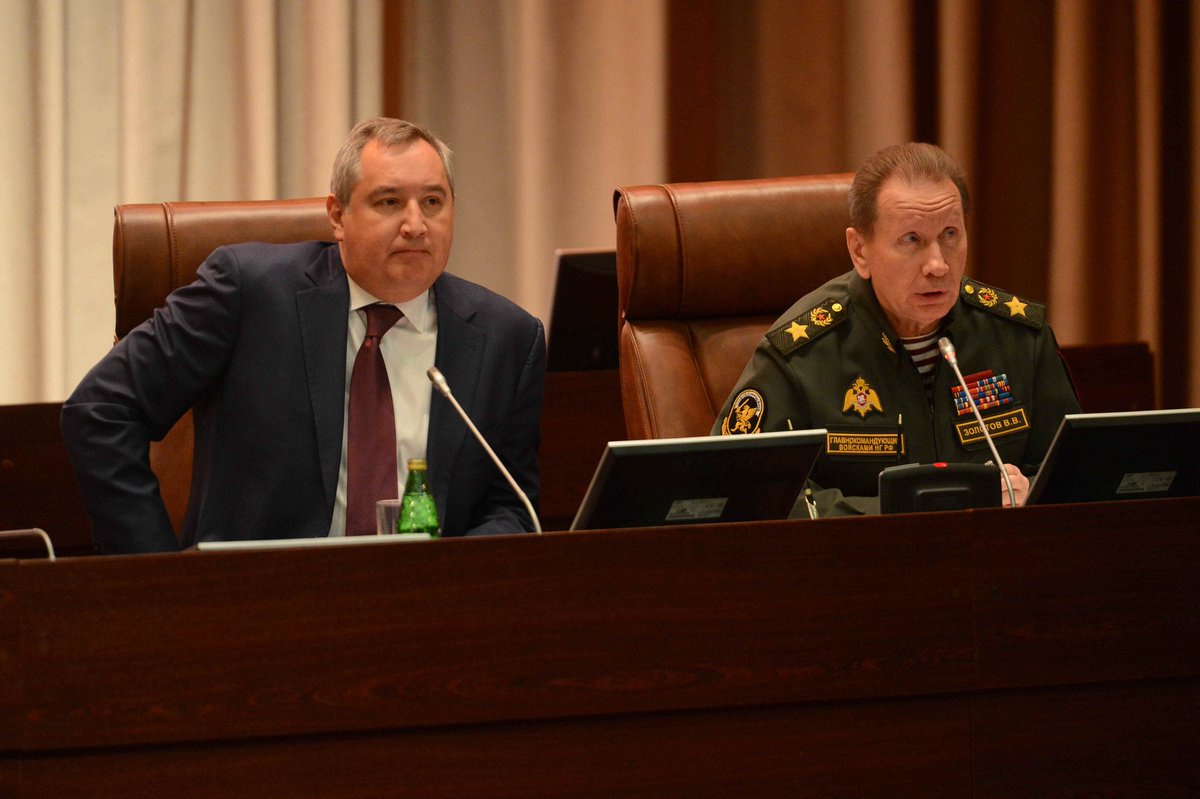
Dmitry Rogozin
World

Russian Social Media Users ‘Explain’ Mysterious Space Station Hole

by Staff Writer
October 2, 2018
Next Post
Sudan coup protest

Thousands Rally in Sudan Against Coup, Teargas Fired

LGBT Network Russia

Under Pressure, Russian LGBTQ Rights Group Vows to Soldier On

Recommended

The Fnideq (Morocco) - Ceuta (Spain) fence, located in northern Africa, is one of the main borders used by people on the continent to try to immigrate to the European Union. In September 2024, a massive attempt to cross the fence occurs, and the Moroccan police push back hundreds of people who head towards the Spanish exclave. In 2024, Spain receives 46,000 migrants.

Thousands Cross Into Spain’s North Africa Enclave in New Migrant Crisis

July 31, 2026
An armed Iranian police officer holding a rifle monitors the area as motorcyclists ride beneath a billboard depicting an AI-generated image of the Strait of Hormuz and an effigy of US President Donald Trump, displayed on the wall of a state building in downtown Tehran, Iran, on May 3, 2026.

US, Saudi Strike Iraq Alliance in Expanding War

July 29, 2026
Germany, Berlin, 26 july 2026, Gathering in tribute to the victims and all those affected by the attack on the 2026 CSD (Christopher Street Day/Pride) event, held at Pariser Platz.

Berlin LGBTQ Community Fears Far-Right ‘Exploitation’ of Pride Attack

July 27, 2026
AI chatbot applications.

Trump Under Pressure From All Sides Over Chinese AI Surge

July 24, 2026
Protesters gathered to condemn the detention of opposition leader of parliament, Rahul Gandhi, during a protest in New Delhi.

India Student Protests Keep Up Pressure on Modi Government

July 22, 2026
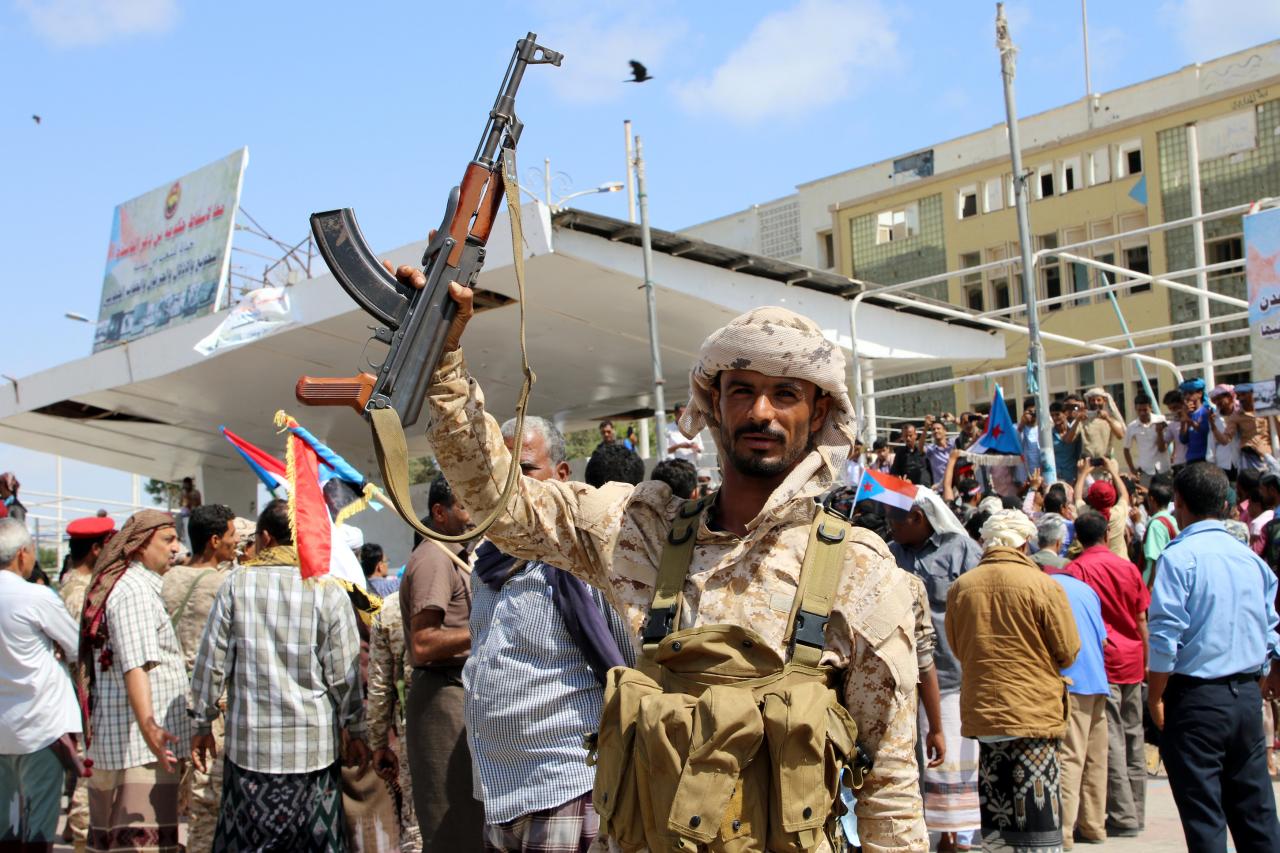
A southern Yemeni separatist fighter waves his rifle at the site of an anti-government protest in the port city of Aden, Yemen January 30, 2018.

Yemen’s Iran-Backed Houthis Announce Maritime Blockade of Saudi Arabia

July 20, 2026

Opinion

A Cuban street with a flag

Cuba Through a Pulse: Intimacy, Poverty, and the Shadow of Revolution

March 10, 2026
An Iranian walking in front of a wall painting of the Iranian flag in Tehran

Iran Can’t Dominate the Middle East Without Iraq

January 13, 2026
US President Donald Trump

Vladimir Trump and Blood for Oil

January 5, 2026
A trial COVID-19 vaccine

America’s Global Health Retreat Is a Gift to Its Rivals

November 12, 2025
Israeli Prime Minister Benjamin Netanyahu

UN Might Tolerate Netanyahu, and White House Might Welcome Him, But He’s Still Guilty of Genocide

September 30, 2025
Former President Donald Trump speaks at a Fox News Town Hall

Cruelties Are US

August 25, 2025
Facebook Twitter

Newsletter

Do you like our reporting?
SUBSCRIBE

About Us

The Globe Post

The Globe Post is part of Globe Post Media, a U.S. digital news organization that is publishing the world's best targeted news sites.

submit oped

© 2018 The Globe Post

No Result
View All Result
  • National
  • World
  • Business
  • Interviews
  • Lifestyle
  • Democracy at Risk
    • Media Freedom
  • Opinion
    • Editorials
    • Columns
    • Book Reviews
    • Stage
  • Submit Op-ed

© 2018 The Globe Post