


Since 9/11, aviation security continues to be a hot topic worldwide. A common premise seems to be “the bigger the better”: more screening of people and baggage, more surveillance of areas farther and farther away from points of departure, more uniformed and undercover security personnel, more organizations created to focus on keeping the traveling public safe, and more remote sensing and other technologies saturating the aviation environment making even the semblance of anonymity a fantasy.
And now, many terrorism experts are criticizing the Transportation Security Administration (TSA) for considering the elimination of passenger screening at small and medium-sized airports serving aircraft with 60 seats or less. They also criticize TSA for considering other initiatives which could reduce its budget by about $300 million. Even TSA itself suggests that such actions could render aviation at least somewhat less safe. What should the traveling public think about all of this?
Terrorists Don’t Care About Size
Terrorist attacks whether against aviation or anything else are psychological in nature. The goal is not to kill and injure people or destroy and damage infrastructure, but to psychologically affect those who survive or learn of the attacks. The means of the attacks are for a specific end: to influence people with the requisite ability and authority to act in a manner supporting the political, religious, and other ultimate desires of those behind the attacks.
So, the size of an airport or aircraft and the amount and type of death, injury, destruction, and damage are much less important than the meaning people give to these events. Attacks on the smallest venue and fewest number of people may yield the greatest psychological bang-for-the-buck from the terrorist perspective. Attacks on the largest venue and most people may not.
Overreliance on Technology
Most screening procedures have significant error rates. This is especially important in the context of terrorists just having to be successful once amidst multiple failures, while counterterrorists are labeled as failures for one slip-up amidst multiple successes.
These error rates come from multiple sources. Facial recognition systems often are severely challenged through incomplete databases, the ambient lighting of airports, simple human disguises, facial movement, and even changes in the pace of walking. Interviewing and interrogation procedures to detect terrorism-related deception often operate at chance levels. Finally, big data mining captures the past, not the present and future most relevant to deterring or countering a terrorist attack.
Intelligence Over Technology
The most valuable measures to support aviation security comprise intelligence activities, including collecting and analyzing information worldwide to get a better idea of what plots are afoot. They also include covert, clandestine, and counterintelligence operations especially those that infiltrate terrorist groups and influence potential terrorists for purposes of deterrence and lessening support for them.
Intelligence information, after being appropriately modified to protect sources and methods, should be securely and in a timely manner transmitted to those who plan, implement, and authorize aviation security activities.
However, some security authorities seem to be more fascinated with buying technologies and funding more personnel uncoupled with the implications of intelligence information. Some also seem to be primarily interested in building up and protecting their own political fiefdoms. Among security and intelligence personnel there is often enough the discounting, ignoring, and nonaddressal of individual rights and legitimate political activity among their targets.
Risk Versus Resources
When it comes to aviation or any security, there’s an infinite amount of threat: potential bad actors worldwide. There’s an infinite amount of vulnerability: all the things that can go wrong with people, infrastructure, and systems. And, thus, there’s an infinite amount of risk, like the integration of threat and vulnerability for any specific aircraft, airport, and flight. But there is only a finite amount of aviation security resources, like personnel, technologies, and budget.
Screening and Stereotypes
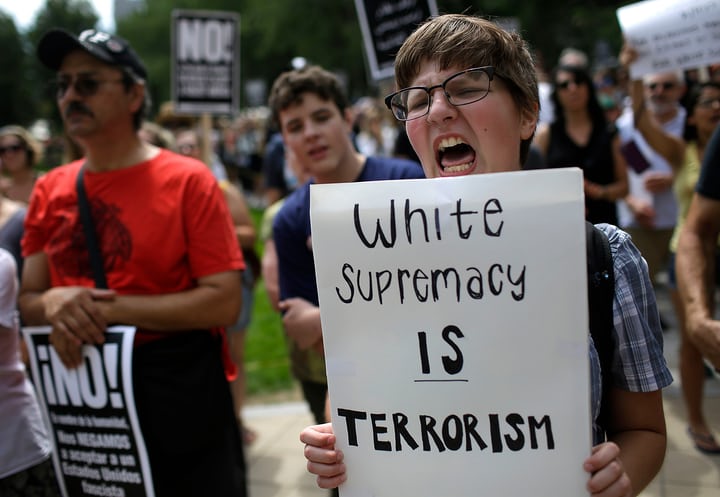
Throughout history, there has been significant tension between a focus on the effectiveness of security programs and the quantity and quality of individual and collective rights. Security programs too often are imbued – whether implicitly or explicitly, whether wittingly or unwittingly – with elements of racism, sexism, and other discriminations and stigmatizations.
Such programs ironically detract from their very effectiveness. They can create greater security risks from members of populations who are unfairly treated. They also can facilitate successful terrorist attacks by members of populations who are formally and wrongly identified as low risk. Careful selection and ongoing training of security personnel are vital to protect individual and collective rights and to prevent a perversion of rights from perverting security.
Is Bigger Better?
Returning to TSA, the elimination of passenger screening at small and medium-sized airports, and reducing its budget, we should now conclude as follows. TSA should continually assess its security programs to ensure intelligence information and security programs are linked and that this linkage is apparent in budgeting. Funds should be transferred among budget lines during a fiscal year so specific security technologies, other capabilities, and locations are best resourced to meet threat, vulnerability and risk.
Because intelligence is almost always incomplete, partially contradictory, and partially ambiguous, the combination of security programs employed will be to some degree intuited and guessed at. The same is true because of inevitable and often unknowable error rates in screening. This is not a negative reflection on TSA, but the inevitable consequence of its tough counterterrorism challenge.
So, does size matter?
Yes, but bigger isn’t always better. Security experts should right-size based on best estimates of threat, vulnerability, and risk. Moreover, TSA can have the opportunity to defuse the tension between security and rights. The right size will lead to protecting both.