

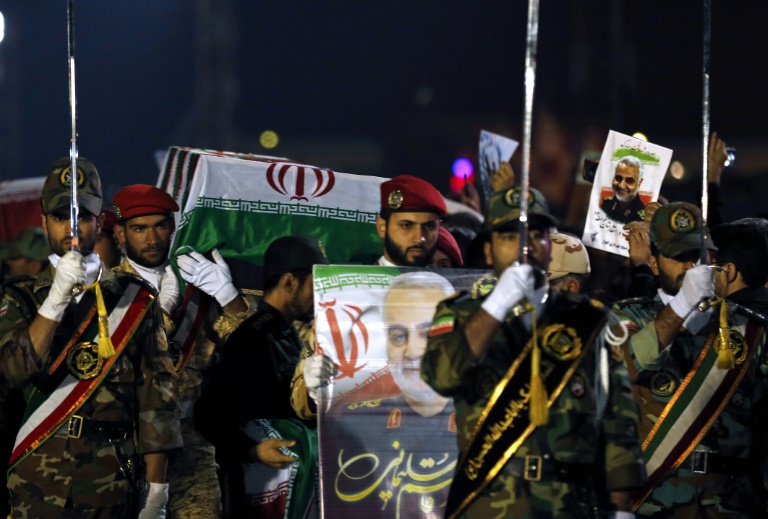
The U.S. drone strike that killed Iran’s Islamic Revolutionary Guard Corps Quds Force commander Qasem Soleimani sent shock waves across the Middle East.
The Islamic Republic’s threat of retaliation for the loss of its best-known military man was to be expected. The responses of other nations in the region have been in most cases as expected.
Far more troubling is the anger expressed by Iraq’s leaders – at whose capital city’s airport the conflagration occurred – followed by their seeking to expel American troops and even shut down the American embassy.
Responses to Soleimani’s Death
Syrians who had opposed Bashar al-Assad’s brutal regime and its patron Iran celebrated Soleimani’s demise because he had inflicted much suffering and dislocation.
Israel’s government, long under siege by Iran, cautiously “lauded” the US action.
Saudi Arabia, which has witnessed an escalation of attacks from the Iranian military and its proxies, called the American strike a response to “terrorist acts.”
The United Arab Emirates coupled “strongest condemnation” of the December 31 attack on the U.S. embassy in Baghdad with a call for “political solutions.”
A furious Iran threatened to avenge a US drone strike that killed a top Iranian commander in Baghdad on Friday, raising fears of a wider regional conflict between the arch-foes https://t.co/Cv9kQv8uSe pic.twitter.com/ty6JYkcJoG
— AFP news agency (@AFP) January 3, 2020
Egypt cautioned that “escalation should be prevented” while Turkey requested “all sides to act with common sense.”
Lebanese Hezbollah mourned Soleimani and threatened retaliation against the U.S. and Israel, for that group lost an important benefactor.
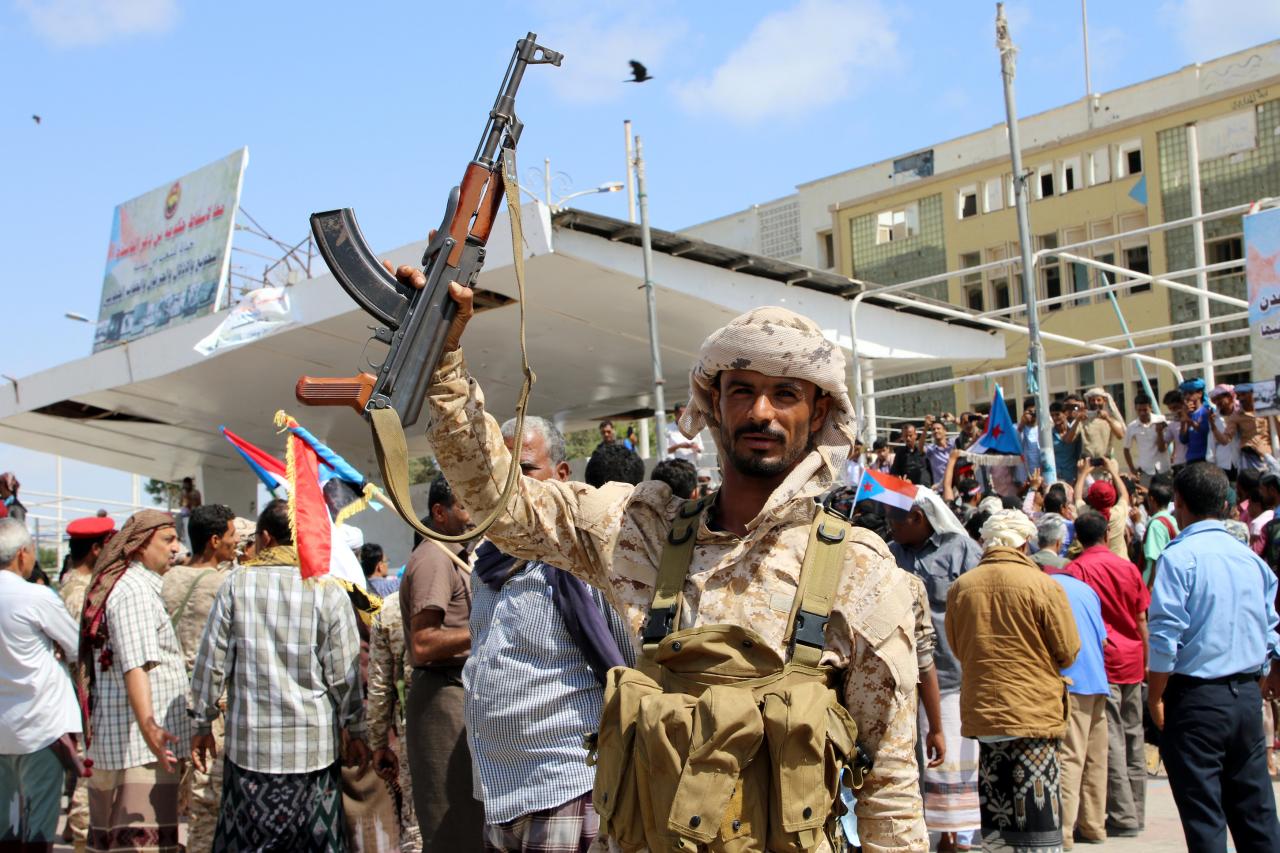
Yemen’s Houthi militia, who receive equipment from the Quds Force, eulogized Soleimani as a “martyr” and called for the expulsion of “the American occupier.”
The elimination of Soleimani and his Iraqi collaborator Abu Mahdi al-Muhandis, who led the Iran-allied Kataib Hezbollah militia, should have been greeted with relief by Iraq’s authorities. The opposite has ensued.
Iraq’s Misguided Response
Iraqi principals have emerged as vocal denouncers of the strike specifically and the U.S. broadly, second only to Iranian officials. Iraq’s caretaker Prime Minister Adel Abdul Mahdi declared that,
“the assassination of an Iraqi military commander who holds an official position is considered aggression on Iraq … and the liquidation of leading Iraqi figures or those from a brotherly country on Iraqi soil is a massive breach of sovereignty.”
Deputy Speaker Hassan al-Kabi demanded that the parliament make “decisive decisions that put an end to U.S. presence inside Iraq.”
PM @AdilAbdAlMahdi: The assassinations violate the conditions governing the presence of US forces in Iraq whose role is to train Iraqi forces and assist in the fight against Daesh as part of the Global Coalition, subject to the supervision and approval of the @IraqiGovt.
— Government of Iraq – الحكومة العراقية (@IraqiGovt) January 3, 2020
Iraq’s military Joint Operations Command, which benefits considerably from U.S. aid and training, announced it mourns those “martyred last night in a cowardly and treacherous attack carried out by American aircraft near Baghdad international airport.”
Even the country’s highly influential and usually moderate Grand Ayatollah, Seyyed Ali al-Sistani, characterized the drone strike as a “vicious attack” and an “insolent breach of Iraqi sovereignty.” The grand ayatollah’s son then received the coffins of Soleimani and al-Muhandis at the Imam Ali Shrine in Najaf, interpreted by many as a sign of deference to the authority of the Islamic Revolutionary Guard Corps and Kataib Hezbollah.
Kurds in Iraq
An official statement from the President of Iraq’s Kurdistan Region took a more balanced and pragmatic approach:
“Iraq must not become a battleground for other countries to settle their disputes. We urge them to solve their problems through dialogue and to respect Iraq and its sovereignty.”
The Kurds have preserved their autonomy largely due to American benefaction. Yet most of Iraq’s citizens received but squandered a unique opportunity, following the ouster of Saddam Hussein in 2003, to rebuild their country and society into a broadly representative, secular, prosperous, and safe nation.
Iran’s Influence in Iraq
Iran steadily expanded its political and religious influence inside Iraq after Washington removed Saddam Hussein. Iran sponsored and equipped violent paramilitaries. Those Shiite fighters, not only of Iraqi origin but recruited from Afghanistan, Central Asia, and Syria as well, have taken thousands of civilian lives and sundered Iraq along confessional and ethnic lines.
The Islamic Revolutionary Guard Corps, and especially its Quds Force directed by Soleimani, has been the primary driver of those deaths, societal fissures, and national instability. Iran, not the U.S., has made a mockery of Iraq’s sovereignty. Moreover, Iranian-backed attacks have cost U.S. forces over 600 fatalities to date inside Iraq.
Al-Muhandis’ Role
Soleimani had been met at Baghdad International Airport by members of Iraq’s Popular Mobilization Forces, including its deputy chief al-Muhandis.
Al-Muhandis began working as a Quds Force military adviser in Kuwait, where he masterminded attacks on the American and French embassies during 1983. Facing the death penalty in Kuwait, he fled to Iran, where he acquired citizenship, before returning to Iraq temporarily from 2003-2006 and permanently in 2011.
Despite serving as a Government of Iraq official, al-Muhandis and his militia participated in the siege of the U.S. embassy at Baghdad. Designated a terrorist organization, like the Islamic Revolutionary Guard Corps, by the U.S. government, al-Muhandis’ militia has violently inflicted Iran’s will upon Iraqi civilians.
Iraq’s Misplaced Outrage
After nearly two decades of foreign military, paramilitary, and political contests on their soil, in which they have actively partaken, Iraqis’ current outrage toward the U.S. for surgically removing two major figures of instability is both misdirected and at least in part feigned.
Iraq shares a long border with Iran and is its second-largest trading partner. Approximately 65 percent of Iraq’s population is Shiite, sharing longstanding religious ties with coreligionists in Iran.
Leaked documents reveal that Iranian cash, weapons, operatives, and information have elevated to power pro-Tehran political groups while quashing opponents. So, on January 5, with 179 of 329 members present, the parliament voted on a five-point non-binding resolution to cancel the agreement for assistance from the U.S.-led coalition in the fight against terrorism. Rational actors should ensure the resolution is just a warning gesture.
Dangers of Siding with Iran
Loyalty to and fear of Tehran’s clout combined with self-interest rather than national concern seems to be shaping the words and deeds of Iraq’s leaders and influencing the citizenry. Pushing out the U.S. is not a change for the better.
Iraq will not achieve self-governance, stability, and prosperity by siding with Iran, whose political system is theocratic, despotic, and intolerant of political, religious, ethnic, social, and intellectual diversity. Additionally, Iran’s economic structure is collapsing due to mismanagement and corruption.
Instead, Iraq will become a major staging ground for Tehran’s regional expansion while its human capital and mineral resources will be exploited to shore up the Islamic Republic.
Indeed, the Iraqi Kurdistan regional administration rightly warns “continuation of these complications, actions and reactions, will push Iraq and the region towards an abyss and an uncertain future.”