
• About Us
  • Who Are We
  • Work With Us
Friday, November 6, 2026
No Result
View All Result
The Globe Post
39 °f
New York
44 ° Fri
46 ° Sat
40 ° Sun
41 ° Mon
  • National
  • World
  • Business
  • Interviews
  • Lifestyle
  • Democracy at Risk
    • Media Freedom
  • Opinion
    • Editorials
    • Columns
    • Book Reviews
    • Stage
  • Submit Op-ed
  • National
  • World
  • Business
  • Interviews
  • Lifestyle
  • Democracy at Risk
    • Media Freedom
  • Opinion
    • Editorials
    • Columns
    • Book Reviews
    • Stage
  • Submit Op-ed
No Result
View All Result
The Globe Post
No Result
View All Result
Home Featured

Sino-Indian Relations Back on ‘Right Track’ After Months of Tension

Jinghong Chen by Jinghong Chen
09/06/17
in Featured, World
china-india, doklam border

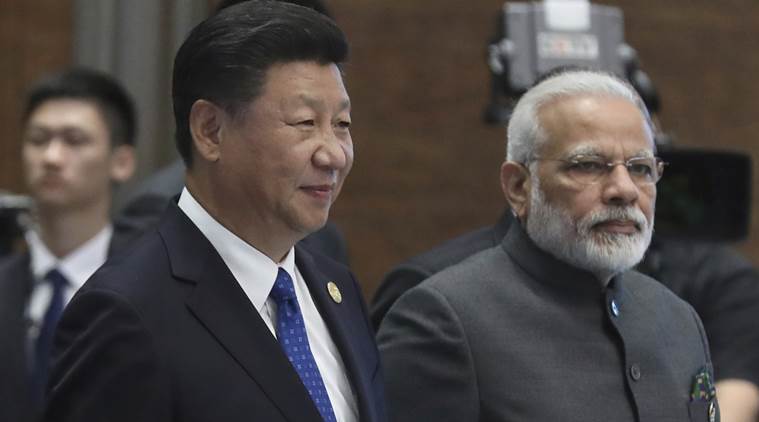
Chinese President Xi Jinping, left, and Indian Prime Minister Narendra Modi. Photo: AP

Share on FacebookShare on Twitter

As tensions between North Korea and the United States continued to dominate the headlines last week, a quieter months-long conflict between China and India was just resolved.

On Tuesday, Chinese President Xi Jinping and Indian Prime Minister Narendra Modi held official talks after a BRICS summit of emerging economies in Xiamen, China.

The talks came during a months-long military standoff in the Doklam border that was one of the most serious confrontations between the two countries in decades.

The dispute on the Doklam plateau began in mid-June after a Chinese road-building party entered the Doklam territory that is claimed both by China and Bhutan. India then sent in troops to assist Bhutan, claiming that China’s military existence threatened the security of India.

The Doklam territory is of strategic importance, as it overlooks the Siliguri Corridor which bridges India’s remote northeastern provinces and the rest of the nation.

“This time, China considered the ridge on which a road was constructed as its own territory, while for India and Bhutan affirmed that it was Bhutanese territory,” Claude Arpi, the Field Marshal KM Cariappa Chair of Excellence of the United Service Institution of India, told The Globe Post. “It was also the first time that India intervened militarily to defend a neighbor. This greatly infuriated China.”

Beijing responded that New Delhi has no right to intervene and called for a unilateral troop withdrawal.

In the early August, China’s defense ministry said in a statement: “No country should underestimate the Chinese military’s confidence in and ability to fulfill its mission of safeguarding peace, and should not underestimate the Chinese military’s determination and will to defend the country’s sovereignty, security and development interests.”

At the time, there were approximately 300 soldiers on each side facing each other from a distance of about 150 meters.

“The difficulty was to avoid an armed conflict which would not have benefited anybody; at the same time, none of the [countries] was ready to lose face,” Mr. Arpi said.

On August 28, India and China agreed to withdraw troops to end the dispute. The Indian government said that it had agreed to an “expeditious disengagement” along the border, pulling its troops from the territory.

Neither Beijing nor New Delhi mentioned whether the construction of the road near the border, which triggered the standoff, would be halted.

“Ultimately, China and India have to live together; it is in the interest of both nations to have a peaceful border,” Mr. Arpi said. “Though India’s and China’s final statement differed, this point is agreed by both parties.”

The two countries, which hold 36 percent of the world’s population, agreed to move on from the dispute and maintain “healthy, stable ties” in the fundamental interests of both nations.

“China and India should stick with the fundamental judgment that both can provide development opportunities for each other and neither should pose threats toward each other,” Mr. Xi said during Tuesday’s meeting, according to the official Xinhua News Agency.

India’s Foreign Secretary Subrahmanyam Jaishankar also said in a press briefing that both leaders wanted to prevent the recurrence of similar standoffs.

“Both sides agreed that there should be better communication and cooperation so that such occurrences don’t happen again,” he said.

Yet Mr. Arpi suggested that similar disputes might occur again as there are several differences of perceptions about the Line of Actual Control along the Sino-Indian border. The maps of these perceptions have never been exchanged.

“An exchange of maps could be a first step to more permanently diffuse the situation. China is apparently opposed to it,” Mr. Arpi said. “This said, many mechanisms exist to avoid such situation, particularly the Border Personnel Meeting. They worked relatively well, though their limitations were apparent.”
ShareTweet
Jinghong Chen

Jinghong Chen

Related Posts

Lai Ching-te attends an inaugural ceremony as president of Taiwan
Featured

China’s ‘Growing Authoritarianism’ Won’t Stop With Taiwan: Lai

by Staff Writer with AFP
August 29, 2024
A protester reacts from tear gas fired by police during a 2019 pro-democracy march in Hong Kong
Democracy at Risk

Rare Hong Kong Protest Sounds Alarm on New Security Law

by Staff Writer with AFP
February 27, 2024
Chinese President Xi Jinping listens to a speech
World

Pacific Nation Nauru Cuts Ties to Taiwan, Switches to China

by Staff Writer with AFP
January 16, 2024
Taiwan's President Tsai Ing-wen
Democracy at Risk

Possible Scenarios for a Chinese Invasion of Taiwan

by Staff Writer
January 9, 2024
Doctors attended to quake survivors with mild injuries at the Jishishan County People's Hospital
World

China Quake Survivors Recover in Hospitals as Toll Rises to 135

by Staff Writer with AFP
December 21, 2023
Chinese President Xi Jinping
World

China Announces ‘Strategic Partnership’ With Syria

by Staff Writer
September 22, 2023
Next Post
Turkey prisons, Gulen movement, purge victims, gulenists

Turkey Is Building 50 New Prisons For Gulenists

DACA, protest, dreamers

Ending DACA: Too Many Losses For US

Recommended

The Fnideq (Morocco) - Ceuta (Spain) fence, located in northern Africa, is one of the main borders used by people on the continent to try to immigrate to the European Union. In September 2024, a massive attempt to cross the fence occurs, and the Moroccan police push back hundreds of people who head towards the Spanish exclave. In 2024, Spain receives 46,000 migrants.

Thousands Cross Into Spain’s North Africa Enclave in New Migrant Crisis

July 31, 2026
An armed Iranian police officer holding a rifle monitors the area as motorcyclists ride beneath a billboard depicting an AI-generated image of the Strait of Hormuz and an effigy of US President Donald Trump, displayed on the wall of a state building in downtown Tehran, Iran, on May 3, 2026.

US, Saudi Strike Iraq Alliance in Expanding War

July 29, 2026
Germany, Berlin, 26 july 2026, Gathering in tribute to the victims and all those affected by the attack on the 2026 CSD (Christopher Street Day/Pride) event, held at Pariser Platz.

Berlin LGBTQ Community Fears Far-Right ‘Exploitation’ of Pride Attack

July 27, 2026
AI chatbot applications.

Trump Under Pressure From All Sides Over Chinese AI Surge

July 24, 2026
Protesters gathered to condemn the detention of opposition leader of parliament, Rahul Gandhi, during a protest in New Delhi.

India Student Protests Keep Up Pressure on Modi Government

July 22, 2026
A southern Yemeni separatist fighter waves his rifle at the site of an anti-government protest in the port city of Aden, Yemen January 30, 2018.

Yemen’s Iran-Backed Houthis Announce Maritime Blockade of Saudi Arabia

July 20, 2026

Opinion

A Cuban street with a flag

Cuba Through a Pulse: Intimacy, Poverty, and the Shadow of Revolution

March 10, 2026
An Iranian walking in front of a wall painting of the Iranian flag in Tehran

Iran Can’t Dominate the Middle East Without Iraq

January 13, 2026
US President Donald Trump

Vladimir Trump and Blood for Oil

January 5, 2026
A trial COVID-19 vaccine

America’s Global Health Retreat Is a Gift to Its Rivals

November 12, 2025
Israeli Prime Minister Benjamin Netanyahu

UN Might Tolerate Netanyahu, and White House Might Welcome Him, But He’s Still Guilty of Genocide

September 30, 2025
Former President Donald Trump speaks at a Fox News Town Hall

Cruelties Are US

August 25, 2025
Facebook Twitter

Newsletter

Do you like our reporting?
SUBSCRIBE

About Us

The Globe Post

The Globe Post is part of Globe Post Media, a U.S. digital news organization that is publishing the world's best targeted news sites.

submit oped

© 2018 The Globe Post

No Result
View All Result
  • National
  • World
  • Business
  • Interviews
  • Lifestyle
  • Democracy at Risk
    • Media Freedom
  • Opinion
    • Editorials
    • Columns
    • Book Reviews
    • Stage
  • Submit Op-ed

© 2018 The Globe Post