

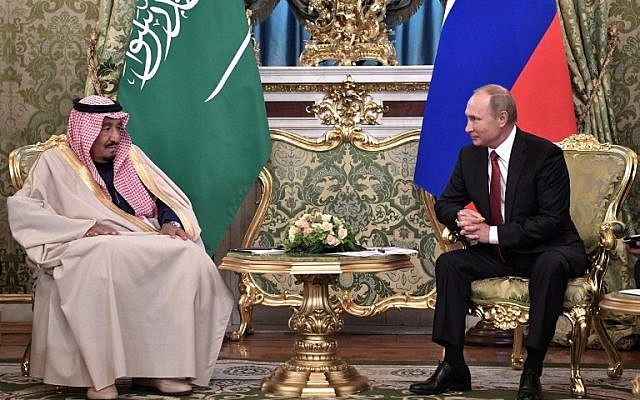
King Salman of Saudi Arabia recently concluded the first-ever official visit of a head of state of his country to Russia. Decades ago, at the height of the Cold War and the oil kingdom’s dependence on the U.S. for its security, such a visit would have been highly unlikely.
Today, however, the real question for the Saudi leadership regarding its traditional superpower ally’s modern rival would be “why not” explore better ties to Moscow. The Saudi high-level trip to Russia is part of a broader strategy of the Kingdom’s global assertiveness founded on three bases of recent political consolidation, a general reorientation away from oil-based stability, and, above all, getting much of what it wants from the United States.
The Saudi king’s appointment of his 32-year-old son Mohammed as crown prince, Minister of Defense, and Deputy Prime Minister may be the largest consolidation of power and a political shake-up in the country’s modern history, with likely long-term implications. Saudi Arabia’s new leadership has made rapid strides to establish tight political control with plans to move forward an ambitious reshaping of the country away from some aspects of past social conservatism in favor of a more economically-diverse, nationalistic, and muscular Arab regional power.
The Saudi move to tighten political control in the service of a less oil-driven formula for socioeconomic stability is common throughout Arab Gulf states, whose leaderships are well-aware of the long-term unviability of nations sustaining themselves mostly through petroleum revenues.
The shock waves that the overthrow of long-term Arab regimes in Tunisia, Egypt and elsewhere sent to the Arab Gulf resulted in an acceleration of Gulf states’ plans to simultaneously centralize their rule and provide a new formula for long-term economic and political pride for their citizens. In the case of Saudi Arabia, the richest and, by far, the most populous of the Gulf Arab countries, this new formula for the rule must have a strong foreign policy component.
The Saudis have long exercised soft power in the Arab Gulf by virtue of their country’s size and the coordinating mechanism of the Gulf Cooperation Council. This is why Qatar’s efforts in the past decade to establish its own set of global policies have vexed its larger neighbor’s leaders.
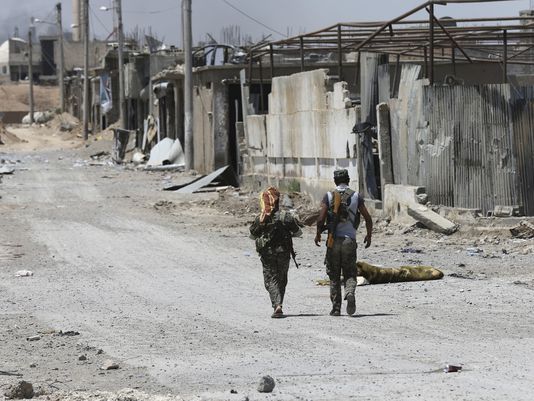
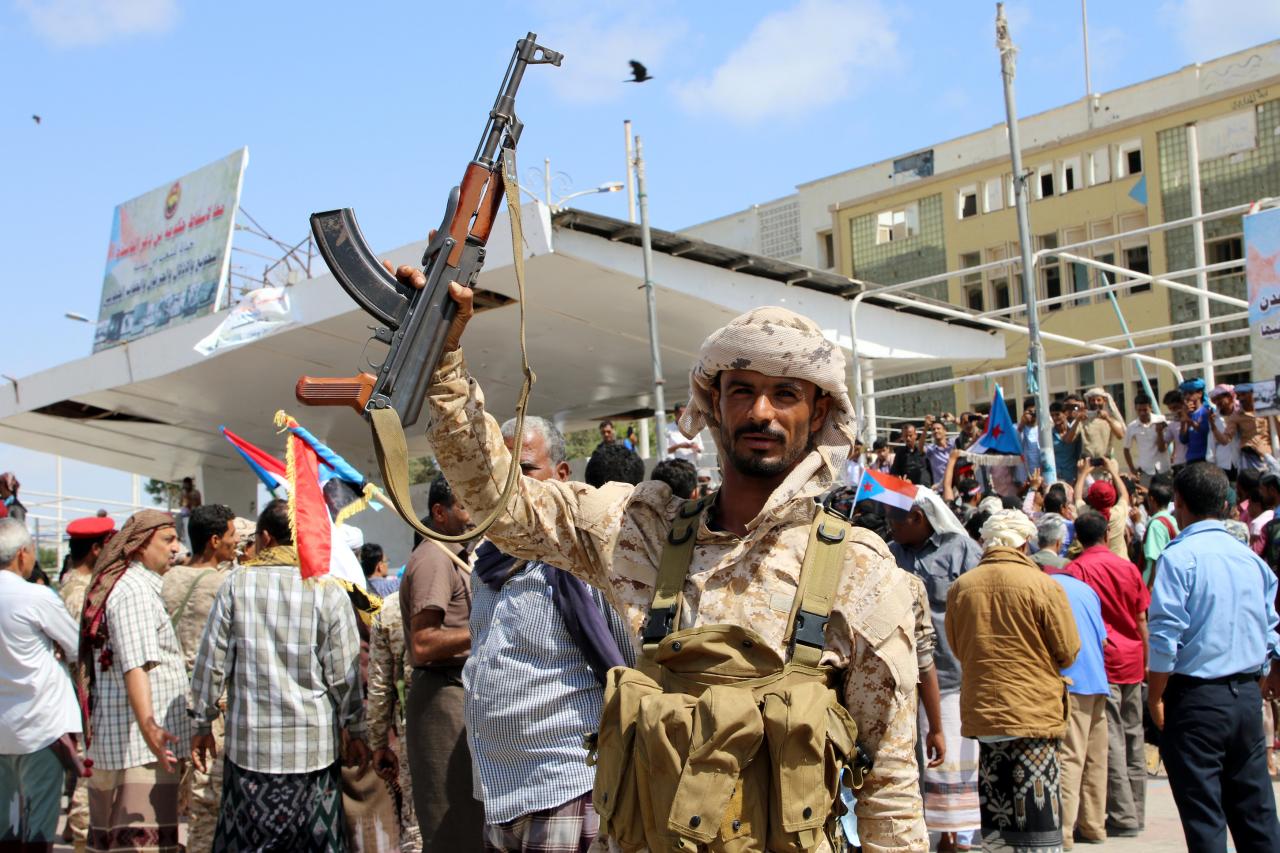
Yet, with internal political consolidation and diversification away from oil-revenue-based identity, comes a more robust and active Saudi foreign policy. Saudi foreign policy has included not only intensified efforts to be the leading Arab power in the Gulf region, but a willingness to use force and its own citizens to achieve this goal. This makes sense of the Kingdom’s ongoing war to try to establish unified Sunni Muslim control in Yemen.
Indeed, the war in Yemen is part of Saudi Arabia’s major challenge in dominating the Gulf region in the name of Sunni Islam, its long-standing enmity to the Shi’a Muslim non-Arab power of Iran. Saudi elites have long seen Iran as the most dangerous state in the Middle East, an ideological and geostrategic threat to its efforts to be the most influential theocratic and economic power in the region.
If Western countries’ deal with Iran to check its nuclear weapons program has largely contained one aspect of Tehran’s global ambition, it also led Saudi Arabia to amplify its own efforts to confront Iran directly and indirectly, through a more generally aggressive foreign policy.
It is easy to see new Saudi leaders’ assertiveness abroad, and particularly its recent diplomatic thaw with Russia, as part of a general dissatisfaction with a match between its foreign policy goals and Western countries, especially the United States. This may indeed be the case, and the prospect of warmer American links to Iran that the nuclear agreement raised may have particularly roiled Riyadh.
Nonetheless, one important aspect of shifting and muscular Saudi foreign policy is that it actually has gotten much of what it wants, and as much as it likely can, from Washington. The Trump administration’s less active foreign policy in general, and significantly decreased concern for global human rights and democratization in particular, gives the Saudi government more breathing room domestically and in regional politics.
This was quite evident in the support and enthusiasm for Saudi Arabia, and its efforts to combat Islamic extremism, a vague term to be sure, that the U.S. president demonstrated in his visit to the Kingdom in May.
In the one area in which U.S. military capacity is most critical to Saudi Arabia, its war in Yemen, the White House has given significant logistical and political support, to an extent that worries some Washington insiders. And, while President Donald J. Trump himself is learning that the nuclear deal with Iran is too well-regarded in Europe and among key domestic American actors to be scrapped, he has made no secret of his unwillingness to take any further steps to improve U.S. relations with Tehran.
Increased Saudi success in foreign policy requires further progress towards deterring Iran’s political assertion in the Middle East, as well as a calming in Syria’s ongoing devastation to increase the broader pattern of renewed authoritarian stabilization in the Middle East. Such stabilization benefits Riyadh’s particular ability to use its oil wealth to fund infrastructural projects and other initiatives in Sunni Arab states that increase its significance.
However, the Trump administration’s scaled-down diplomatic ambitions and positive global image, as well as Moscow’s close ties to both Iran and Syria’s newly-relevant Bashar al-Assad, underscore the merit of a Saudi move to include Russia in its plan to amplify its foreign policy ambitions.
Ironically, therefore, the most telling conclusion from Saudi Arabia’s stepped-up foreign policy visibility, and particularly its recent rapprochement with Russia, is the further evidence it provides of declining U.S. global influence and relevance during the Trump administration.