

As the latest horrific attacks in Spain have made clear, the persistent popularity of jihadist teachings has sustained an unprecedented wave of terrorism across Europe in the past few years. Unfortunately, media coverage has often overlooked the fact that most attacks on Europe have been committed by young men who were raised in Europe—and not in their countries of familial origin.
Encouraged by ISIS, and to a lesser extent, Al Qaeda, deep societal factors have cemented radical ideology within some Muslim communities in Europe, especially among North Africans in France, Belgium, Spain, Germany and Italy.
The heritage of these attackers has been blamed as a primary reason, but the real cause lies with ongoing conflicts in Syria and Iraq, the ascendance of radical ideology worldwide, and its attraction for disenfranchised communities in Europe.
A sense of marginalization plagues some European Muslims who lack the tools to respond to religious, cultural and identity crises, worsened by the rise of xenophobia and racism on the continent. And this disconnect only worsens public perception of Arabs, and leads to the suggestion that their origin in countries like Morocco, Algeria and elsewhere is somehow the primary cause.
In these circumstances, some young European Muslims, faced with discrimination, academic failure and unemployment, choose a life of criminality and delinquency, filling prisons where many become radicalized by extremists.
Others, undergoing an identity crisis, have sought refuge in mosques run by Islamic radical movements that progressively direct their recruits towards Salafi jihadism, which holds Europe and Christians in general responsible for the decline of Islamic civilization.
The majority of recent attacks in Europe have originated with young European terrorists of Maghrebi origin—from Morocco, Algeria, Tunisia and Libya—whose sole link to North Africa is their parents’ or grandparents’ native origins. Although there are exceptions, these youth generally live in precarious conditions, having failed in school and struggled to find employment. Criminality is often their best option.
The operatives behind the November 2015 attacks in Paris were, for instance, born and raised in either France or Belgium. Abdelhamid Abaaoud, a native Belgian, was reportedly the mastermind of those attacks. We saw the same scenario only couple of months later, in the March 2016 attacks in Brussels of young Belgians of Moroccan origin who nurtured no connection to Morocco: suicide bomber Najim Laachraoui, who grew up in Belgium, along with Belgian-born Mohamed Abrini and brothers Khaled El Bakkraoui and Brahim El Bakkraoui.
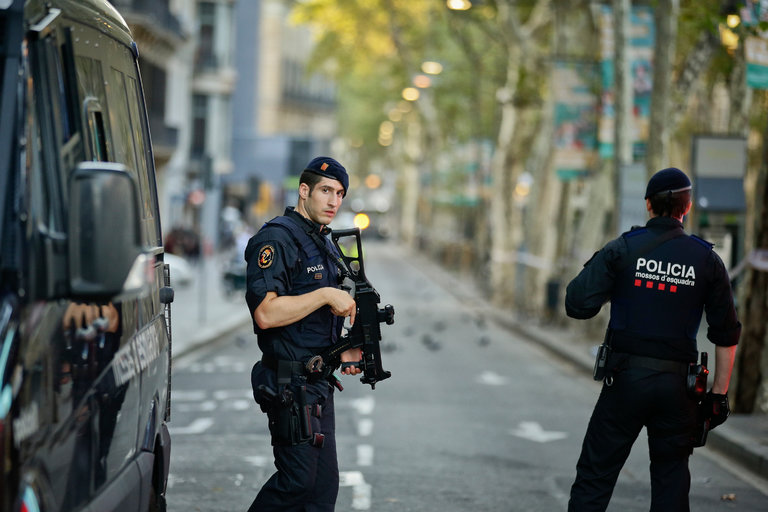
Most recently, the August 2017 attacks in Barcelona and Cambrils were perpetuated by a terrorist cell of 12 individuals of Moroccan origin, aged between 17 and 44 and established in Spain. Almost all moved to Spain at a very young age: Mohamed Hou Chemlal; brothers Hichamy Omar and Mohamed Omar; brothers El Houssaine and Younes Abouyaaqoub and brothers Aalla, Youssef and Mohamed Said. Moussa Oukabir was born in Spain, while his brother Driss also moved there when he was 10.
The majority of terrorists attacking Europe have been disconnected from the birth countries of their parents. Yet media coverage paints these attacks as somehow a result of the attackers’ heritage, rather than extreme ideology that evolved as a result of their peripheral status in the societies they were raised in. It’s not accurate to demonize country of origin and hold nations such as Morocco accountable for crimes perpetuated by individuals who were raised, and often born, in Europe.
In Europe, North African youth continue to face discrimination and social and economic pressures, which lead to frustration and marginalization. All these factors combine to make Islamic radicalism and violence more attractive.
The unfounded stigmatization of Morocco and other nations as exporters of terrorism assumes a genetic or societal predisposition for violence in those countries, whereas these criminals have been radicalized in their own countries.
The push to blame religion, immigration policy and national origin is therefore misguided, whereas the terrorism that plagues Europe is largely a byproduct of youth who have been radicalized in prisons and mosques, through operational intermediaries who encourage “jihad” in social media. As we have seen in Syria, Iraq and numerous other countries, this ideology is a global cancer that does not discriminate by national origin. And, as many Muslims have stated publicly, terrorism is not a tenet of Islam.
Rather than vilify countries and nationalities, it would be more effective to focus on the global trend of jihadism and discover why youth are drawn to it, and continue to foster the strong dynamic of cooperation between security actors in Europe, Morocco and other nations to thwart terrorist attacks fomented by extremist groups like ISIS and their sympathizers.
Disclaimer: The views and opinions expressed here are those of the author and do not necessarily reflect the editorial position of The Globe Post.