• About Us
  • Who Are We
  • Work With Us
Saturday, November 7, 2026
No Result
View All Result
The Globe Post
39 °f
New York
44 ° Fri
46 ° Sat
40 ° Sun
41 ° Mon
  • National
  • World
  • Business
  • Interviews
  • Lifestyle
  • Democracy at Risk
    • Media Freedom
  • Opinion
    • Editorials
    • Columns
    • Book Reviews
    • Stage
  • Submit Op-ed
  • National
  • World
  • Business
  • Interviews
  • Lifestyle
  • Democracy at Risk
    • Media Freedom
  • Opinion
    • Editorials
    • Columns
    • Book Reviews
    • Stage
  • Submit Op-ed
No Result
View All Result
The Globe Post
No Result
View All Result
Home Featured

Beyond Referendum: How Should an Independent Kurdistan Be Different?

Tyler Fisher by Tyler Fisher
10/01/17
in Featured, Opinion
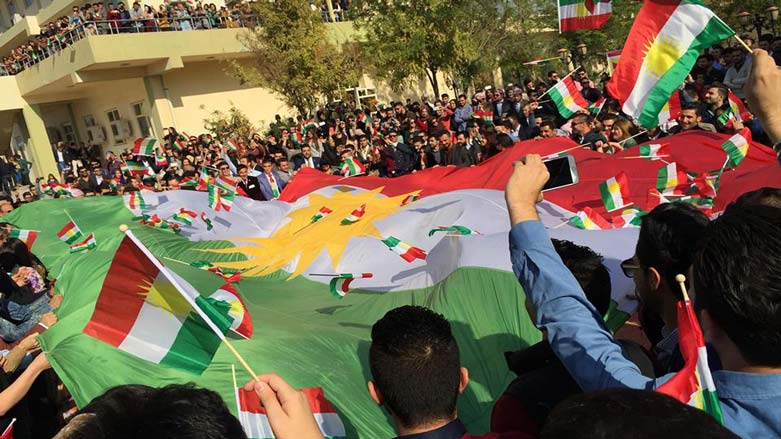
Kurdistan voted to become independent in last week's referendum.

Kurdistan voted to become independent in last week's referendum.

Share on FacebookShare on Twitter

The oft-repeated observation, that the Kurds are the world’s largest ethnic group without a nation-state of their own, might very soon be out of date. Following a referendum on Sept. 25, the Kurdish Regional Government (KRG) has announced the results strongly in favor of secession from Iraq: 92% said ‘Yes’. Culturally and linguistically distinct, Kurdistan (literally, the land of the Kurds) already exercises a significant degree of autonomy. Kurdish ethnicity is driving this referendum. Ethnicity underlies its purpose and parameters, as well as the problems it may provoke.

Culturally and linguistically distinct, Kurdistan (literally, the land of the Kurds) already exercises a significant degree of autonomy. Kurdish ethnicity is driving this referendum. Ethnicity underlies its purpose and parameters, as well as the problems it may provoke.

Increasingly functioning as a proto-state since the overthrow of Saddam Hussein, the Kurdistan Region of Iraq has, in fact, become virtually sovereign. It has nearly all the trappings of statehood: its own capital, its own president and parliament, flag, education system, official holidays, military and borders — though some borders remain in dispute with the Iraqi federal government in key areas. A separate currency and diplomatic recognition by the international community are conspicuously missing from this list.

Indeed, the international community has largely and vociferously opposed the referendum. In addition to threats of aggressive counter-measures by Iraq, Iran and Turkey, the United Nations, European Union and the United States have all questioned the timing of the referendum and have issued statements in support, instead, of Iraq’s territorial integrity and unity.

What little unity Iraq may possess is fundamentally artificial, of course, as factitious today as when the country’s borders were drawn up by the global powers a century ago, imposing artificial unity and artificial divisions. Within its borders, geographies of tribe and creed more often prevail. Kurdistan itself corresponds to these. Consult almost any map (in English) that predate the First World War, and Kurdistan appears, even where the name Iraq is absent as a political entity.

Thus, while the international community calls for maintaining the status quo, Kurdish voters are delivering a robust answer: the status quo, their vote declares, is historically and actually fractured, and the referendum is, in a sense, simply acknowledging the fault lines. Recognizing, politically, the disunity and irreconcilable differences with Baghdad need not provoke further unrest in the region. It is a step towards underscoring, de jure, a disintegration that has already taken place de facto.

An independent Kurdistan would do well, however, to remember its own tortured history, its struggle towards self-determination under the thumb of presumptions and impositions of national unity. The Kurdistan Region of Iraq is home to a fragile mosaic of ethnic minorities, including Arabs, Armenians, Assyrians, Turkmens, and Yezidis, and their presence is especially pronounced in disputed territories. Political disenfranchisement of these minorities, whether real or only perceived, must be

Political disenfranchisement of these minorities, whether real or only perceived, must be carefully, conscientiously averted. The land of the Kurds must also be a land for these people groups who do not necessarily identify as Kurds, although their roots in the region also run deep. Strong reassurances to this end from the current leadership — and, more importantly, written into any foundational constitution — will be essential. In a seeming paradox, an independent Kurdistan will likely need to allow, even cultivate, a form of ethnic federalism in order to avoid balkanization.

The referendum is ultimately non-binding, and Kurdistan will not transform into a fully autonomous state overnight, but the referendum gives the KRG a robust, democratic mandate by which to negotiate territory and natural resources when crafting the terms of an inevitable independence.

It will be little short of a geopolitical miracle if that independence peacefully ushers in a truly pluralistic society and bastion of human rights. But the peoples of Kurdistan take pride in their difference. May they prove different in this as well.
ShareTweet
Tyler Fisher

Tyler Fisher

Member of Board of Advisors at the Soran University in Iraqi Kurdistan.

Related Posts

Scottish independence activists rally to call for a second referendum, 2016.
Featured

Scottish Leader Threatens Independence Referendum in Case of No Deal Brexit

by Staff Writer
July 25, 2019
Egypt President Abdel Fattah el-Sisi
Democracy at Risk

Egyptians Vote in Referendum to Extend Sisi’s Rule

by Staff Writer
April 20, 2019
People wave pro-independence Catalan flags 'Esteladas' while holding letters reading 'independence' during a pro-independence demonstration in Barcelona, Spain
Featured

Road Blocks, Strike in Catalonia Against Separatists’ Trial

by Staff Writer
February 21, 2019
A Kurd holds up a flag saying 'Kurdistan'
Opinion

Kurds and Turkish-Cypriots: Shared Destiny, Common Struggle

by Ferran Taberner
October 17, 2018
A member of the LGBT community holds a rainbow flag while waiting for the results of the anti-gay-marriage referendum in Romania.
Opinion

Romania’s Referendum Proves LGBT Citizens’ Rights are Far from Protected

by Radzhana Buyantueva
October 14, 2018
Catalonia, Catalan, Catalan independence, Catalan referendum, Spain, Guardia Civil
World

Million Catalan Separatists Rally in Barcelona in Show of Strength

by Staff Writer
September 11, 2018
Next Post
China, North Korea, crisis, missile threat

China Orders North Korean Enterprises to Close Within 120 Days

Kurdistan, Iraq, referendum, independence, Turkey, instability, independence referendum, Falah Mustafa, Kurdistan referendum

Operations Against ISIS in Iraq Unaffected by Kurdistan Referendum

Recommended

The Fnideq (Morocco) - Ceuta (Spain) fence, located in northern Africa, is one of the main borders used by people on the continent to try to immigrate to the European Union. In September 2024, a massive attempt to cross the fence occurs, and the Moroccan police push back hundreds of people who head towards the Spanish exclave. In 2024, Spain receives 46,000 migrants.

Thousands Cross Into Spain’s North Africa Enclave in New Migrant Crisis

July 31, 2026
An armed Iranian police officer holding a rifle monitors the area as motorcyclists ride beneath a billboard depicting an AI-generated image of the Strait of Hormuz and an effigy of US President Donald Trump, displayed on the wall of a state building in downtown Tehran, Iran, on May 3, 2026.

US, Saudi Strike Iraq Alliance in Expanding War

July 29, 2026
Germany, Berlin, 26 july 2026, Gathering in tribute to the victims and all those affected by the attack on the 2026 CSD (Christopher Street Day/Pride) event, held at Pariser Platz.

Berlin LGBTQ Community Fears Far-Right ‘Exploitation’ of Pride Attack

July 27, 2026
AI chatbot applications.

Trump Under Pressure From All Sides Over Chinese AI Surge

July 24, 2026
Protesters gathered to condemn the detention of opposition leader of parliament, Rahul Gandhi, during a protest in New Delhi.

India Student Protests Keep Up Pressure on Modi Government

July 22, 2026
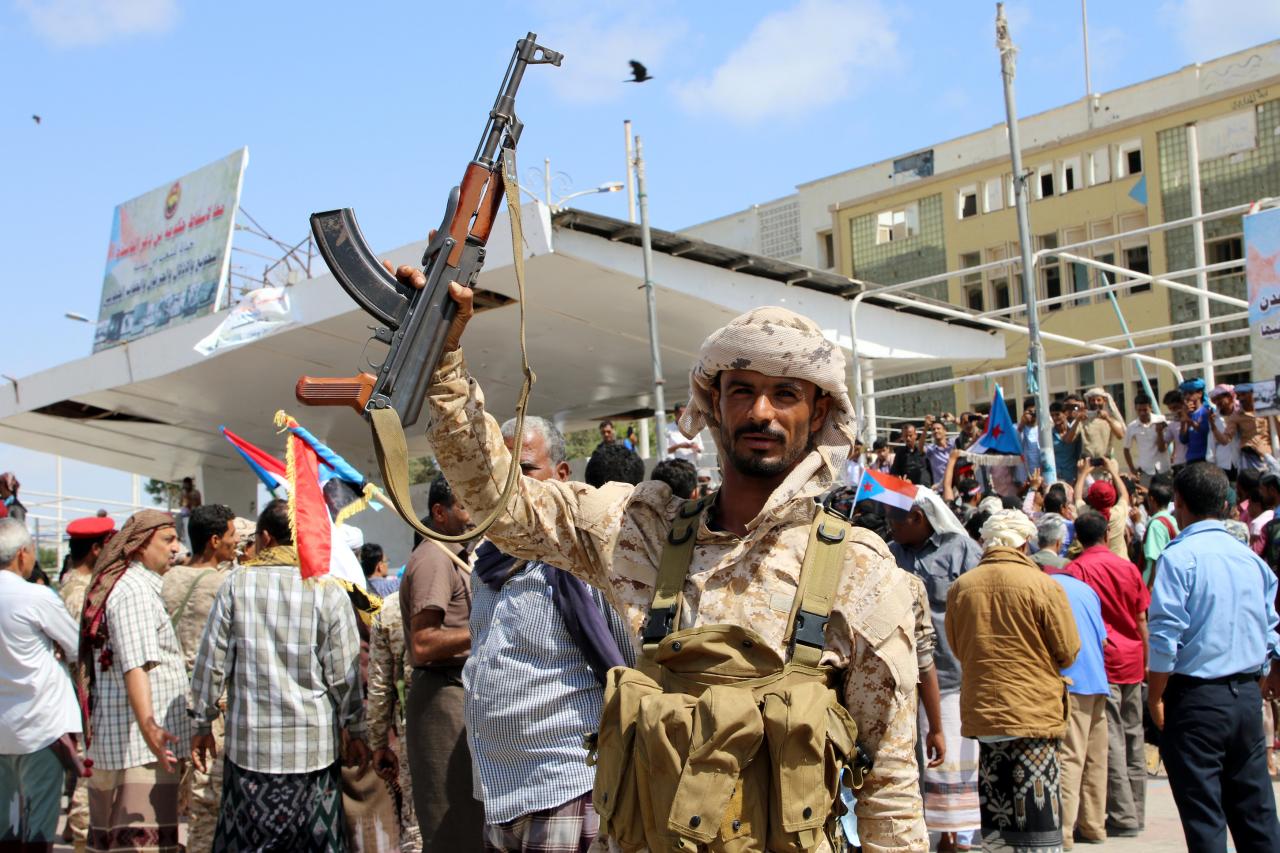
A southern Yemeni separatist fighter waves his rifle at the site of an anti-government protest in the port city of Aden, Yemen January 30, 2018.

Yemen’s Iran-Backed Houthis Announce Maritime Blockade of Saudi Arabia

July 20, 2026

Opinion

A Cuban street with a flag

Cuba Through a Pulse: Intimacy, Poverty, and the Shadow of Revolution

March 10, 2026
An Iranian walking in front of a wall painting of the Iranian flag in Tehran

Iran Can’t Dominate the Middle East Without Iraq

January 13, 2026
US President Donald Trump

Vladimir Trump and Blood for Oil

January 5, 2026
A trial COVID-19 vaccine

America’s Global Health Retreat Is a Gift to Its Rivals

November 12, 2025
Israeli Prime Minister Benjamin Netanyahu

UN Might Tolerate Netanyahu, and White House Might Welcome Him, But He’s Still Guilty of Genocide

September 30, 2025
Former President Donald Trump speaks at a Fox News Town Hall

Cruelties Are US

August 25, 2025
Facebook Twitter

Newsletter

Do you like our reporting?
SUBSCRIBE

About Us

The Globe Post

The Globe Post is part of Globe Post Media, a U.S. digital news organization that is publishing the world's best targeted news sites.

submit oped

© 2018 The Globe Post

No Result
View All Result
  • National
  • World
  • Business
  • Interviews
  • Lifestyle
  • Democracy at Risk
    • Media Freedom
  • Opinion
    • Editorials
    • Columns
    • Book Reviews
    • Stage
  • Submit Op-ed

© 2018 The Globe Post