
• About Us
  • Who Are We
  • Work With Us
Saturday, September 5, 2026
No Result
View All Result
The Globe Post
39 °f
New York
44 ° Fri
46 ° Sat
40 ° Sun
41 ° Mon
No Result
View All Result
The Globe Post
No Result
View All Result
Home Opinion

Can Catalan Independence Break on Through to Other Side?

Andrew Dowling by Andrew Dowling
09/15/18
in Opinion
People wave pro-independence Catalan flags 'Esteladas' while holding letters reading 'independence' during a pro-independence demonstration in Barcelona, Spain

On September 11, 2018, around one million Catalans rallied in Barcelona in a show of support for independence nearly a year after a failed attempt to break away from Spain. Photo: AFP

Share on FacebookShare on Twitter

For the seventh year in a row, the Catalan independence movement has once again demonstrated an extraordinary capacity for mobilization. Since 2011, every September 11 the movement has been able to bring around one million people onto the streets, usually of Barcelona. This is perhaps the single most important distinguishing characteristic of the push for Catalan sovereignty. There are few, if any, movements able to sustain such capacity for demonstration, year by year.

Yet paradoxically this annual commemoration is expressive of both the movement’s strengths and its weakness. The Catalan independence movement has built an optimistic narrative about the ease of separation from Spain. This optimistic story is celebratory and found full expression every September 11. Next year is always going to be the year of separation. Optimism was also evident in the belief that Catalonia could depart from Spain un-traumatically and would be welcomed with open arms as a new member state of the European Union. Finally, even though pro-sovereignty forces won parliamentary elections in Catalonia in 2015

online pharmacy purchase anafranil online no prescription

with 47 percent of the vote, the movement told itself that this was enough.

This eternally optimistic narrative clashed with political reality on 1 October 2017. After another vast demonstration on September 11 preparation was underway for a referendum on independence

online pharmacy buy premarin no prescription with best prices today in the USA

which the Spanish authorities deemed illegal. The referendum-mobilization of October 1 produced a turnout of around two million (43 percent of voters) but global attention focussed on the often brutal Spanish police violence that marred that day.

Within days, the European Union made its position clear. It did not support Catalan secession but rather the unity of Spain. Two theses the movement told itself had proven to be gravely mistaken. Separation would not be easy, and the European Union had little or no sympathy. Yet the pro-independence government felt it could not stop the momentum and made a rhetorical declaration of independence on October 27, 2017. Within hours, members of the Catalan government fled the country or were arrested soon after. This phase was completed in late December 2017 with new elections held in Catalonia when, once again, Catalan independence obtained 47 percent of the vote.

Catalan pro-independence flags wave above a crowd during a protest in Barcelona, Catalonia
A pro-independence protest in 2017. Photo: Philippe Marcoup, AFP

Since December 2017, we can say that the movement for Catalan independence is emotionally grieving. The police violence of 1 October is constantly replayed on social media and Catalan television. More notable is the emotional grievance around the imprisonment of civic and political leaders by the Spanish authorities. These grievances are particularly intense because they demonstrate that the strategy pursued between 2012 and 2018 failed. In spite of repeated attempts at civil disobedience, momentum soon faded, and a mooted “Catalan Spring” came and went largely without incident. Yellow is now the color of social trauma, and most energy is centered around the marking of public space with yellow ribbons recalling the imprisoned leadership.

The movement is internally divided about how best to proceed. What we might call the realist wing of Catalan independence believes the movement must consolidate support. Without international support and with Spain refusing to countenance secession, the only option is to build upon the 47 percent. This realistic narrative is also seen as necessary because around half of Catalans have shown they are opposed to independence. Thus, the only way forward is to convince skeptical Catalans of the merits of secession.

However, the realist wing is rivaled by what we can call the true believers. At present, the true believers are more firmly in control of both the Catalan government and the broader movement. The true believers advocate doubling down on the strategy pursued till now, and that one last heave will produce the separation from Spain that failed in October 2017. Criticism of this approach is often framed as a betrayal of the cause and those injured by the Spanish police.

Paradoxically, the realist wing should be in the ascendant. Since June 2018, the Spanish government has been in new hands, the social democrats of the PSOE supported externally by the leftist Podemos. This Spanish government has been active in terms of recognizing grievances but has been unable to address the greatest grievance of all: the imprisonment of the pro-independence leadership. With trials of these leaders planned later this year, the true believers are convinced that momentum is on their side and new elections called in this context might just push independence over the magic figure of 50 percent. For the current Catalan government then, escalating the tension is seen as the only hope for Catalan independence to break on through to the other side and for Catalonia to become an independent state.

Disclaimer: The views and opinions expressed here are those of the author and do not necessarily reflect the editorial position of The Globe Post.
Share6Tweet
Andrew Dowling

Andrew Dowling

Senior Lecturer in Catalan and Spanish History at Cardiff University in Wales. Author of 'The Rise of Catalan Independence: Spain's Territorial Crisis,' Routledge, 2017

Related Posts

A woman stocks a bathroom with free pads and tampons
World

Spain Passes Law for Europe’s First ‘Menstrual Leave’

by Staff Writer
February 17, 2023
Spain migrants
Refugees

Spain Prosecutor Opens Probe Into Melilla Migrant Deaths

by Staff Writer
June 28, 2022
Samuel Luiz
World

Two More Suspects Arrested Over Killing of Gay Man in Spain

by Staff Writer
July 9, 2021
Catalan students hold a banner reading "For an education to serve the Catalan people".
Opinion

‘Enough Is Enough:’ Ideological Harassment in Catalan Universities

by Carlos Conde Solares
September 4, 2020
Carrie Lam press conference in Hong Kong
World

Hong Kong Reimposes Social Distancing as Global Cases Continue to Rise

by Alexandra Marquez
July 14, 2020
People wave pro-independence Catalan flags 'Esteladas' while holding letters reading 'independence' during a pro-independence demonstration in Barcelona, Spain
Featured

Spain’s New Government to Tackle Catalonia via Negotiation

by Staff Writer
January 13, 2020
Next Post
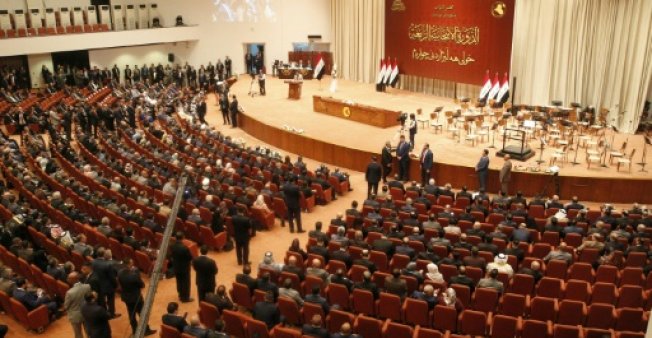
A session at the Iraqi Parliament

Iraq Parliament Elects Pro-Iran List Candidate as Speaker

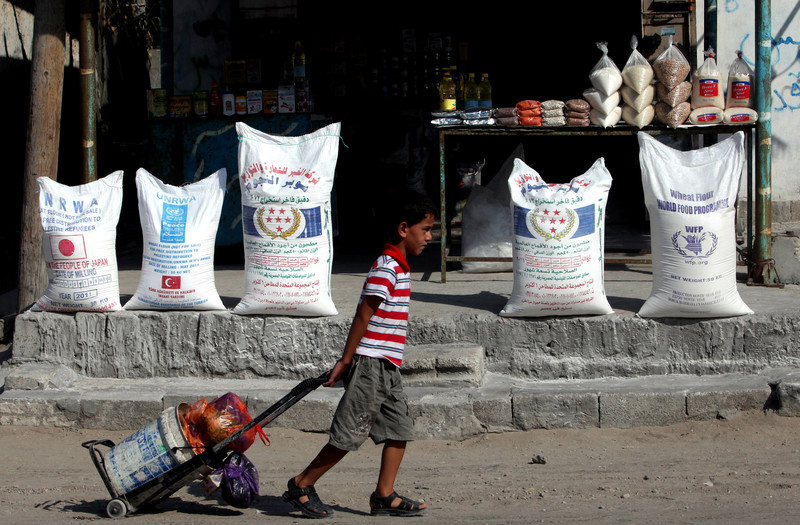
The United States is threatening to withhold millions in aid to Palestine in calls for other nations to share the burden by stepping up to the plate. Photo: APA

US Confirms Further Palestinian Aid Cut

Please login to join discussion

Recommended

The Fnideq (Morocco) - Ceuta (Spain) fence, located in northern Africa, is one of the main borders used by people on the continent to try to immigrate to the European Union. In September 2024, a massive attempt to cross the fence occurs, and the Moroccan police push back hundreds of people who head towards the Spanish exclave. In 2024, Spain receives 46,000 migrants.

Thousands Cross Into Spain’s North Africa Enclave in New Migrant Crisis

July 31, 2026
An armed Iranian police officer holding a rifle monitors the area as motorcyclists ride beneath a billboard depicting an AI-generated image of the Strait of Hormuz and an effigy of US President Donald Trump, displayed on the wall of a state building in downtown Tehran, Iran, on May 3, 2026.

US, Saudi Strike Iraq Alliance in Expanding War

July 29, 2026
Germany, Berlin, 26 july 2026, Gathering in tribute to the victims and all those affected by the attack on the 2026 CSD (Christopher Street Day/Pride) event, held at Pariser Platz.

Berlin LGBTQ Community Fears Far-Right ‘Exploitation’ of Pride Attack

July 27, 2026
AI chatbot applications.

Trump Under Pressure From All Sides Over Chinese AI Surge

July 24, 2026
Protesters gathered to condemn the detention of opposition leader of parliament, Rahul Gandhi, during a protest in New Delhi.

India Student Protests Keep Up Pressure on Modi Government

July 22, 2026
A southern Yemeni separatist fighter waves his rifle at the site of an anti-government protest in the port city of Aden, Yemen January 30, 2018.

Yemen’s Iran-Backed Houthis Announce Maritime Blockade of Saudi Arabia

July 20, 2026

Opinion

A Cuban street with a flag

Cuba Through a Pulse: Intimacy, Poverty, and the Shadow of Revolution

March 10, 2026
An Iranian walking in front of a wall painting of the Iranian flag in Tehran

Iran Can’t Dominate the Middle East Without Iraq

January 13, 2026
US President Donald Trump

Vladimir Trump and Blood for Oil

January 5, 2026
A trial COVID-19 vaccine

America’s Global Health Retreat Is a Gift to Its Rivals

November 12, 2025
Israeli Prime Minister Benjamin Netanyahu

UN Might Tolerate Netanyahu, and White House Might Welcome Him, But He’s Still Guilty of Genocide

September 30, 2025
Former President Donald Trump speaks at a Fox News Town Hall

Cruelties Are US

August 25, 2025
Facebook Twitter

Newsletter

Do you like our reporting?
SUBSCRIBE

About Us

The Globe Post

The Globe Post is part of Globe Post Media, a U.S. digital news organization that is publishing the world's best targeted news sites.

submit oped

© 2018 The Globe Post

No Result
View All Result
  • National
  • World
  • Business
  • Interviews
  • Lifestyle
  • Democracy at Risk
    • Media Freedom
  • Opinion
    • Editorials
    • Columns
    • Book Reviews
    • Stage
  • Submit Op-ed

© 2018 The Globe Post