


TIRANA, Albania – The ongoing crisis in Catalonia, the northeastern region of Spain, has reopened many wounds that were slowly healing. The independence referendum, held on October 1, resulted in a setback for Catalonia itself after the Spanish parliament, protesting against the vote, approved direct rule over the region.
Catalonia has been a part of Spain since the 15th century. The region has been integrated into the country but enjoyed some level of autonomy through its own independent institutions.
During the rule of General Francisco Franco in Spain in the late 1930s, Catalonia’s autonomy was revoked. The move catalyzed the independence drive in the region, particularly after autonomy was restored following Mr. Franco’s death.
Catalonia’s secessionist ideas entered a period of revival after 2008 as Spain entered a financial crisis.
The Catalan independence vote did not affect only the region itself, it stirred up controversy in Serbia, which has had its own share of struggles with territorial unity.
In October, Serbian Minister of Foreign Affairs Ivica Dacic accused the international community of double standards when it comes to Catalonia and Kosovo.
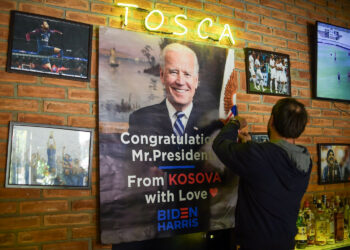
Kosovo declared independence from Serbia unilaterally in 2008. The declaration had the support of the U.S. and major players within the European Union. At present, Kosovo is recognized as a sovereign state by 114 countries worldwide, not including Russia, India or China.
“I am bothered by the double standards of the international community,” Mr. Dacic said on the national television channel RTS. “The E.U. will never say it made an error with the recognition of Kosovo, but that decision will backfire. The Pandora’s box was opened.”
Despite Mr. Dacic attempt to draw parallels between the two regions, political scholars and commentators have been skeptical about the comparison.
Besnik Pula, an Albanian from Kosovo and professor at Virginia Tech University, told The Globe Post that there are some eerie resemblances between Spain’s actions in Catalonia and Kosovo’s fate before the disintegration of Yugoslavia in 1989.
“But I think one should not make too much of the parallels,” Mr. Pula noted.
He explained that Kosovo was also forcefully deprived of its autonomy in the late 1980s by Serbia, but this was at its base an aggressive action by the Serbian government.
“Kosovo had not intended to nor proclaimed independence at that point. Indeed, one could argue that Serbia’s actions in Kosovo provoked Kosovo’s independence movement and the Serbian government’s repression and violence through the 1990s ultimately resulted in armed conflict,” Mr. Pula noted.
Unlike in Kosovo, the Spanish authorities are acting in response to intentions by the Catalan government to declare its independence unilaterally, the professor continued. Moreover, the events in Catalonia and Spain are unfolding within the context of a democratic regime and in full view of European and international actors, which was not the case in Kosovo in the 1980s and 1990s.
“Madrid’s actions will certainly provoke further secessionist sentiment in Catalonia, and it is foolish to think that Madrid can solve the Catalan issue by imposition and force,” Mr. Pula said.
“At the same time, Kosovo’s independence was ultimately the consequence of the break-up of the larger federation of which it was part – Yugoslavia, and international sympathies and support generated after the war of 1998-99,” he added. “Catalonia’s bid for independence lacks such international support, and as a result, it will be hard to imagine European nations and the US recognizing an independent Catalonia against the will of Madrid.”
Elvis Hoxha, an Albanian philosopher and a member of Kosovo’s self-determination party Vetvendosje!, analyzed Catalonia’s independence struggle from the perspective of languages.
Unlike Spanish, which has been recognized as the is the official language of the country, Catalan does not have the same status.
“One of these languages is seen as official and it makes the other one unconstitutional, together with its speakers,” Mr. Hoxha told The Globe Post.
Because European authorities fear the crisis of yet another secession, they are trying to force some of the minorities to blend, Mr. Hoxha argued, commenting on some anti-secession statements made by E.U. officials.
He urged a more mature discourse on the issue, noting that statements made about the Catalonia crisis by some E.U. member-states and the Madrid government could only deepen the drive for secession and encourage the Catalan leaders to move forward with their goal.
The real discourse should have dealt with the interaction of Spanish and Catalan cultures and areas that hold respective communities together, Mr. Hoxha said.
“Instead of this, we are seeing only the proclamation of Madrid’s arbitrarily towards Barcelona’s unilateralism … It is simply the confirmation of lack of modernism in politics.”