

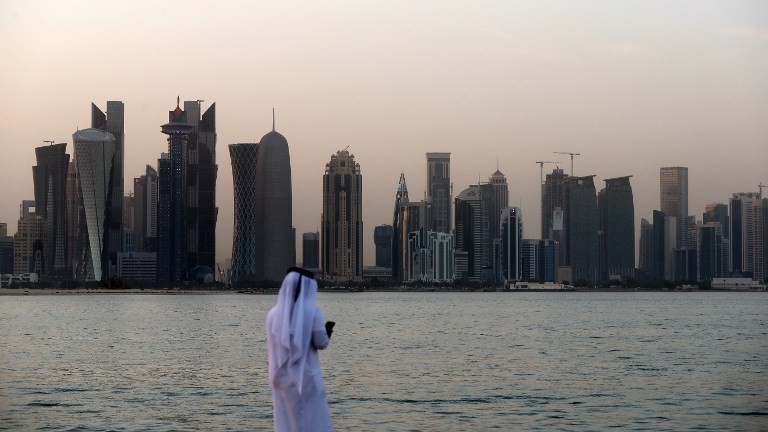
Qatar will pull out of the 15-member Organization of Petroleum Exporting Countries (OPEC) at the start of 2019 after nearly six decades of membership. The peninsular Arab country was the sixth member of OPEC, joining a year after Iran, Iraq, Kuwait, Saudi Arabia, and Venezuela formed the cartel in 1960. Qatar is not the first member to leave. Ecuador and Gabon both left and returned, and Indonesia left, returned, and left again. However, it is the first Gulf country to depart.
Qatar stated that it is leaving OPEC to give full attention to natural gas, which dominates its oil production and exports. The country exports natural gas in the form of liquefied natural gas (LNG). Its current export capacity is 77 million tonnes per year, while its production of crude oil has fallen from 615,000 barrels per day (b/d) in November to just over 600,000 b/d.
Focus on Natural Gas
Qatar has a far more important role to play in global natural gas trade than it does within the OPEC and global oil trade. From its natural gas capacity of 77 million tonnes per year, it exported 76 million tonnes in 2017, accounting for more than 26 percent of LNG-based natural gas trade worldwide. This compares to its 1.8 percent share of OPEC production, ranking the country at 11th out of 15 OPEC members. Moreover, Qatar has announced plans to expand its natural gas liquefaction capacity to 110 million tonnes per about 2025.
#Qatar announced it will leave #OPEC in January of next year to focus on it's natural gas production. Check out where Qatar stands on natural gas https://t.co/szQBUzwsRg pic.twitter.com/3qR2kDoOVs
— Statista (@StatistaCharts) December 3, 2018
If Qatar had remained in OPEC and accepted its proportional share of the newly proposed production cuts, it would have been obliged to reduce production to 97.5 percent of current or by just under 15,000 b/d. This equals just over 0.1 percent of Saudi Arabia’s October 2018 production.
So, Qatar’s departure should have minimal effect on OPEC, in general, or on the remaining members of OPEC’s ability to meet their obligations under the new production agreement.
Political Rows
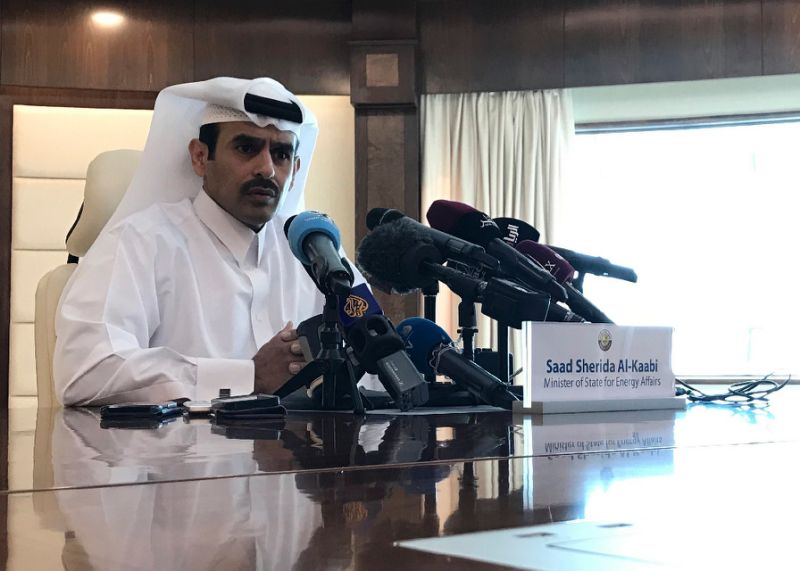
There has been speculation that Qatar is withdrawing from OPEC due to its ongoing political row with Saudi Arabia, Kuwait, and the United Arab Emirates. However, Qatar argued the departure was not related to this but rather because of its decision to focus on its natural gas developments. The country’s Energy Minister Saad Sherida al-Kaabi was quoted as saying, “The withdrawal decision reflects Qatar’s desire to focus its efforts on plans to develop and increase its natural gas production from 77 million tonnes per year to 110 million tonnes in the coming years.”
Given Qatar’s relatively small and declining production of crude oil, its role within OPEC is and has been marginal at best, even before the political tension.
The veracity of the claim that the departure is unrelated to these political rows may be revealed in the future if and when the tensions are resolved. If Qatar then were to return to the organization, it may be inferred that the rift had at least some role to play. However, if this were to occur only after Qatar has completed the expansion of its natural gas export capacity, the role of the row may be deemed as having been somewhat irrelevant to the decision.
Qatar’s limited crude oil production capacity significantly limits the effect it can have on the global oil market by increasing or decreasing production, even once it is no longer “bound” by OPEC-membership obligations. However, being free of obligations will unlikely have any significant financial implications, because the prices Qatar will face going forward will be no different whether or not it remains within OPEC.
Different Oil Market
Oil producing countries are reacting to a very different world today than they were as recently as 5 or 10 years ago. The role of the U.S. increase in crude oil production and direct entry into the global export trade has significantly reshaped the global oil trade balances.
In light of these vast changes in the market, OPEC has partnered with Russia and other non-OPEC crude oil exporters(OPEC+) to attempt to stabilize the global market. OPEC is still learning while doing, understanding that the methods it employed independently in the 1990s and early 2000s no longer apply.
Qatar’s role in this effort has shrunk, both with its production and the changed environment. It is therefore not surprising that the country wanted to reconsider its role and re-focus its effort to the trade in natural gas where it plays a far more significant role and where the markets are also in significant flux due to growing U.S. production and trade.
History suggests that the earlier departures did not materially affect the overall operation or effectiveness of the OPEC cartel. Those withdrawals did not foretell a collapse of OPEC due to internal strife. Qatar’s departure should not either.
Disclaimer: The views and opinions expressed here are those of the author and do not necessarily reflect the editorial position of The Globe Post.