
• About Us
  • Who Are We
  • Work With Us
Wednesday, September 9, 2026
No Result
View All Result
The Globe Post
39 °f
New York
44 ° Fri
46 ° Sat
40 ° Sun
41 ° Mon
No Result
View All Result
The Globe Post
No Result
View All Result
Home Featured

Putin Signs Laws Against ‘Disrespecting’ Authorities, Fake news

Staff Writer by Staff Writer
03/18/19
in Featured, Media Freedom, World
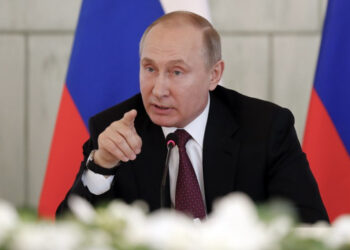
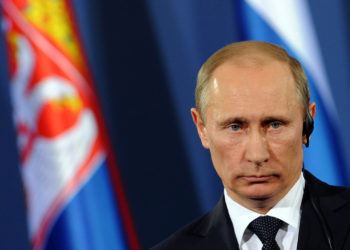
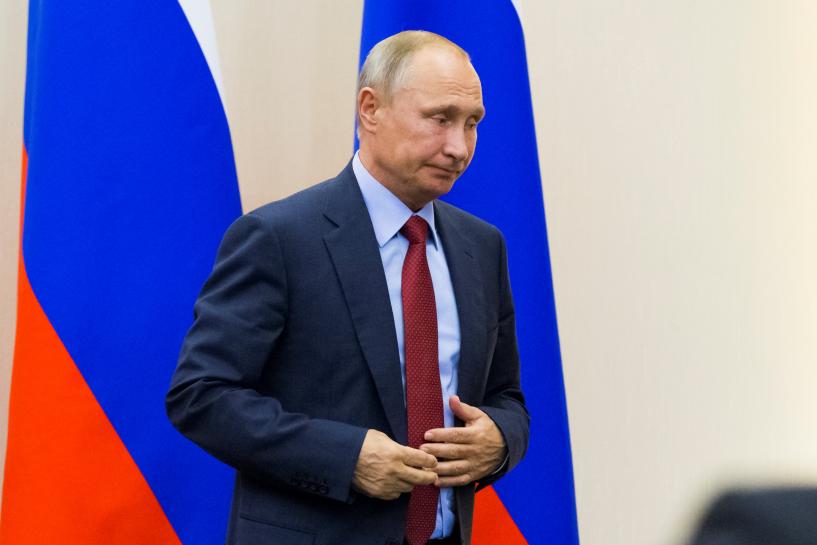
Russian President Vladimir Putin. Photo: Reuters

Russian President Vladimir Putin. Photo: Reuters

Share on FacebookShare on Twitter

Russian President Vladimir Putin on Monday signed controversial laws that allow courts to fine and briefly jail people for showing disrespect towards authorities, and block media for publishing “fake news.”

Putin signed off on the legislation against the advice of human rights activists, who warned the laws amounted to censorship and would be abused to further crackdown on freedom of speech.

The law on disrespecting authorities backs punishment for “offending state symbols” and stipulates hefty fines and jail terms of 15 days for repeat offenders.

Another piece of legislation allows authorities to decide what amounts to “fake news” and gives a media watchdog the power to demand an outlet delete the information.

Websites that fail to comply would be blocked.


New Level of Repression 

Fines could reach 1.5 million rubles (over $22,700) if the infraction leads to grave consequences like death or rioting.

Rights activists say that since first becoming president in 2000, Putin has gradually crushed freedoms in Russia, muzzling critics and bringing television under control.

The new legislation takes the crackdown on civil society to a whole new level, they say.

Critics say the legislation is vaguely worded and would have large scope for abuse, further complicating the difficult and sometimes deadly work of rights activists and opposition journalists in Russia.

The Kremlin is stepping up media control to counter a fall in Putin’s approval rating amid mounting economic trouble, according to activists.

“These new prohibitions and punishments are not just a continuation of the repressive legislative and practical measures that began in 2012,” Yuri Dzhibladze, president of the Center for the Development of Democracy and Human Rights, told AFP.

“This is a completely new level which almost literally repeats the Soviet-era law about ‘activities undermining the Soviet system’ and ‘anti-Soviet campaigning and propaganda.'”

The authorities unleashed a major crackdown on dissenters after Putin returned to the Kremlin in 2012 in the face of mass protests.

“From now it will be police that will decide what fake news is and what’s not,” said Alexander Cherkasov of Memorial, a top rights group.

“This will lead to a violation of civil rights and freedoms.”


‘Hating in Silence’ 

Moscow on Monday marked the fifth anniversary of Crimea’s annexation from Ukraine, a move condemned by the West but celebrated by most Russians.

Mikhail Fedotov, the chairman of the Kremlin’s human rights’ council, told AFP that the legislation had “numerous flaws” and his group had asked the president to reject it.

Even the usually pliant media criticized the new laws.

“Authorities want people to hate in silence,” mass-circulation tabloid Moskovsky Komsomolets wrote ahead of the signing last week.

“The authorities’ desire to gag their subjects is a very old, shameful and meaningless desire.”

In 2018, Putin was elected to a historic fourth term in office with a record vote share amid increasing international isolation.

But the 66-year-old Russian president’s popularity ratings have taken a beating due to a controversial pension age hike and falling living standards as a result of tough Western sanctions over Ukraine and other crises.

Last month Russian lawmakers backed a bill that could cut off the country’s internet traffic from servers abroad, which critics say is a possible step towards an isolated network like in North Korea.


More on the Subject 

Russian lawmakers in February backed a bill that could cut off the country’s internet traffic from servers abroad which critics say is a step towards censorship and possibly an isolated network like in North Korea.

The bill passed its first reading by 334 votes to 47 after an unusually heated debate in the State Duma, where many lawmakers from minority parties criticized it as too costly and argued that it was not written by experts.

Authors of the initiative say Russia must ensure the security of its networks after U.S. President Donald Trump

online pharmacy buy metformin without prescription with best prices today in the USA

 unveiled America’s new cybersecurity strategy last year.
Russian Lawmakers Back Bill to Isolate Country’s Internet

Share3Tweet
Staff Writer

Staff Writer

With Contributions by AFP

Related Posts

Putin talks to Trump in Hamburg
Opinion

From Roosevelt to Trump: The Complicated Legacy of Personal Diplomacy

by Tizoc Chavez
November 15, 2024
North Korean leader Kim Jong-un
World

Ties With Russia Entering New Era, N. Korea’s Kim Say

by Staff Writer with AFP
June 19, 2024
Russian President Vladimir Putin
World

Putin Inauguration Set to Prolong His Two Decades in Power

by Staff Writer with AFP
May 7, 2024
Russian President Vladimir Putin
Democracy at Risk

Polls Open in Russian Vote to Extend Putin’s Reign

by Staff Writer with AFP
March 15, 2024
Alexei Navalny
Opinion

Resistance Will Endure in the Wake of Alexei Navalny’s Death

by Stephen J. Lyons
February 28, 2024
Russian opposition politician Alexei Navalny.
World

Navalny Team Says Relatives Refused Access to His Body for Third Day

by Staff Writer with AFP
February 19, 2024
Next Post
Cholera cases in Yemen

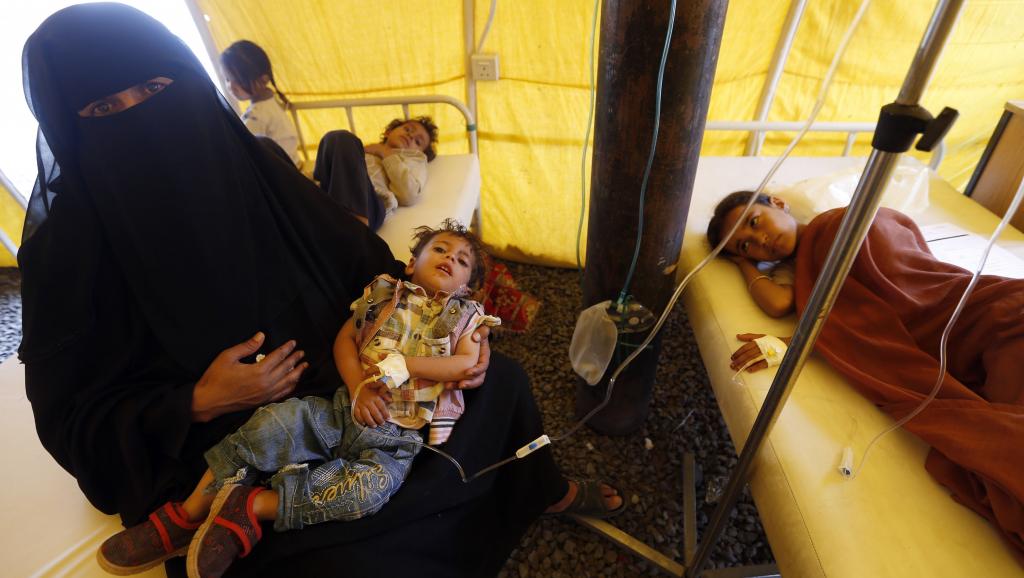
Yemeni Women Take on Traditional 'Male' Roles Amid Crisis

UN flag

UN Reports Increase in Sex Abuse Allegations by UN Staff

Recommended

The Fnideq (Morocco) - Ceuta (Spain) fence, located in northern Africa, is one of the main borders used by people on the continent to try to immigrate to the European Union. In September 2024, a massive attempt to cross the fence occurs, and the Moroccan police push back hundreds of people who head towards the Spanish exclave. In 2024, Spain receives 46,000 migrants.

Thousands Cross Into Spain’s North Africa Enclave in New Migrant Crisis

July 31, 2026
An armed Iranian police officer holding a rifle monitors the area as motorcyclists ride beneath a billboard depicting an AI-generated image of the Strait of Hormuz and an effigy of US President Donald Trump, displayed on the wall of a state building in downtown Tehran, Iran, on May 3, 2026.

US, Saudi Strike Iraq Alliance in Expanding War

July 29, 2026
Germany, Berlin, 26 july 2026, Gathering in tribute to the victims and all those affected by the attack on the 2026 CSD (Christopher Street Day/Pride) event, held at Pariser Platz.

Berlin LGBTQ Community Fears Far-Right ‘Exploitation’ of Pride Attack

July 27, 2026
AI chatbot applications.

Trump Under Pressure From All Sides Over Chinese AI Surge

July 24, 2026
Protesters gathered to condemn the detention of opposition leader of parliament, Rahul Gandhi, during a protest in New Delhi.

India Student Protests Keep Up Pressure on Modi Government

July 22, 2026
A southern Yemeni separatist fighter waves his rifle at the site of an anti-government protest in the port city of Aden, Yemen January 30, 2018.

Yemen’s Iran-Backed Houthis Announce Maritime Blockade of Saudi Arabia

July 20, 2026

Opinion

A Cuban street with a flag

Cuba Through a Pulse: Intimacy, Poverty, and the Shadow of Revolution

March 10, 2026
An Iranian walking in front of a wall painting of the Iranian flag in Tehran

Iran Can’t Dominate the Middle East Without Iraq

January 13, 2026
US President Donald Trump

Vladimir Trump and Blood for Oil

January 5, 2026
A trial COVID-19 vaccine

America’s Global Health Retreat Is a Gift to Its Rivals

November 12, 2025
Israeli Prime Minister Benjamin Netanyahu

UN Might Tolerate Netanyahu, and White House Might Welcome Him, But He’s Still Guilty of Genocide

September 30, 2025
Former President Donald Trump speaks at a Fox News Town Hall

Cruelties Are US

August 25, 2025
Facebook Twitter

Newsletter

Do you like our reporting?
SUBSCRIBE

About Us

The Globe Post

The Globe Post is part of Globe Post Media, a U.S. digital news organization that is publishing the world's best targeted news sites.

submit oped

© 2018 The Globe Post

No Result
View All Result
  • National
  • World
  • Business
  • Interviews
  • Lifestyle
  • Democracy at Risk
    • Media Freedom
  • Opinion
    • Editorials
    • Columns
    • Book Reviews
    • Stage
  • Submit Op-ed

© 2018 The Globe Post