

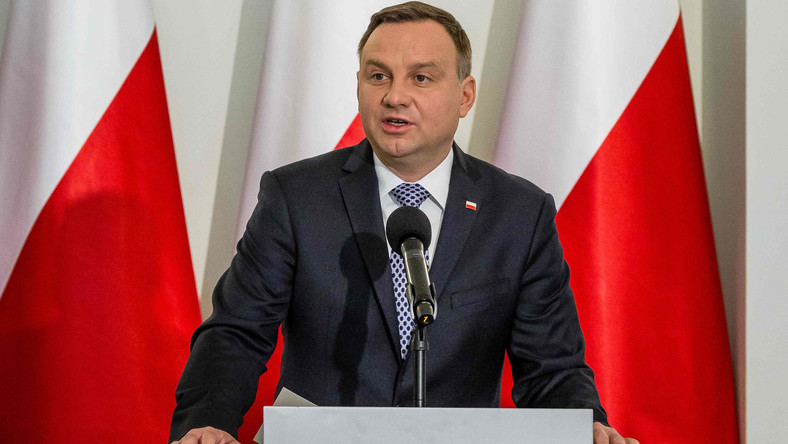
Using the slogan “Poland in ruins,” the national conservative Law and Justice Party (PiS) won the country’s 2015 parliamentary elections. Since then, the party has “rebuild” the Central European state by deeply restructuring Polish politics.
PiS has used its absolute parliamentary majority to undermine the rule of law and attack press freedom. These developments are met by an apparently toothless European Union that lacks any powerful sticks to preserve liberal democratic standards once a state has joined the bloc.
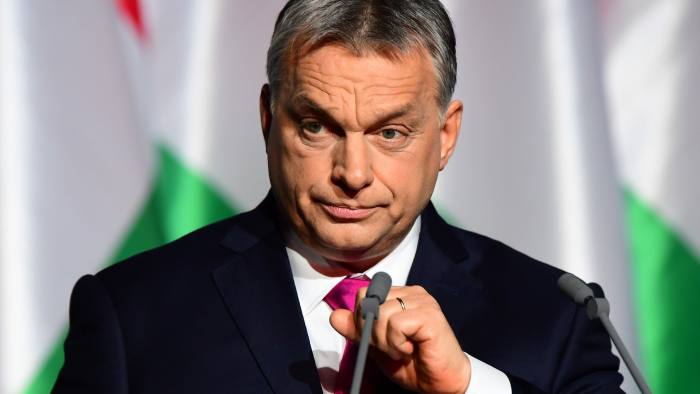
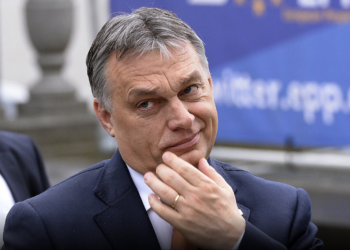
Poland is often named in one breath with Viktor Orban’s Hungary. However, while there are parallels with Hungary, it is too early and pessimistic to speak of the beginning of the end of liberal democracy in Poland.
Don’t be fooled though, Poland’s democratic decline is apparent. However, it is essential to take a step back from thinking of democratic development as a linear process. Additionally, the changes in Poland are not achieved through constitutional amendments like in Hungary, and equally important, are met by a vibrant opposition.
Democratic Backsliding
Notions of democratic backsliding follow a linear way of thinking about democracy. While Poland’s negative trends regarding the rule of law and press freedom should not be ignored, this way of thinking simplifies the understanding of what is happening in the country and Central and Eastern Europe at large.
The stability of a democratic system can find itself competing with democratic contention and engagement. A decrease in the quality of one of these elements might not necessarily represent the decrease of the other. For instance, the imperative to create stable democratic institutions in Central and Eastern Europe after the 1989 fall of communism, coupled with a neoliberal imperative to rebuild the economy, has side-lined debates on political content and citizens’ involvement.
While the democratic system has stabilized after this period, it did not necessarily encourage the active involvement of the citizens beyond voting. Closely examining democracies all over the world further reveals that sliding around is a common occurrence.
Moreover, it is not only the institutional but also the civic resilience and response to Poland’s attacks on liberal democracy that deserve attention.
Poland’s Civil Society
Poland’s civil society fulfills a crucial role when it comes to civic resilience. While the country’s political landscape for over a decade has polarized around PiS and their liberal-conservative opponent the Civic Platform (PO), civil society represents a much completer spectrum of political and cultural positions. The influence of civil society on political processes becomes therefore crucial as its scope determines whether positions beyond the (center-)right are reflected in national policy-making.
Polish civil society is vibrant and goes increasingly beyond mere NGO work. A beautiful example of this is the mobilization of women. Starting as mass protests in the so-called Black Protest in 2016, women’s mobilization has branched out from demanding liberalization of abortion rights to a platform that fights for inclusive Polish citizenship more generally.
Thousands of people in Poland are participating in “Black Friday” protests over the government’s latest attempt to restrict abortion. Poland already has some of the strictest abortion laws in Europe. pic.twitter.com/YyT6i8LLPW
— AJ+ (@ajplus) March 23, 2018
The active and visible civil society challenges the current government and represents a wide range of political positions, but the ruling party is making their work increasingly complicated.
In 2017, the creation of the National Institute for Freedom and a Committee for non-profit Concerns reformed the relationship between NGOs and the state. The government has created a system that favors organizations ideologically close to the government through the distribution of state funding. At the same time, changes in the laws regulating public gatherings have also been tilted towards government-friendly groups.
However, despite these obstacles, grassroots mobilization seems strong, persistent, and even growing. If we look beyond institutional indicators, Poland’s democratic backsliding is not that simple to confirm after all.
Populism and Illiberalism
The rise of populism and illiberalism in Central and Eastern Europe has challenged the apparent success story of the region’s democratic transition. Poland’s society is increasingly polarized, leading to a strong mobilization and politicization of the electorate. This challenges consensual democratic behavior, but not necessarily liberal democracy itself.
While the polarization of society is dangerous, it has also led to strong civic mobilization. This engagement indicates that Poland’s democracy is maybe not as imperiled as one might think when looking at the country’s weak and declining scores in democracy indices.
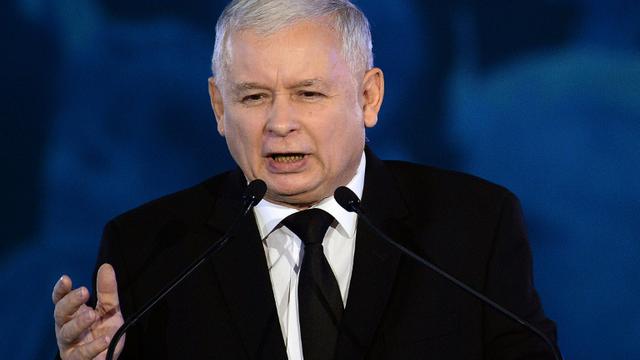
The problem of polarization comes when the antagonistic duopoly in the political sphere becomes the all-determining rally point. It is either PiS or the opposition centered around PO that voters support. This prevents policy issues to be treated as thoughtfully, as they should in a liberal democratic system, because support for either of the parties is not based on their stance on policy issues but rather on their opposition to the other party.
To preserve Poland’s liberal democracy, the political landscape has to live up to the diversity expressed in the Polish civil society. The country’s democracy is not in ruins, but it is currently heavily reliant on its citizens to stay that way.
Disclaimer: The views and opinions expressed here are those of the author and do not necessarily reflect the editorial position of The Globe Post.