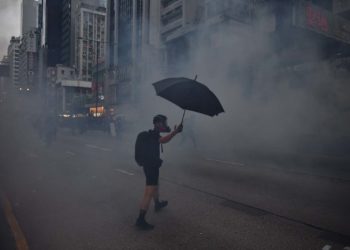


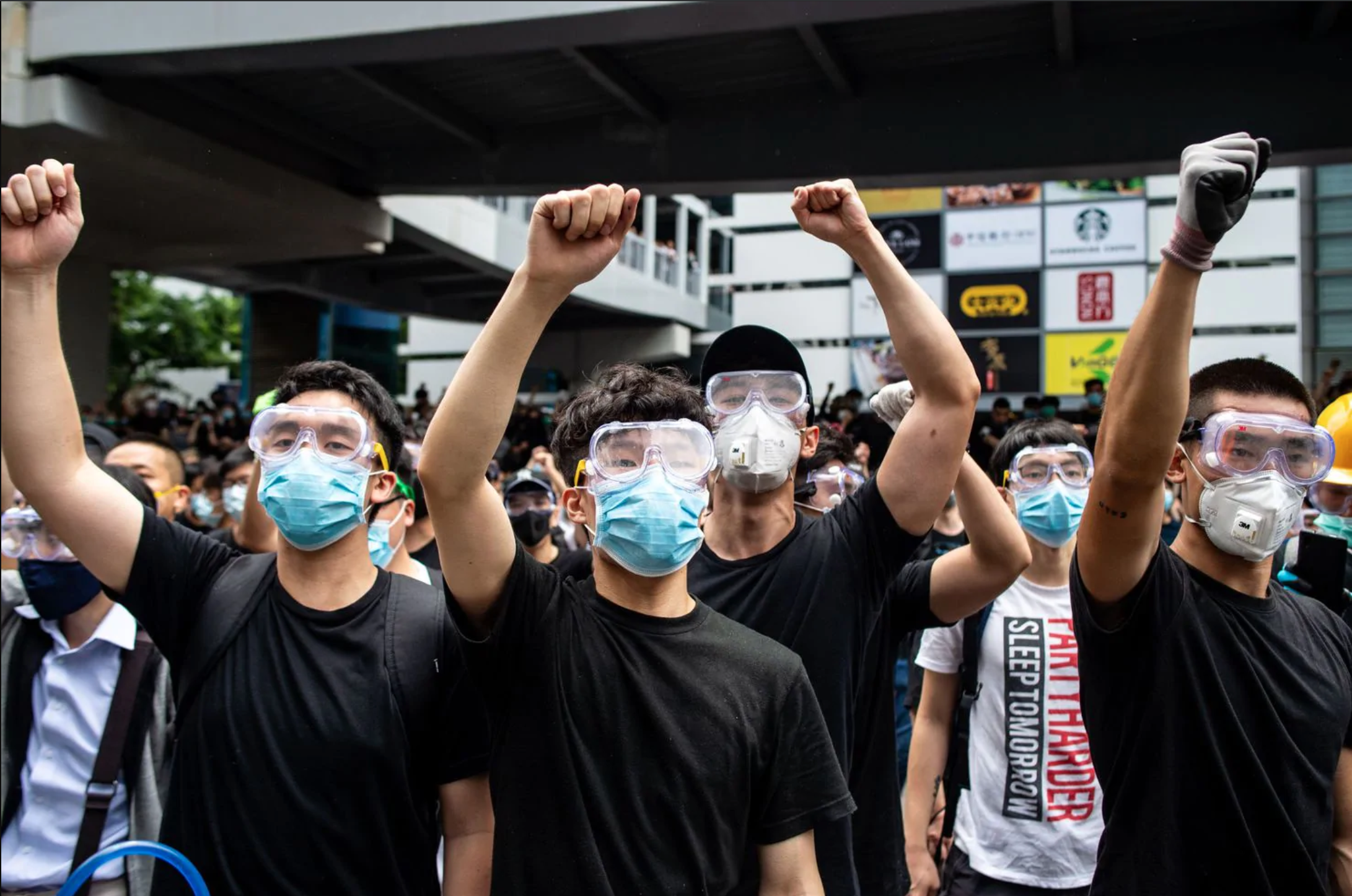
What started as a protest against a proposed “Fugitives Bill” in Hong Kong on March 31, has continued throughout the summer. A turning point perhaps occurred on June 12, the day that the bill was scheduled to be read in the Legislative Council, when observers witnessed a sharp uptick in violence as police began to deploy tear gas and rubber bullets. Since then, outbreaks of violence have been more frequent between police, activists, and pro-Beijing triad gangs.
The demands of the activists now vary: calls for an independent inquiry on police brutality, the release of imprisoned protestors, direct elections, governmental retraction on the use of terms such as “riots,” and shifts to full independence. These are just a few examples, and they demonstrate just how divisive the protests are.
With such varied demands and causes, the goals of negotiation are not simply black and white.
Differing Views
The diversity of views makes any conflict-resolution difficult. There are people in Hong Kong that are sympathetic to the cause, but simply wish it would all stop. Meanwhile, others are now so deeply involved that they are not prepared to quit until significant changes are made. The same is true in China. Ultra-nationalists are growing impatient with a government that they see as having done little to control the situation, making China look weak. Others who are less sympathetic to the communist party see this potential government weakness as an opportunity to express their views.
Much has been written comparing the situation in Hong Kong to the Tiananmen Square protests in 1989. The protests in Hong Kong have indeed gone on much longer than those in 1989. But Tiananmen Square was continuous, whereas Hong Kong has seen breaks in protesting. Moreover, 1989 was a watershed moment in revolutionary movements throughout Europe: Poland, East Germany, Bulgaria, Czechoslovakia, and Romania, and these fed similar yearnings for political freedom in places such as China, as well as influencing how governments responded to them.
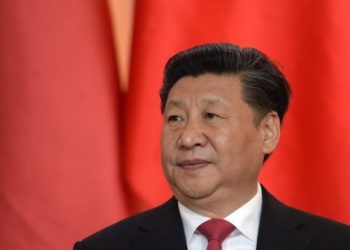
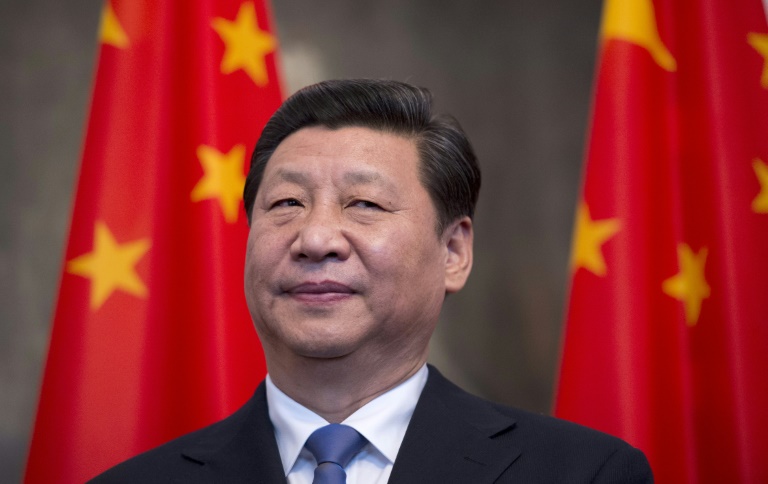
The situation today is very different. The most important difference is simply that Tiananmen Square is in Beijing, at the very center of communist rule in China, whereas Hong Kong is out on the periphery of the empire. What is undeniable, however, is that the Chinese leader, Chairman Xi Jinping, has no choice but to respond. What is not clear is how he will do so.
Xi’s Response and China’s Global Image
The response Xi chooses will prove to be critical for the future of Chinese domestic and foreign policy. Like Tiananmen before it, this will change how China behaves internationally, and it will forever alter how the international community perceives the country.
Some commentators argue that Beijing is reluctant to send in the People’s Liberation Army (PLA) because they are afraid of a loss of face on the world stage. This is a miscalculation. Increasingly, Chinese leaders have become aware that China’s global “image” is not always that important. It has power and influence that the international community cannot just ignore in the same way that it could following the Tiananmen Massacre. China now is simply too big.
The military build-up in Shenzhen, just across the border from Hong Kong, could be theatre: an elaborate game of smoke and mirrors. After all, the Chinese government was the one to release the images, with their intended audience being domestic. Not only is this a show of force, but it also represents a willingness to intervene at a time of their choosing.
Disturbing video taken in #Shenzhen just across the boarder with #HongKong. Something extraordinarily bad is about happen. #China #HongKongProtests #Democracy #SaveHongKong pic.twitter.com/Gad5R5HVZL
— Alexandre Krauss (@AlexandreKrausz) August 12, 2019
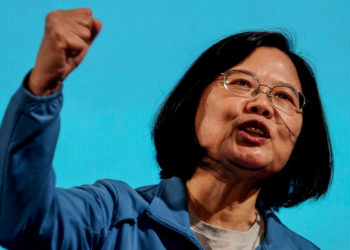
To the people of Hong Kong, this only reinforces the positions that they already hold. It is unlikely to sway those who are already prepared for a fight. It is perhaps with reference to Taiwan and the upcoming elections in January that the Chinese government is being more careful. They don’t want to repeat the mistakes of 2016, when Taiwan’s President Tsai Ing-wen and her Democratic Progressive Party won a landslide victory in the presidential and legislative elections – a triumph that was aided by Beijing’s saber-rattling, such as the public humiliation of Taiwanese pop singer Chou Tzu-yu who was forced to apologize for waving the Taiwan flag while in South Korea.
Not only does Xi need to control the PLA’s response, he needs to control perceptions. Observers should continue to expect misinformation about the protests, such as their mischaracterization as “terrorism” and “riots.” The communist party mouthpieces that pass for media outlets in China will continue to frame the situation in Hong Kong as the result of foreign interference in internal affairs, fomenting unrest.
UK’s Role in Hong Kong
Key to this is Beijing’s insistence that the United Kingdom is meddling. What Beijing seemingly fails to understand is that the U.K. position has been restrained. According to international law, London has a role to play in any resolution. Some argue that the U.K. is not doing enough.
Domestically, Britons are consumed with issues relating to Brexit. However, the 1984 Sino-British Joint Declaration clearly lays out that both parties (the U.K. and China, but interestingly not Hong Kong) need to ensure that the stipulations of the treaty are adhered to. Chief among these is that Hong Kong’s government is responsible for the maintenance of public order. PLA forces dispatched by the Chinese government, as well as those already stationed in Hong Kong, are restricted by the treaty – to say nothing of international law – from turning their weapons on their own people, the people of Hong Kong.
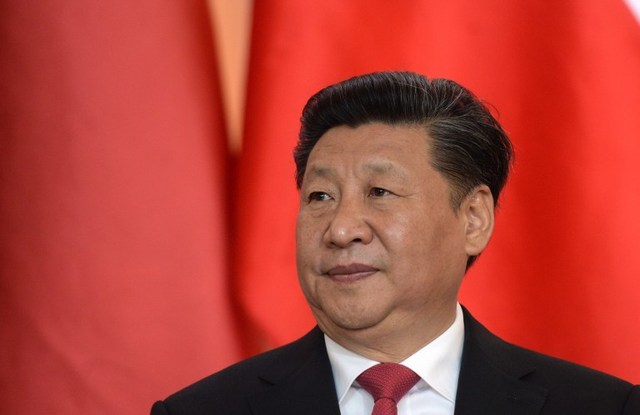
Lu Kang, a spokesman for China’s foreign ministry, has voiced Beijing’s view that the treaty is little more than “a historical document, no longer [having] any practical significance.” This is a grave miscalculation. The Joint Declaration is a legally binding treaty that confers upon London not just the right, but the responsibility, of taking an active role in ensuring that its stipulations are implemented. Foremost among these stipulations is that Beijing leaders shall not abridge the basic policies outlining Hongkongers’ democratic rights and freedoms for 50 years. Lu Kang’s “historical document” only went into effect 20 years ago.
The situation in Hong Kong is clearly not straightforward. Its layers of complexity ensure that the possible outcomes remain unknown. With so many competing interests and so much misinformation, it can be difficult to understand the conflict.
At present, it is simply bargaining of positions, with each stakeholder arguing their bottom line. Negotiations under these circumstances are simply not possible, as no side can abandon its position. It is difficult to see how such an impasse can be broken.
Disclaimer: The views and opinions expressed here are those of the author and do not necessarily reflect the editorial position of The Globe Post.