

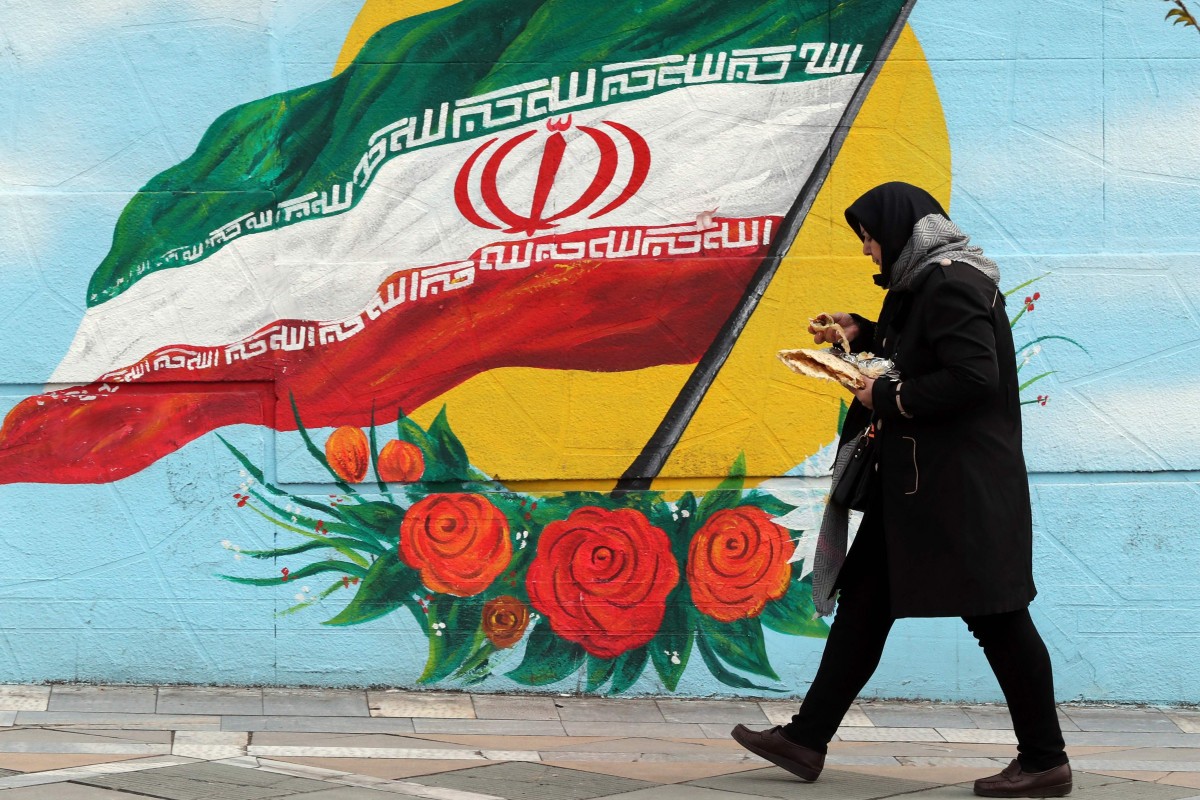
The people of Iran have been fighting for their freedoms for more than a century. The democratic activist movement began with the Constitutional Revolution of 1906 and has continued in various forms since. Although the campaign has enjoyed a handful of triumphant milestones, it has also witnessed each successive prospect snatched away.
Today, Iran’s clerical regime survives within a near-constant state of war. Regional force projection, endemic corruption, and limitless repression are the pillars of the mullahs’ hold on power. This has helped to keep the democratic movement at bay, but it has also regularly renewed the nation’s sense of the necessity of regime change.
Regime’s Obsession with Conflict
Iran’s fixation on conflict began with the Iran-Iraq War in 1980. Over eight years, the strife not only killed one million people but also gave the regime an understanding of how military nationalist sentiment tended to limit the reach of domestic dissent.
The winding down of the war provided the regime with a convenient excuse to systematically execute political prisoners on the pretense of “mitigating national security threats.” In the summer of 1988 alone, approximately 30,000 such prisoners were put to death.
Ruhollah Khomeini, who led the 1979 Iranian Revolution, explicitly stated that the Iran-Iraq War was a gift to the regime, partly because it provided a new outlet for the energy that had formerly been directed toward overthrowing the Shah.
When Khomeini was forced to accept a resolution to the conflict, his regime immediately began looking for other avenues of military adventurism. To a great extent, these outlets came in the form of terrorist activity, particularly that directed by the Islamic Revolutionary Guard Corps’ Quds Force.
The Quds Force was established in 1988 and carried out foreign special operations under Lieutenant General Qassem Soleimani right up until a U.S. drone strike killed him in January. The impact of his leadership is ongoing in Iraq and Syria, where Iran-backed militias have proliferated and injected themselves into domestic politics.
Iran’s imperial role in the region has also become a powerful contributor to sectarian conflict, leading to the growth of competing Sunni militant groups, including ISIS. Tehran’s clerical regime is apparently untroubled by these developments, as they play into its strategy for maintaining its grip on power. Khomeini’s successor, Ali Khamenei, has been quoted as saying, “If we had not fought in Syria and Iraq, we would have fought in Tehran.”
Externalization of Iran’s Internal Conflicts
The externalization of Iran’s internal conflicts is so crucial to the regime’s strategy that Tehran is willing to spend lavishly on it. Because of the staggering cost of creating and maintaining foreign militias, about 33 percent of Iranians live in absolute poverty. And this is to say nothing of the impact on the countries where Tehran has helped to prolong conflicts.
It is not only Iran’s regional neighbors who have been threatened by its four-decade commitment to foreign conflict. Iran-backed terrorism has claimed victims throughout the world, and there is no doubt that Iranian institutions are plotting more attacks.
As protests in Iran continue, I share my support for the brave men and women who are speaking out against a corrupt regime and the leaders of the world's largest sponsor of state terrorism.
— Sen. Dan Sullivan (@SenDanSullivan) January 2, 2018
In July 2018, an Iranian Resistance rally in Paris narrowly avoided becoming a victim of successful Iranian terrorism. Three months later, French authorities accused Iranian officials of being behind the attempted attack.
The Paris bomb plot effectively confirms that the regime sees little reason to curtail its activities, although its failure also suggests that the international community has become skillful at identifying and disrupting such plots.
Imminent Iranian terror plans were cited as justification when the White House ordered the strike on Soleimani – a move that might have changed the Iranian regime’s calculation. There is no sign of serious Iranian retaliation for the assassination, and this confirms that the regime will only refrain from violent action when it believes there is a substantial price to pay.
As Force Projection Weakens, Domestic Uprising Swells
The notable absence of backlash against Soleimani’s killing, both within Iran and throughout the surrounding region, flies in the face of many Western news outlets’ description of Soleimani as a beloved or revered figure
Tehran attempted to stage a massive funeral for Soleimani, but the opposition roundly dismissed the theatrics, noting that attendance had been mandatory for government employees and that impoverished Iranians were given financial incentives to join the event.
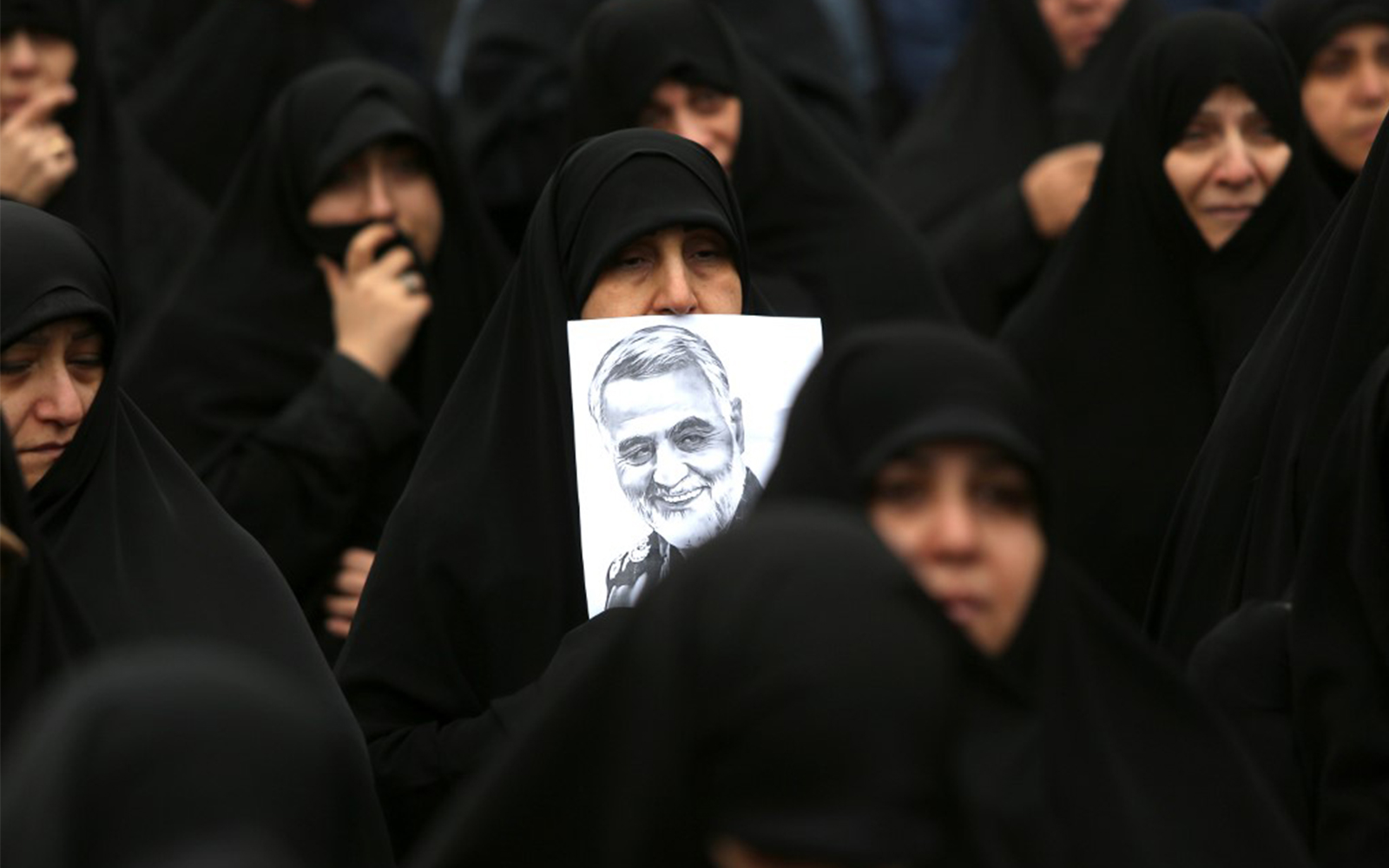
To whatever extent the funeral gave the impression of anti-Western sentiment among the Iranian people, that message was quickly contradicted by the outbreak of new anti-government protests just days later.
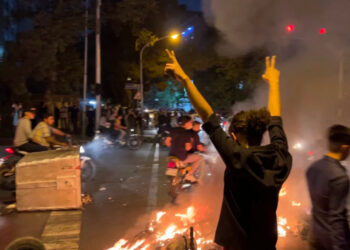
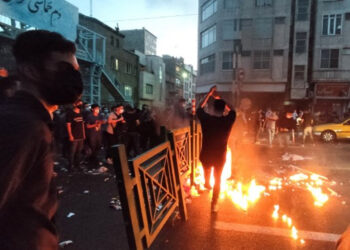
Residents of at least 19 Iranian provinces took to the streets to condemn the downing of a Ukraine airplane, and in each case, the demonstrations quickly took on a more general anti-government tone. Slogans focused on the supreme leader and the Islamic Revolutionary Guard Corps in particular.
“Down with tyrants, whether king or supreme leader,” participants chanted, repeating a sentiment that had become popular in previous uprisings between 2017 and 2019.
Tehran’s Worst Crisis Is Nation’s Greatest Opportunity
The November 2019 uprising, for example, was unprecedented. Many analysts agree that it represented the regime’s greatest challenge yet. Across 190 cities and towns, people called for an end to the system that enshrined ultimate power in a ruling cleric. Amid shrinking foreign influence and escalating tensions with Western adversaries, the regime struggled to find any way to respond to the challenge other than with brutal suppression.
According to Mojtaba Zonnour, head of the parliamentary security committee, at the peak of the uprisings, there were clashes between people and the regime at 147 points in Tehran alone, and a further 800 locations in the rest of the country. Top commanders of the Islamic Revolutionary Guard Corps, whose forces were sent on the scene, compared the situation to the heaviest clashes of the Iran-Iraq War and concluded that “only God could save the regime.”
About 1,500 demonstrations were killed during the uprising, while a further 4,000 were wounded and more than 12,000 were arrested. Remarkably, the extraordinary scale of this repression seems to have done little to silence dissenting voices in Iranian society.
Three prisoners in Iran -Amirhossein Moradi, Mohammad Rajabi, Saeed Tamjidi -have been sentenced to death in connection w/protests in November 2019. Authorities accused them of committing acts of arson. Their trial was unfair & they say they were tortured https://t.co/S9lsXR44Nk pic.twitter.com/cERjguIuRg
— Amnesty Iran (@AmnestyIran) February 28, 2020
Even following the regime’s effort to gin up the anti-Western sentiment at Soleimani’s funeral, participants in the January 2020 protests refused to walk on American and Israeli flags, but instead tore down memorial images of Soleimani and turned their wrath against the mullahs once again.
Anti-government sentiments are now working hand-in-hand with Iran’s growing international isolation, the U.S. “maximum pressure” policy, and the end of appeasement policies throughout the West. Collectively, these factors may establish the greatest prospect for Iranian democracy in over a century. And as such, the Iranian opposition has declared 2020 the year of the regime’s overthrow.
Although Iran’s pre-revolutionary history established the public’s passionate desire for democratic governance, the mullahs found a workable strategy for suppressing that impulse by a combination of domestic political violence and regional force projection. That strategy, however, can only be successful if outside factors keep the regime from facing the full consequences of its actions.
Now that those circumstances have finally changed, it is highly unlikely that the Iranian regime will be able to survive these crises.
Disclaimer: The views and opinions expressed here are those of the author and do not necessarily reflect the editorial position of The Globe Post.