
• About Us
  • Who Are We
  • Work With Us
Friday, November 6, 2026
No Result
View All Result
The Globe Post
39 °f
New York
44 ° Fri
46 ° Sat
40 ° Sun
41 ° Mon
  • National
  • World
  • Business
  • Interviews
  • Lifestyle
  • Democracy at Risk
    • Media Freedom
  • Opinion
    • Editorials
    • Columns
    • Book Reviews
    • Stage
  • Submit Op-ed
  • National
  • World
  • Business
  • Interviews
  • Lifestyle
  • Democracy at Risk
    • Media Freedom
  • Opinion
    • Editorials
    • Columns
    • Book Reviews
    • Stage
  • Submit Op-ed
No Result
View All Result
The Globe Post
No Result
View All Result
Home Opinion

India’s Caste System Is Criticized but America’s Class System Is No Better

Priya Harindranathan by Priya Harindranathan
08/21/20
in Opinion
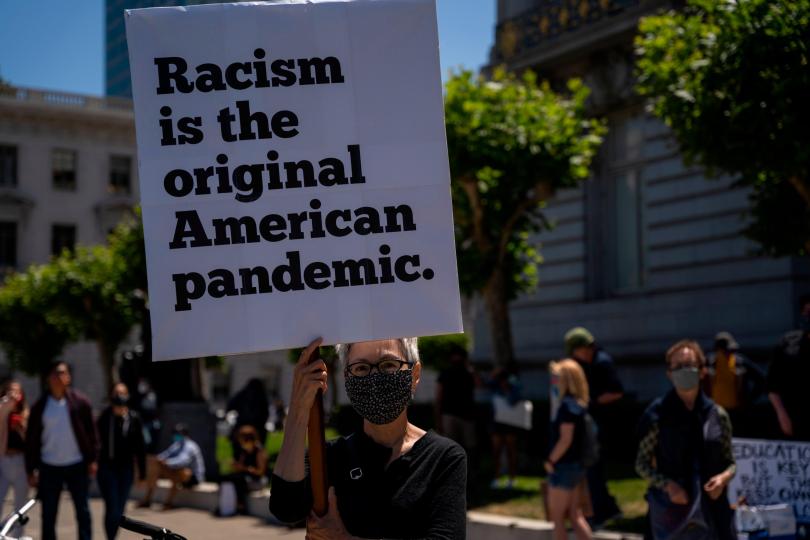
A woman holds a sign during a rally to mark Juneteenth on June 19, 2020, in San Francisco

A woman holds a sign during a rally to mark Juneteenth on June 19, 2020, in San Francisco. Photo: Vivian Lin/AFP

Share on FacebookShare on Twitter

During my first year in the US as a visiting scholar from India, on a visit to an American professor’s family, his wife was curious to understand India’s infamous caste system. After I had explained how the system had degenerated to exploit, discriminate, deny opportunities, and oppress the people of lower castes, she exclaimed, “Whoa, I would never want my kids to live in such a society!”

My immediate reaction was one of disbelief as she was easily appalled about the existing inequalities in Indian society, yet oblivious to the similarities of the system in the US. Although I wondered why it was so difficult for her to see that class-related oppression is not a third world problem, I remained silent.

However, a few years later, I read a letter from Harvard University’s president in response to George Floyd’s killing. I couldn’t help but notice the commonalities in this letter and the conversation I had with a white, college-educated, middle-class US citizen a few years ago.

The most striking is the prevalence of ivory tower syndrome in both: a nose blind approach to the realities faced by the minority groups.

Race and Classes in US

The American myth of meritocracy — a blindly optimistic belief that the US is a race-free, class-free society of endless opportunities that fairly rewards hard work — is used to rationalize class status and privilege.

In India, people find solace in the belief that one’s present life is a consequence of deeds (karma) from the previous birth, and that good deeds in the current life would free one in the subsequent birth.

Although both the American and Indian constitution guarantees equal rights and protection for all sections of society, in reality, the egalitarian principles do not hold good. Minorities in both countries face different forms of oppression.

Exploitation and Marginalization

In a capitalist society like the US people are legally free, unlike feudal societies and thus the class division and domination remain covert. However, the workforce is divided by race: Blacks, Native Americans, and Hispanics have high rates of unemployment and have considerably lower-paying jobs than Whites.
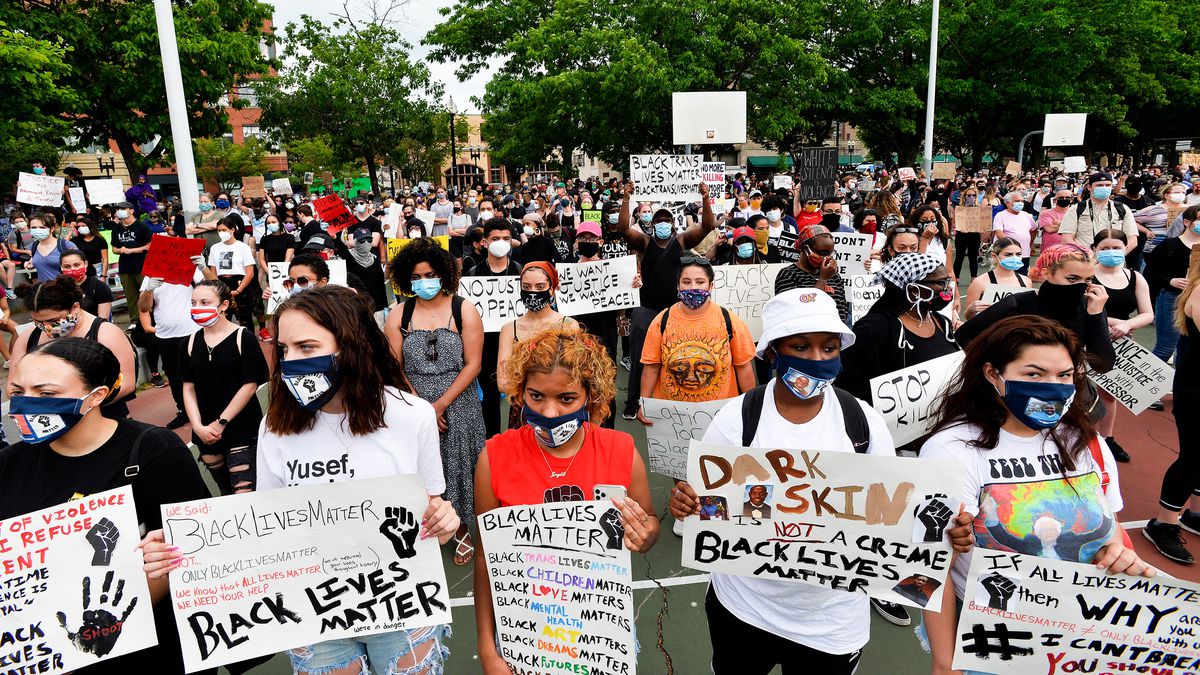
A crowd protests against the killing of George Floyd.
Hundreds of people gather to protest against the killing of George Floyd. Photo: Joseph Prezioso/AFP

Likewise, the lower castes in India are deemed to engage in servile, low-paying labor. 

In both countries, the indigenous groups (Native Americans in the US and Adivasis in India) are displaced from their ancestral lands.

Powerlessness

Both in the US and India, the division of labor into intellectual and menial gives birth to two segregated classes of people: both in educational institutions and social circles. The class structure determines what schools you attend, what neighborhood you live in, the social group you belong to, the education and health care you can afford, the jobs you can get, and the respect you receive from society. 

The class system, like caste, thus compartmentalizes people at birth and leaves them with little power to make a class transition. 

This is the strongest form of oppression as it leaves the oppressed voiceless and indoctrinated with negative images about themselves.

Violence

Both in the US and India, racial minorities and lower castes are victims of violence, the most visible form of oppression.

Mob lynching and rape of women of lower castes are not uncommon in India. In the US, the post-civil war mob-violence by dominant groups has transformed into condoned violence of African Americans by the state police.

Cultural and Intellectual Hegemony

Both American and Indian culture is heavily impacted by British colonization. For example, while both countries do not have an official language, English is the dominant language. Other languages and even accents are looked down upon.

Oppressed people gain an understanding and critical consciousness of themselves and others through education, literacy, and self-reflection. An equally dedicated effort might be required to educate, critically reflect upon, recognize, and accept one’s privilege.

ShareTweet
Priya Harindranathan

Priya Harindranathan

Ph.D. candidate at the School of Education and a research assistant at the Center for the Analytics of Learning and Teaching (C-ALT), Colorado State University. Her research interest includes multi-cultural education, cultural humility, technology-enhanced learning methods, and analytics. She has seven years of research experience in multiple cultural settings including in India, Germany, South Africa, and the US

Related Posts

A trial COVID-19 vaccine
Opinion

America’s Global Health Retreat Is a Gift to Its Rivals

by Thespina Yamanis, Elizabeth Lane, Natsuko Matsukawa, and Israel Olu
November 12, 2025
Donald Trump
Opinion

Fact vs. Fiction: The Trump Administration’s Dubious War on Reverse Discrimination

by Kevin Cokley
June 18, 2025
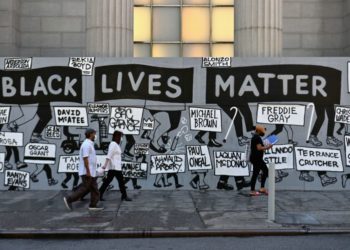
A Black Lives Matter mural in New York City.
Opinion

Fuhgeddaboudit! America’s Erasure of History

by Stephen J. Lyons
April 2, 2025
Smoke from the Palisades Fire in Pacific Palisades, California, from Santa Monica, California, on January 7
National

Los Angeles Fire Deaths at 10 as National Guard Called In

by Staff Writer with AFP
January 10, 2025
President Donald Trump and Ukrainian President Volodymyr Zelensky shake hands during a meeting in New York on September 25, 2019
World

Zelensky Says ‘Unpredictable’ Trump Could Help End War

by Staff Writer with AFP
January 2, 2025
President Donald Trump in the Brady Briefing Room of the White House.
National

Trump Wishes ‘Merry Christmas’ to ‘Left Lunatics’ in Frenzy of Social Posts

by Staff Writer with AFP
December 27, 2024
Next Post
Indigenous people from the Parque das Tribos community mourn at the death of Chief Messias of the Kokama tribe

Pandemic and Persecution: The Double Threat Facing Brazil's Indigenous

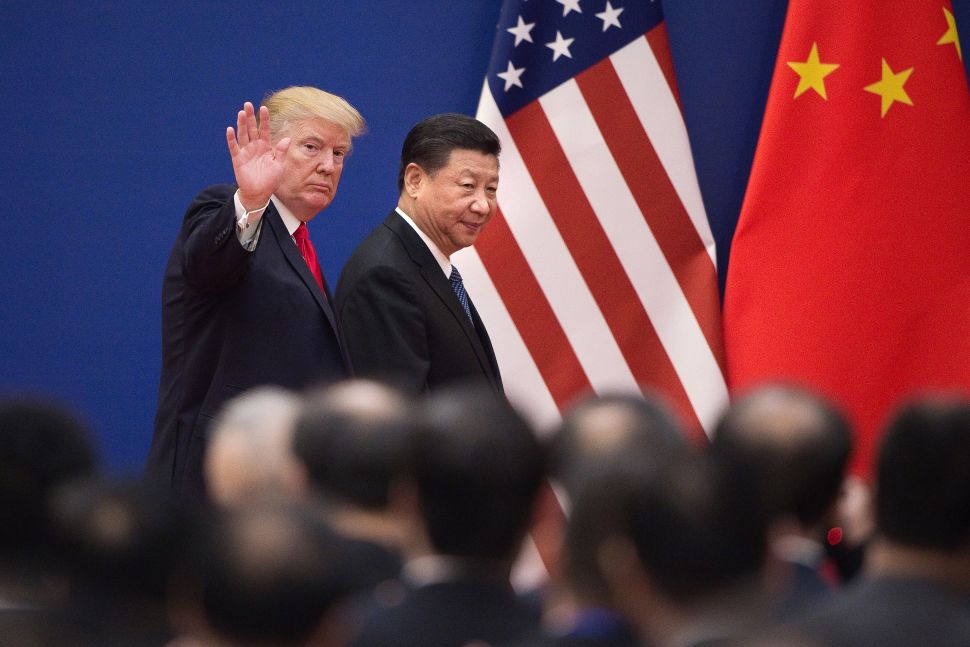
US President Donald Trump and China's President Xi Jinping in Beijing

America’s Grand Strategy in the Asian Century

Please login to join discussion

Recommended

The Fnideq (Morocco) - Ceuta (Spain) fence, located in northern Africa, is one of the main borders used by people on the continent to try to immigrate to the European Union. In September 2024, a massive attempt to cross the fence occurs, and the Moroccan police push back hundreds of people who head towards the Spanish exclave. In 2024, Spain receives 46,000 migrants.

Thousands Cross Into Spain’s North Africa Enclave in New Migrant Crisis

July 31, 2026
An armed Iranian police officer holding a rifle monitors the area as motorcyclists ride beneath a billboard depicting an AI-generated image of the Strait of Hormuz and an effigy of US President Donald Trump, displayed on the wall of a state building in downtown Tehran, Iran, on May 3, 2026.

US, Saudi Strike Iraq Alliance in Expanding War

July 29, 2026
Germany, Berlin, 26 july 2026, Gathering in tribute to the victims and all those affected by the attack on the 2026 CSD (Christopher Street Day/Pride) event, held at Pariser Platz.

Berlin LGBTQ Community Fears Far-Right ‘Exploitation’ of Pride Attack

July 27, 2026
AI chatbot applications.

Trump Under Pressure From All Sides Over Chinese AI Surge

July 24, 2026
Protesters gathered to condemn the detention of opposition leader of parliament, Rahul Gandhi, during a protest in New Delhi.

India Student Protests Keep Up Pressure on Modi Government

July 22, 2026
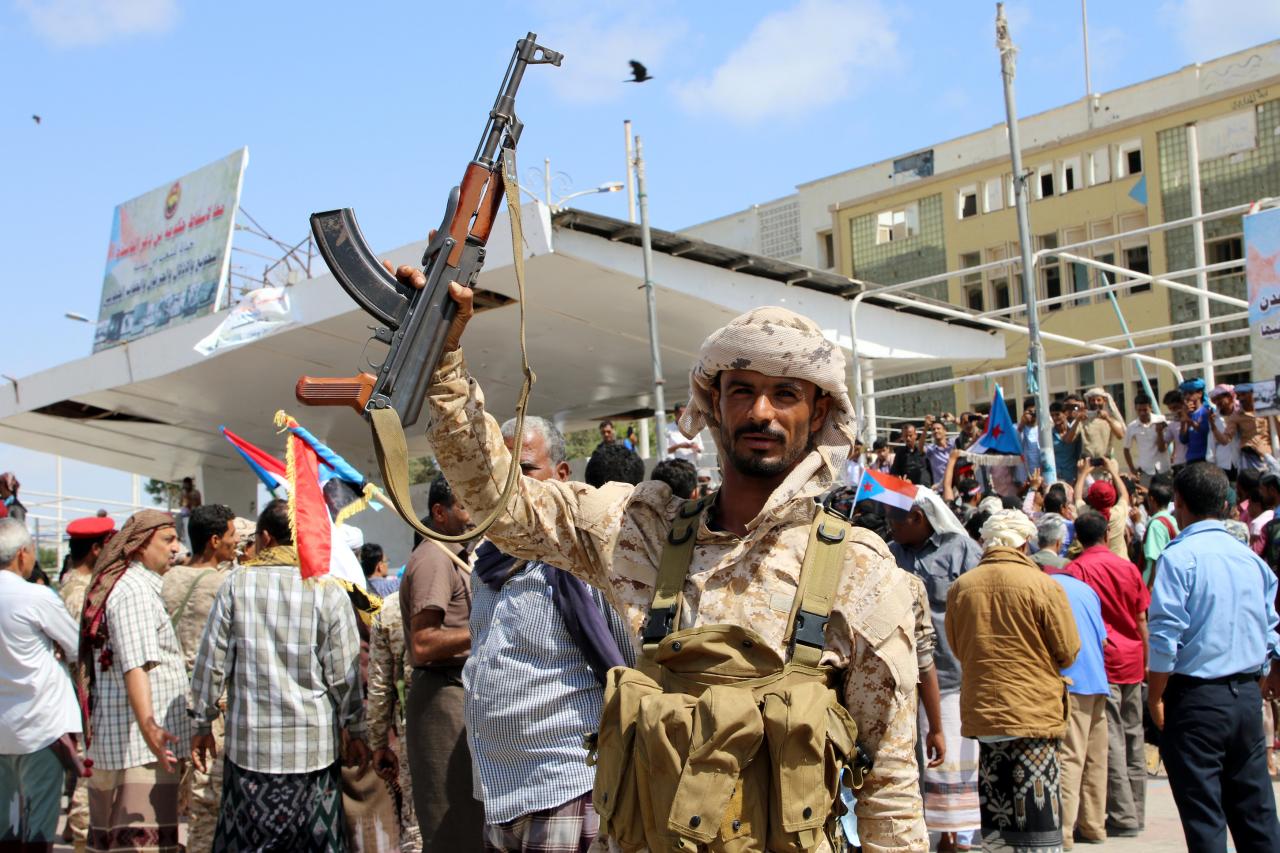
A southern Yemeni separatist fighter waves his rifle at the site of an anti-government protest in the port city of Aden, Yemen January 30, 2018.

Yemen’s Iran-Backed Houthis Announce Maritime Blockade of Saudi Arabia

July 20, 2026

Opinion

A Cuban street with a flag

Cuba Through a Pulse: Intimacy, Poverty, and the Shadow of Revolution

March 10, 2026
An Iranian walking in front of a wall painting of the Iranian flag in Tehran

Iran Can’t Dominate the Middle East Without Iraq

January 13, 2026
US President Donald Trump

Vladimir Trump and Blood for Oil

January 5, 2026
A trial COVID-19 vaccine

America’s Global Health Retreat Is a Gift to Its Rivals

November 12, 2025
Israeli Prime Minister Benjamin Netanyahu

UN Might Tolerate Netanyahu, and White House Might Welcome Him, But He’s Still Guilty of Genocide

September 30, 2025
Former President Donald Trump speaks at a Fox News Town Hall

Cruelties Are US

August 25, 2025
Facebook Twitter

Newsletter

Do you like our reporting?
SUBSCRIBE

About Us

The Globe Post

The Globe Post is part of Globe Post Media, a U.S. digital news organization that is publishing the world's best targeted news sites.

submit oped

© 2018 The Globe Post

No Result
View All Result
  • National
  • World
  • Business
  • Interviews
  • Lifestyle
  • Democracy at Risk
    • Media Freedom
  • Opinion
    • Editorials
    • Columns
    • Book Reviews
    • Stage
  • Submit Op-ed

© 2018 The Globe Post