


• About Us
  • Who Are We
  • Work With Us
Friday, November 6, 2026
No Result
View All Result
The Globe Post
39 °f
New York
44 ° Fri
46 ° Sat
40 ° Sun
41 ° Mon
  • National
  • World
  • Business
  • Interviews
  • Lifestyle
  • Democracy at Risk
    • Media Freedom
  • Opinion
    • Editorials
    • Columns
    • Book Reviews
    • Stage
  • Submit Op-ed
  • National
  • World
  • Business
  • Interviews
  • Lifestyle
  • Democracy at Risk
    • Media Freedom
  • Opinion
    • Editorials
    • Columns
    • Book Reviews
    • Stage
  • Submit Op-ed
No Result
View All Result
The Globe Post
No Result
View All Result
Home Featured

‘Space Pups’: Mouse Sperm Stored on ISS Produces Healthy Young

Staff Writer by Staff Writer
06/11/21
in Featured, Lifestyle
space mice

Healthy offspring and next generation of mice derived from space preserved spermatozoa Photo: Teruhiko Wakayama / AFP

Share on FacebookShare on Twitter

Japanese researchers found mouse sperm exposed to high levels of cosmic radiation for nearly six years produced a large brood of healthy, unremarkable “space pups.” 

Their study was published Friday in Science Advances — which noted no signs so far of Mousezillas or rodent Hulks. 

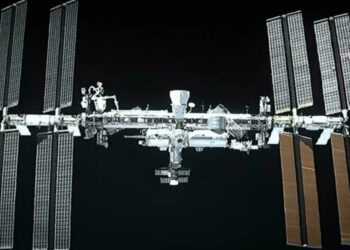
The sperm was stored in the International Space Station in freeze-dried form. Once brought back to Earth and rehydrated, it resulted in the birth of 168 young, free of genetic defects.

Developmental biologist and lead author Teruhiko Wakayama told AFP on Thursday that there was little difference between mice fertilized by space sperm and sperm that had remained confined to our planet. 

“All pups had normal appearance,” he said, and when researchers examined their genes “no abnormalities were found.”

In 2013, Wakayama and colleagues at the University of Yamanashi in Japan launched three boxes, each containing 48 ampoules of freeze-dried sperm, to the ISS for the long-term study. 

They wanted to determine whether long term exposure to radiation in space would damage DNA in reproductive cells or pass mutations along to offspring.

That could be a problem for our own species in future space exploration and colonization missions.

Batches were returned to Earth for fertilization after the first nine months, then after two years, and finally after six years, leading to hundreds of births.

Freeze-dried sperm was selected for the experiment because it can be preserved at room temperature, rather than needing a freezer.

The ampoules were also small and very light, about the size of a small pencil, further cutting launch costs.

When the space mice reached adulthood, they were randomly mated and the next generation appeared normal as well. 

Space colonies

Wakayama, now director for Advanced Biotechnology Center at the University of Yamanashi, told AFP he had been inspired by the science fiction of Heinlein and Asimov and once wanted to be an astronaut.

Though he settled on becoming a scientist, the sense of wonder and whimsy about space exploration never left him.

“In the future, when the time comes to migrate to other planets, we will need to mantain the diversity of genetic resources, not only for humans but also for pets and domestic animals,” Wakayama and colleagues wrote in their paper.

“For cost and safety reasons, it is likely that stored germ cells will be transported by spaceships rather than by living animals.”

Getting to other planets means leaving the safety of Earth’s protective atmosphere and magnetic field — which also extends to the ISS, 250 miles (400 kilometers) above the surface.

Deep space is filled with strong radiation from both solar particles and galactic cosmic rays from outside our system.

Solar flares from the surface of the Sun generate particles that can have particularly devastating impacts on human health and penetrate current generation spaceships.

According to Wakayama, the process of freeze drying sperm increases its tolerance compared to fresh sperm, since the former does not contain water inside its cell nuclei and cytoplasms.

According to the team’s calculations, freeze-dried sperm could be stored for up to 200 years on board the orbital outpost.

Humanity might also want to spread its genetic resources off planet in case of a disaster on Earth, the paper added.

The study noted it is still necessary to investigate the effects of space radiation on frozen female eggs and fertilized embryos before humans take this next step into the space age.

ShareTweet
Staff Writer

Staff Writer

AFP with The Globe Post

Related Posts

International Space Station
Featured

Russia Satellite Destruction Put ISS at Greater Risk: ESA Official

by Staff Writer
November 16, 2021
Dmitry Rogozin
World

Russian Social Media Users ‘Explain’ Mysterious Space Station Hole

by Staff Writer
October 2, 2018
Next Post
canada truck attack march

Interfaith March Honors Muslim Family Killed in Canada Truck Attack

Taj Mahal

Taj Mahal Reopens as India Eases Pandemic Restrictions

Recommended

The Fnideq (Morocco) - Ceuta (Spain) fence, located in northern Africa, is one of the main borders used by people on the continent to try to immigrate to the European Union. In September 2024, a massive attempt to cross the fence occurs, and the Moroccan police push back hundreds of people who head towards the Spanish exclave. In 2024, Spain receives 46,000 migrants.

Thousands Cross Into Spain’s North Africa Enclave in New Migrant Crisis

July 31, 2026
An armed Iranian police officer holding a rifle monitors the area as motorcyclists ride beneath a billboard depicting an AI-generated image of the Strait of Hormuz and an effigy of US President Donald Trump, displayed on the wall of a state building in downtown Tehran, Iran, on May 3, 2026.

US, Saudi Strike Iraq Alliance in Expanding War

July 29, 2026
Germany, Berlin, 26 july 2026, Gathering in tribute to the victims and all those affected by the attack on the 2026 CSD (Christopher Street Day/Pride) event, held at Pariser Platz.

Berlin LGBTQ Community Fears Far-Right ‘Exploitation’ of Pride Attack

July 27, 2026
AI chatbot applications.

Trump Under Pressure From All Sides Over Chinese AI Surge

July 24, 2026
Protesters gathered to condemn the detention of opposition leader of parliament, Rahul Gandhi, during a protest in New Delhi.

India Student Protests Keep Up Pressure on Modi Government

July 22, 2026
A southern Yemeni separatist fighter waves his rifle at the site of an anti-government protest in the port city of Aden, Yemen January 30, 2018.

Yemen’s Iran-Backed Houthis Announce Maritime Blockade of Saudi Arabia

July 20, 2026

Opinion

A Cuban street with a flag

Cuba Through a Pulse: Intimacy, Poverty, and the Shadow of Revolution

March 10, 2026
An Iranian walking in front of a wall painting of the Iranian flag in Tehran

Iran Can’t Dominate the Middle East Without Iraq

January 13, 2026
US President Donald Trump

Vladimir Trump and Blood for Oil

January 5, 2026
A trial COVID-19 vaccine

America’s Global Health Retreat Is a Gift to Its Rivals

November 12, 2025
Israeli Prime Minister Benjamin Netanyahu

UN Might Tolerate Netanyahu, and White House Might Welcome Him, But He’s Still Guilty of Genocide

September 30, 2025
Former President Donald Trump speaks at a Fox News Town Hall

Cruelties Are US

August 25, 2025
Facebook Twitter

Newsletter

Do you like our reporting?
SUBSCRIBE

About Us

The Globe Post

The Globe Post is part of Globe Post Media, a U.S. digital news organization that is publishing the world's best targeted news sites.

submit oped

© 2018 The Globe Post

No Result
View All Result
  • National
  • World
  • Business
  • Interviews
  • Lifestyle
  • Democracy at Risk
    • Media Freedom
  • Opinion
    • Editorials
    • Columns
    • Book Reviews
    • Stage
  • Submit Op-ed

© 2018 The Globe Post