

Submission of Turkey’s already battered judiciary into the political sway of the ruling party reached a new level, making judicial independence nothing but a dead letter.
Turkey’s sweeping purge in judiciary following an abortive coup attempt last summer created a shortage of judges and prosecutors in the face of a mountain of cases sprang up recently.
More than 4,000 judges and prosecutors have been sacked, and majority of them were placed behind bars. With the coup trials against tens of thousands of people are underway, a hard slog remains ahead for authorities to compensate the burning need for new judges.
To the astonishment of Turkey’s opposition and legal experts, the Turkish Justice Ministry compromised the legal procedure for selection of new judges, bypassing an impartial, merit-based process.
Under normal circumstances, Turkey’s aspirant judicial officials, prosecutors or lawyers, take judgeship exams after an excruciating preparation period and try their chances. Then they go through in-depth committee-like hearings by a bi-partisan jury of high justice to measure their fitness for the prestigious job. Their knowledge, erudition and vision are tested by veterans.
Earlier this month, the Turkish media reported that the Justice Ministry will hire new 2,750 judges and prosecutors. Of the needed positions, 750 of them will be recruited from attorneys. To fill the vacancies, there will be an exam on June 3, and then hearings by juries after exam results, the media reported. But despite the announcement, what happened was an entirely different story.
To the surprise of many, this long-held, well-established tradition was abandoned in the recent wave of recruitment of 900 new judges. Before June recruitment, to address the immediate problem, last month the ministry held exams to hire 1,500 judges, but only promoted 900 ones.
In a clear-cut over-interpretation of the law under the state of emergency, the Justice Ministry simply circumvented the usual legal procedure, razing the norms by, according to the opposition, fixing the exam results it recently held for judgeship positions.
Last week 800 lawyers who held different positions in rank and file cadres of ruling Justice and Development Party (AKP) have become judges after compromised and tailored selection process. The political intervention came into public view this week, with the main opposition party railing against the not-so-obscure politicization of Turkey’s judiciary.
Baris Yarkadas, a lawmaker from main opposition Republican People’s Party (CHP), unleashed a scathing criticism of the Justice Ministry, castigating how the ministry handled with the recent hiring process before June.
The centerpiece of the dispute lay at how the government twisted, manipulated the procedure of hiring 900 judges. According to Mr. Yarkadas, the government-controlled Justice Academy eliminated candidates who scored more than 80 points, while propelled those who got fewer than 55 points.
What was more jarring than that was the fact that only 900 of 1500 candidates became judges after a process driven by nepotism, patronage links, and favoritism, elements that killed the very essence of professionalism that long defined Turkey’s once independent judiciary. And, as Mr. Yarkadas detailed at great length, 800 of the newly hired judges had been AKP officials before being promoted as judges.
That represents a high-water mark of politicization of Turkey’s judicial body. It was never this rotten before in living memory even by Turkey’s not-so-perfect standards.
Filling vacant judicial positions by party members gives the government a direct control over an already gutted judiciary whose members have been too frightened to challenge political authorities, voluntarily refraining from taking any legal action, or ruling against it.
“According to the information I obtained from judicial sources, there is a disheartening picture regarding judgeship exams… They released results after referendum… To avoid charges of nepotism, they waited until the end of the referendum, ” Mr. Yarkadas told media.
In a stunning revelation, the CHP lawmaker said the only criteria that defined those who passed the selection process was that majority of them were from rank and file of the AKP.
“By [promoting] its cadres to [positions of] judges, AKP aims to control the judiciary,” he said in a vivid display of fulmination.
Among new names, he offered a few specific figures to explain the gist of the matter. Kadir Nozoglu served as AKP provincial bureau chief in the eastern province of Elazig before being appointed as a judge.
Recently selected Judge Behice Cavusoglu was AKP’s women body chairman in Black Sea province of Giresun, is another case in point. According to Mr. Yarkadas, the government may consider grooming Ms. Cavusoglu for position of high justice in Supreme Court, or as a member of Council of Judges and Prosecutors. Given that the former AKP official was among the richest in Giresun, a leading taxpayer/champion, he suggested, that there must be an alluring reason for her to thrust into judiciary where judges earn relatively low salaries.
Ceyda Bozdag, a leading official in the western province of Edirne, and Hacer Alan, a lawyer representing Ankara Mayor Melih Gokcek, are among the newly appointed judges who will manage judicial affairs.
For the opposition lawmaker, lines between the executive power and the judiciary have been blurred to the detriment of rule of law and judicial independence. The recent party takeover of the positions of judges has upended last vestiges of an independent judiciary, rendering it to a rubber-stamp serving for the government’s political agenda.
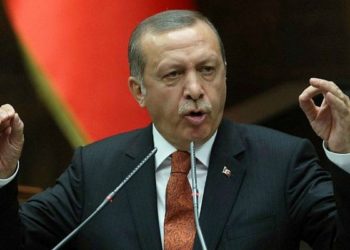
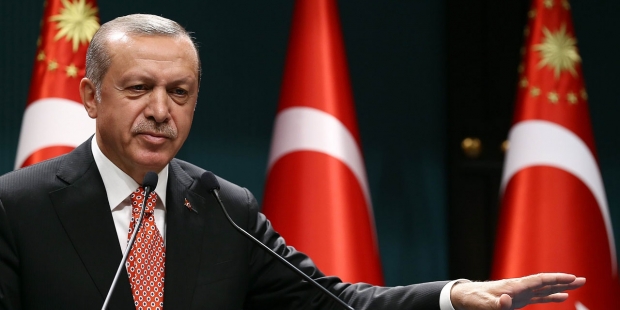
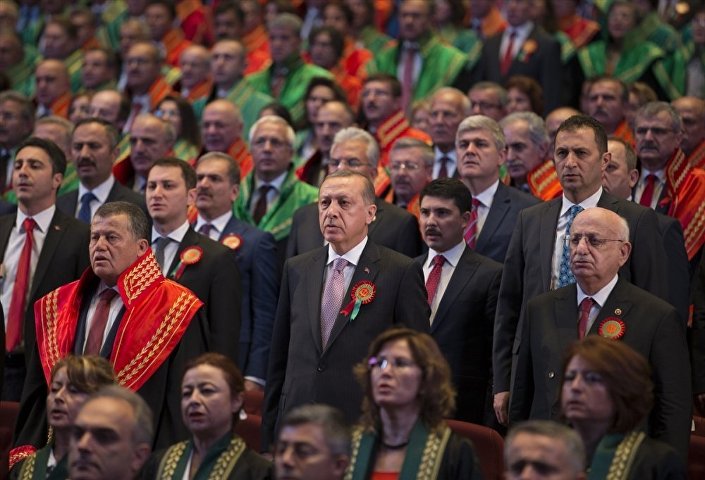
To the befuddled deputy, AKP is turning Turkey into a party-state. He reproached senior judicial officials for publicly displayed efforts to curry the favor of the government. In one particular case last year, President Recep Tayyip Erdogan took senior members of top court and Supreme Court to his hometown Rize where they jointly collected tea leaves in a field of green tea.
That public event ingrained in collective memory as an embarrassing moment for senior judges for acquiescence to the political courtship of President Erdogan.
But if things did not run smoothly over the hiring new judges last week, the referendum result would undoubtedly have far worse ramifications for the judiciary in the future. In a momentous vote on April 16, the Turkish people endorsed a constitutional amendment bestowing unchecked and unlimited powers on the presidential office.
When the constitutional change once goes into effect in 2019, President Erdogan will have a greater say in the election of judges and prosecutors. His direct sway over Constitutional Court and the Council of Judges and Prosecutors will be the last nail in the coffin for the already fraying judicial independence.
********
This article was possible thanks to your donations. Please keep supporting us here.