
• About Us
  • Who Are We
  • Work With Us
Monday, March 16, 2026
No Result
View All Result
The Globe Post
39 °f
New York
44 ° Fri
46 ° Sat
40 ° Sun
41 ° Mon
No Result
View All Result
The Globe Post
No Result
View All Result
Home Featured

North Korea’s Olympic Charm Offensive

Marco Milani and Markus Bell by Marco Milani and Markus Bell
01/26/18
in Featured, Opinion
North Korean leader Kim Jong-un

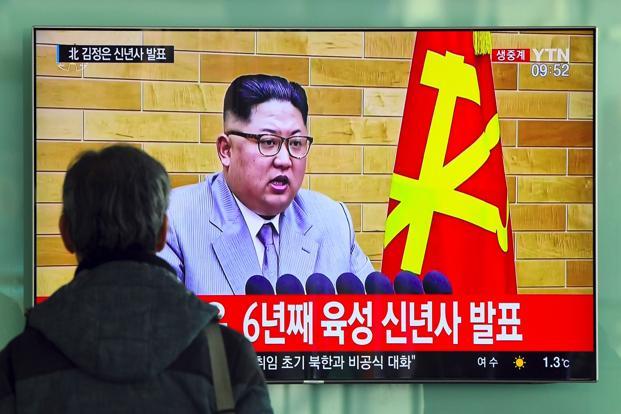
A man watches a television news broadcast, showing North Korean leader Kim Jong-un’s New Year’s address, at a railway station in Seoul. Photo: AFP

Share on FacebookShare on Twitter

North Korea’s participation in the upcoming Pyeongchang Winter Olympics has caught the world by surprise. Following North Korean leader Kim Jong-un’s New Year proposal for dialogue, the two Koreas agreed to a 550 North Korean delegation to join the Games from February 9. The apparent détente comes after North Korean nuclear and missile tests have ratcheted up tensions on the Korean Peninsula to dangerous levels, and barbed exchanges between Kim and President Donald J. Trump had policy makers predicting a second Korean War.

After two years of a relations freeze the two Koreas are planning on marching together during the opening ceremony and fielding a joint women’s ice hockey team. Is Kim Jong-un’s Olympic olive branch a strategy to break the isolation caused by its nuclear and missile advancements? Will North Korea’s Olympic charm offensive evolve into something bigger?

South Korean President, Moon Jae-in welcomed developments as a “precious chance to open the door” and establish peace between the two Koreas. But Moon is facing falling approval ratings and a backlash from conservatives and young South Koreans who claim that experimenting with sports diplomacy disadvantages South Korean athletes.

South Korea’s recently inaugurated President wants it both ways: pushing for dialogue with the North since his inauguration while supporting international sanctions. The South Korean progressive leader has said that the thaw will not extend to ending economic sanctions on the North. Until now, North Korea has rebuffed Southern attempts at dialogue. Kim’s New Year address put Pyongyang in the driver’s seat of inter-Korean relations, sending a clear signal that North Korea is willing to talk, but only on its own terms.

Korean Olympic collaboration threatens to upend U.S. strategy towards North Korea. The White House has pursued a dual strategy of its own, pressuring North Korea through punitive sanctions and the threat of military intervention, while also claiming an openness to dialogue. The fear is North Korea is trying to create a wedge between the U.S.-South Korea alliance: closer North and South Korea cutting U.S. interests out of negotiations. The Trump administration has appeared cautious on developments. A spokesman for the National Security Council commented, “Let’s hope that the experience gives the North Korean athletes a small taste of freedom and that it rubs off.”

We should not expect the Olympic inspired dialogue to result in North Korean denuclearization. North Korea has made very clear that its reaching out to the South has nothing to do with its nuclear program. But it could create a favorable environment for improving inter-Korean relations.

The neutrality and low political profile of sports mean that seemingly innocuous events have the potential to foster an environment for cooperation between rivals. But there are always limits on what can be achieved: sport is sport and an excessive politicization – or securitization – of sport is likely to result in disappointment. Sport can create favorable conditions, but a complicated process of negotiations on delicate issues such as the nuclear and missile issue must be based on a clear political strategy.

Under previous South Korean administrations, sporting cooperation was part of a broader strategy of engagement towards North Korea and was significant for its symbolic role. But the line between politics – in this case, nuclear politics – and cultural exchange was clear during South Korea’s Sunshine drive.

South Korea’s enthusiastic response to Kim Jong-un’s overtures raises an important question: what is Seoul’s strategy in dealing with the North? In a short-term perspective, Pyongyang’s Olympic participation offers reassurance against North Korean military provocations during the Games. But in the long term, the “dual track” approach – dialogue with sanctions – will fail to improve inter-Korean relations and reduce the North Korean nuclear threat.

Olympic cooperation will evolve into something more substantial. But only if Seoul is ready to put aside hopes of North Korean de-nuclearization, at least temporarily, and focus on inter-Korean cooperation and fostering goodwill.

Disclaimer: The views and opinions expressed here are those of the author and do not necessarily reflect the editorial position of The Globe Post.

ShareTweet
Marco Milani and Markus Bell

Marco Milani and Markus Bell

Dr. Marco Milani is a lecturer at the School of International Relations, University of Southern California. Dr. Markus Bell is an anthropologist at the University of Sheffield’s School of East Asian Studies. Follow them on Twitter @marcomilani05 @mpsbell

Related Posts

Citizens cheer after the impeachment of President Yoon Suk-yeol is passed in Seoul, South Korea, on December 14, 2024
World

South Korea’s Yoon Impeached: What Happens Next?

by Staff Writer with AFP
December 20, 2024
Hundreds of citizens gather in front of the National Assembly in Seoul, South Korea, on December 4, 2024, demanding the repeal of the martial law declared by the Yoon Suk-yeol administration and face off against the police
Democracy at Risk

Disbelief, Outrage at South Korea’s Short-Lived Martial Law

by Staff Writer with AFP
December 3, 2024
North Korean leader Kim Jong-un
World

Ties With Russia Entering New Era, N. Korea’s Kim Say

by Staff Writer with AFP
June 19, 2024
South Korean opposition party leader Lee Jae-myung is attended to after being attacked in Busan
World

S. Korean Opposition Leader Recovering in Intensive Care After Stabbing

by Staff Writer with AFP
January 3, 2024
South Korea Halloween crush
World

South Korea to Hold Police Accountable for Tragic Halloween Crush 

by Staff Writer
November 2, 2022
China Muslim Uyghurs
Opinion

Unfair Politicization, Corruption, and the Death of Modern Olympism

by Jianli Yang
April 23, 2022
Next Post
Mohammed bin Salman

Saudi Jails Two Human Rights Defenders: Amnesty International

Morocco

Four Moroccan Journalists are on Trial for Publishing Parliamentary Debate

Please login to join discussion

Recommended

Russian President Vladimir Putin

Moscow Pushes US to Ease More Oil Sanctions

March 13, 2026
An Iranian woman walks past an anti-US mural painted on the wall of the former US embassy in Tehran on November 19, 2011

How Is Trump’s ‘Freedom’ War Seen by Those It Aimed to Help?

March 11, 2026
A Cuban street with a flag

Cuba Through a Pulse: Intimacy, Poverty, and the Shadow of Revolution

March 10, 2026
An aerial view of the Beirut port after the explosion. The blast created a 140 meter (460 feet) wide crater that has since filled with sea water. Photo: AFP.

Water Emerges as a Dangerous New War Target

March 9, 2026
Plumes of smoke rise following reported explosions in Tehran on March 1, 2026, after Iran's supreme leader, Ayatollah Ali Khamenei, was killed a day earlier in a large US and Israeli attack, prompting a new wave of retaliatory missile strikes from Iran.

War in the Middle East: Latest Developments

March 5, 2026
An Iranian motorcyclist rides past the Gandhi Hospital, which is damaged after US-Israeli strikes on a state TV telecommunication tower nearby in Tehran, Iran, on March 2, 2026.

Bombing Iran, Trump Has ‘Epic Fury’ but Endgame Undefined

March 3, 2026

Opinion

A Cuban street with a flag

Cuba Through a Pulse: Intimacy, Poverty, and the Shadow of Revolution

March 10, 2026
An Iranian walking in front of a wall painting of the Iranian flag in Tehran

Iran Can’t Dominate the Middle East Without Iraq

January 13, 2026
US President Donald Trump

Vladimir Trump and Blood for Oil

January 5, 2026
A trial COVID-19 vaccine

America’s Global Health Retreat Is a Gift to Its Rivals

November 12, 2025
Israeli Prime Minister Benjamin Netanyahu

UN Might Tolerate Netanyahu, and White House Might Welcome Him, But He’s Still Guilty of Genocide

September 30, 2025
Former President Donald Trump speaks at a Fox News Town Hall

Cruelties Are US

August 25, 2025
Facebook Twitter

Newsletter

Do you like our reporting?
SUBSCRIBE

About Us

The Globe Post

The Globe Post is part of Globe Post Media, a U.S. digital news organization that is publishing the world's best targeted news sites.

submit oped

© 2018 The Globe Post

No Result
View All Result
  • National
  • World
  • Business
  • Interviews
  • Lifestyle
  • Democracy at Risk
    • Media Freedom
  • Opinion
    • Editorials
    • Columns
    • Book Reviews
    • Stage
  • Submit Op-ed

© 2018 The Globe Post