


• About Us
  • Who Are We
  • Work With Us
Friday, November 13, 2026
No Result
View All Result
The Globe Post
39 °f
New York
44 ° Fri
46 ° Sat
40 ° Sun
41 ° Mon
  • National
  • World
  • Business
  • Interviews
  • Lifestyle
  • Democracy at Risk
    • Media Freedom
  • Opinion
    • Editorials
    • Columns
    • Book Reviews
    • Stage
  • Submit Op-ed
  • National
  • World
  • Business
  • Interviews
  • Lifestyle
  • Democracy at Risk
    • Media Freedom
  • Opinion
    • Editorials
    • Columns
    • Book Reviews
    • Stage
  • Submit Op-ed
No Result
View All Result
The Globe Post
No Result
View All Result
Home Opinion

Here’s Why You Can’t Trust Free VPN Apps

Rahul Telang by Rahul Telang
12/28/18
in Opinion
computer keyboard

Photo: AFP

Share on FacebookShare on Twitter

Internet, by default, does not provide security and privacy when exchanging data. On the open web, sophisticated hackers would have no difficulty in intercepting traffic and stealing confidential information and user identities. Virtual Private Networks (VPNs) provide protection by encrypting data from the designated server to the user machine so that even if data is intercepted, it cannot be read. VPNs are quite popular, but can these apps be trusted?

Most firms set up VPNs for their employees to access content and services remotely. The technology facilitates ready access to data – a critical element of competitiveness in today’s world – without having to sacrifice security and authentication.
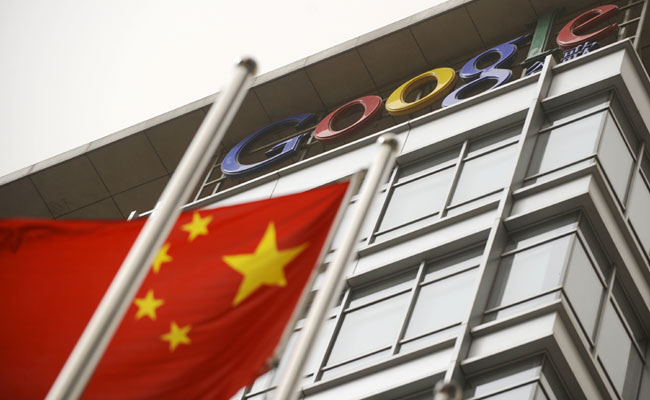
A Chinese flag wavers in front of a Google building.
Google launched its China-based search page in 2006 but left the country four years later. Photo: AFP

Many users also use VPNs to bypass content censorships that many countries or content creators impose. For example, Netflix may not allow customers to access certain shows when they are across the border, even if the user is a legitimate subscriber. Countries like China censor content and prohibit access to sites or services (for example Google). In such cases, users set up VPNs to access the content by hiding the destination IP addresses which are blocked.

Privacy, Security, and Anonymity

There are hundreds of VPN apps out there which all promise privacy, security, and anonymity. Unfortunately, the reality is not as rosy as it looks.

In general, the app market is poorly regulated and many apps, beyond VPNs, provide little information about how they collect data. The current Facebook crisis suggests that, despite substantial spotlight, it is very hard to know how and where firms collect and share users’ data.

With smaller apps that receive little or no attention this problem is significantly worse. It gets even shoddier when app developers come from countries like China, where quality is mostly unverifiable and consequences for developers are minimal. Many of the VPN apps are offered by Chinese developers. This is no surprise since VPNs are particularly useful in China where content access is significantly restricted.

Challenges of Using VPNs

One of the challenges of using VPNs is that while the apps may protect users’ communication to the outside world, there is nothing that stops providers from collecting this data. It may also be impossible to verify whether the services the providers promise are actually being offered.

The majority of Chinese VPN apps are offered for free. It is impossible for any app developer (particularly small ones) to provide a service for free without getting something back in return. So, it is likely that these apps collect users’ data which they then use to sell advertisement. Or worse, they might sell this collected data to third-party aggregators without users’ knowledge. Even worrisome is that some of these apps may become a source of malware and surveillance and capture all sorts of information exchange without any transparency to users.
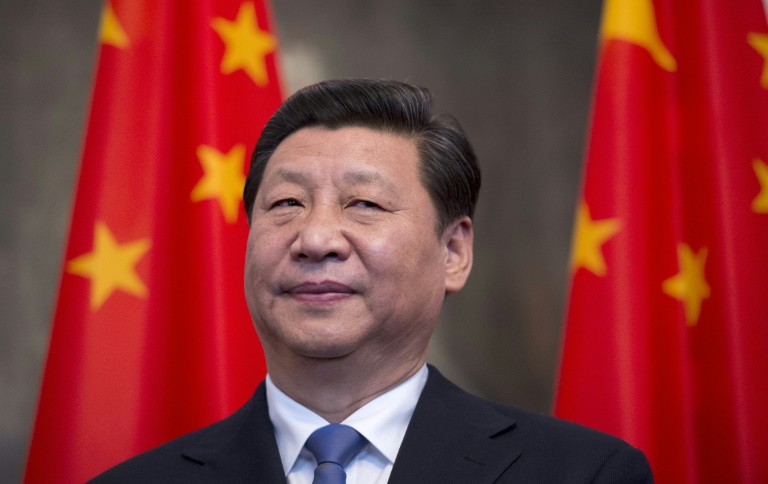
Chinese President Xi Jinping

online pharmacy fluoxetine over the counter with best prices today in the USA

Chinese President Xi Jinping. Photo: AFP

Because the Chinese government tightly controls all aspects of the internet, the suspicion that these app developers spy on user data or turn over this information to government agencies is not unfounded. Most users set up VPNs to hide their identity and generally exchange sensitive and confidential information, making a lack of VPN security even more insidious. In short, an unscrupulous VPN app is significantly worse than a general unscrupulous app.

Free Apps Compromise Privacy

As a rule of thumb, any free app is likely to compromise user privacy. This problem is compounded if the app comes from a country where the government is known for snooping on data.

Unfortunately, it is the “freeness” of these apps that make them attractive. The majority of consumers is unlikely to read privacy policies or understand what the firm might be doing with the data.

We need to shine the spotlight on such practices via academic papers and reports that highlight the widespread misuse of user data prevalent in the big wild world of mobile apps. There are sources that check the claims VPN service providers make and rank them on various attributes. App platforms also hold a responsibility to ensure that the apps they offer are not harmful to users.

At the end of the day, customers have to be vigilant. If they are smart enough to use VPNs, they ought to be smart enough to understand the risks of using such apps and make informed decisions in downloading the right one.

Share9Tweet
Rahul Telang

Rahul Telang

Professor of Information Systems and Management at the Heinz College at Carnegie Mellon University and at the Tepper School of Business, Pittsburgh, Pennsylvania

Related Posts

Google logo
World

Sweden Orders Four Companies to Stop Using Google Tool

by Staff Writer
July 4, 2023
A woman checks her phone as she shelters under an umbrella in the rain on Oxford Street in London on June 18, 2020, as some non-essential retailers reopen from their coronavirus shutdown.
Opinion

Tech’s Dominant Power Undermines Our Human Right to Privacy

by Michael Kleinman
July 28, 2020
Austrian privacy activist Max Schrems
World

Win for Privacy: EU Court of Justice Invalidates EU-US Data Transfer Agreement

by Victoria Mulville
July 20, 2020
A man gets an error message while attempting to access the internet on his phone at an office in Iran's capital Tehran, November 17.
Opinion

Iran’s Insoluble Paradox of Cutting Off the Internet

by Hamid Enayat
January 14, 2020
a Rohingya refugee camp in Bangladesh
Featured

Bangladesh Cuts Mobile Internet Access in Rohingya Camps

by Staff Writer
September 10, 2019
Indonesia's President Joko "Jikowi" Widodo
Featured

Indonesia Blocks Internet in Papua Amid Major Unrest, Rioting

by Staff Writer
August 22, 2019
Next Post
Mohammed bin Salman

Saudi King Orders Government Reshuffle After Khashoggi Murder Fallout

A Mosul checkpoint held by Islamic State militants on June 16, 2014

Psychological Wounds: Rehabilitating the Child Victims of ISIS

Recommended

The Fnideq (Morocco) - Ceuta (Spain) fence, located in northern Africa, is one of the main borders used by people on the continent to try to immigrate to the European Union. In September 2024, a massive attempt to cross the fence occurs, and the Moroccan police push back hundreds of people who head towards the Spanish exclave. In 2024, Spain receives 46,000 migrants.

Thousands Cross Into Spain’s North Africa Enclave in New Migrant Crisis

July 31, 2026
An armed Iranian police officer holding a rifle monitors the area as motorcyclists ride beneath a billboard depicting an AI-generated image of the Strait of Hormuz and an effigy of US President Donald Trump, displayed on the wall of a state building in downtown Tehran, Iran, on May 3, 2026.

US, Saudi Strike Iraq Alliance in Expanding War

July 29, 2026
Germany, Berlin, 26 july 2026, Gathering in tribute to the victims and all those affected by the attack on the 2026 CSD (Christopher Street Day/Pride) event, held at Pariser Platz.

Berlin LGBTQ Community Fears Far-Right ‘Exploitation’ of Pride Attack

July 27, 2026
AI chatbot applications.

Trump Under Pressure From All Sides Over Chinese AI Surge

July 24, 2026
Protesters gathered to condemn the detention of opposition leader of parliament, Rahul Gandhi, during a protest in New Delhi.

India Student Protests Keep Up Pressure on Modi Government

July 22, 2026
A southern Yemeni separatist fighter waves his rifle at the site of an anti-government protest in the port city of Aden, Yemen January 30, 2018.

Yemen’s Iran-Backed Houthis Announce Maritime Blockade of Saudi Arabia

July 20, 2026

Opinion

A Cuban street with a flag

Cuba Through a Pulse: Intimacy, Poverty, and the Shadow of Revolution

March 10, 2026
An Iranian walking in front of a wall painting of the Iranian flag in Tehran

Iran Can’t Dominate the Middle East Without Iraq

January 13, 2026
US President Donald Trump

Vladimir Trump and Blood for Oil

January 5, 2026
A trial COVID-19 vaccine

America’s Global Health Retreat Is a Gift to Its Rivals

November 12, 2025
Israeli Prime Minister Benjamin Netanyahu

UN Might Tolerate Netanyahu, and White House Might Welcome Him, But He’s Still Guilty of Genocide

September 30, 2025
Former President Donald Trump speaks at a Fox News Town Hall

Cruelties Are US

August 25, 2025
Facebook Twitter

Newsletter

Do you like our reporting?
SUBSCRIBE

About Us

The Globe Post

The Globe Post is part of Globe Post Media, a U.S. digital news organization that is publishing the world's best targeted news sites.

submit oped

© 2018 The Globe Post

No Result
View All Result
  • National
  • World
  • Business
  • Interviews
  • Lifestyle
  • Democracy at Risk
    • Media Freedom
  • Opinion
    • Editorials
    • Columns
    • Book Reviews
    • Stage
  • Submit Op-ed

© 2018 The Globe Post