
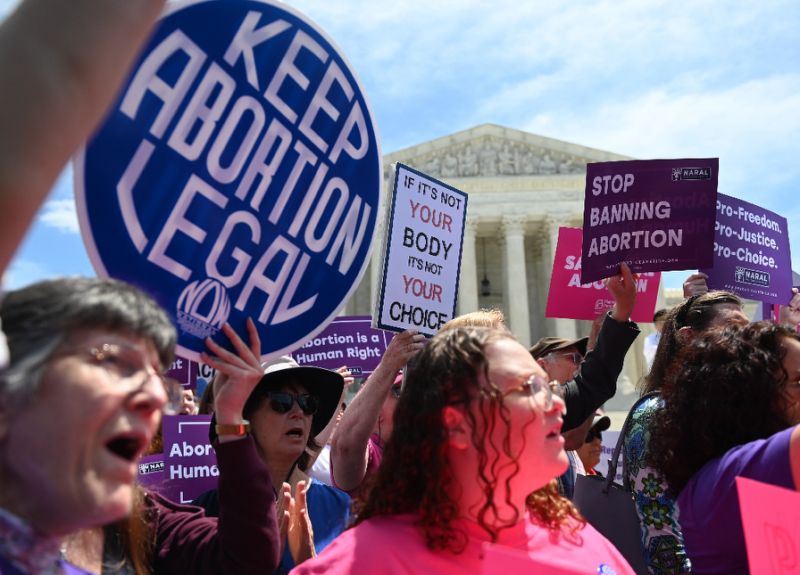
Alabama passed a bill restricting abortion in almost all cases, drawing international attention. Though 23 states have introduced bills banning abortion after a fetal heartbeat is detected since 2011 – the so-called “heartbeat bills” – it was not until this year that several states have succeeded in passing them.
Loss of abortion in Alabama and across the country indicates a loss of separation of church and state, a loss of accountability to voters, and a loss of protection of human rights for those most marginalized. Along with these losses is any credibility the United States had when it comes to protecting women’s rights or even access to credible information about pregnancy, abortion, and other aspects of reproductive health care.
The shift to criminalize abortion is a move in a disturbing direction, and Alabama’s bill is part of a dangerous effort by a small group of actors in the United States that aims to restrict sexual and reproductive rights on a national as well as international scale.
There is a recognition that the Alabama bill was written in such an extreme that it would prompt a backlash. This would, legislators hoped, force the Supreme Court to ultimately overturn Roe V. Wade which currently protects abortion.
In this way, the most radical of the “heartbeat bills” is a testimony of the increasing anti-women and anti-LGBTQ language within the Donald J. Trump administration, resulting in human rights violations domestically.
Access to Abortion
Losing access to safe, affordable abortion can have horrific repercussion. When Romania outlawed abortion between 1969 and 1989, an estimated 10,000 women died as a result of unsafe procedures, with many of them resorting to back-alley abortions.
But one only needs to look at states like Mississippi and Texas to see the impacts of denying access to abortion.

In Mississippi, the chipping away of abortion access has been underway for years through increasing restrictions on care, resulting in the closure of seven abortion clinics between 1992 and 2014. In that period, the number of abortions declined by two-thirds, despite much higher unintended and teen pregnancy rates than the national average.
In Texas, women face a similar “abortion desert,” with some cities over 100 miles from an abortion provider taking time off work, incurring expenses for travel, delaying further into pregnancy for the abortion along with the additional mental stresses that come with traveling for medical care.
Even when abortion is legal, it remains difficult to obtain. In 2014, about 99 percent of Mississippi counties had no clinics providing abortion, and 91 percent of Mississippi women lived in those counties. In the entire United States, 90 percent of counties had no abortion clinics in 2014, with some 39 percent of women of reproductive age living in those countries.
Restriction on the service places disproportionate hardships on low-income women, young women, and women of color. Due to long waiting periods, a lack of funding, and the need to travel distances to access abortion, these women are more likely to seek the care later in their pregnancies.
Protecting Abortion
It speaks to the continuing stigma for reproductive health care that access to abortion is so limited. Many women are working to shift this by sharing their stories of abortion. Resisting stigma on the state level requires politicians taking steps, such as Democratic Senator and presidential candidate Elizabeth Warren’s abortion-rights platform.
The current abortion bills speak to whether or not the government is able to protect the human rights of its citizens. The move to restrict access does not represent the will of the American citizens who by majority believe in the right to abortion.
Abortion bans aren’t just about controlling women’s bodies.
They’re about controlling women’s sexuality. Owning women.
From limiting birth control to banning comprehensive sex ed, US religious fundamentalists are working hard to outlaw sex that falls outside their theology.
— Alexandria Ocasio-Cortez (@AOC) May 16, 2019
In the state of Rhode Island, for example, voters have been pushing lawmakers to pass the Reproductive Health Care Act to protect access to abortion on the state level should Roe V. Wade be overturned. Some states like New York State and Vermont have already passed similar bills to protect abortion access should Roe be overturned.
‘Protecting the Family’
The bill in Alabama is part of a strategy to restrict access to reproductive health care at a time that the Trump administration is also working to roll back transgender rights. These initiatives are deeply tied under the umbrella of “protecting the family” through a religious minority that has gained a foothold in the current political climate.
The stated motivations behind the abortion bill mirror language about “gender ideology” and “protecting the family” elsewhere. This violent rhetoric appeals to those threatened by feminism along with talk of gender. Making space for this rhetoric has already resulted in increasing sexism and an increase in hate crimes against LGBTQ people in the United States. It also mirrors the rhetoric in places like Colombia, Brazil, Russia, and Hungary, where a pushback against gender equality has played a powerful role in politics.
This global dimension is also present in the Trump administration’s decision in March to expand its ban on funding for groups that conduct abortions or advocate for such rights, known as the global gag rule. The policy extension cuts funding to foreign NGOs directly involved in abortions or rights advocacy, and to those who support other groups which provide or discuss abortion.
Backsliding
The bill in Alabama comes just weeks after the passage of the most recent of U.N. resolution meant to protect survivors of sexual violence. During the negotiations at the Security Council, the United States pushed back against the use of the word gender or language about gender minorities, ultimately leading to a much weaker resolution. The weaker language points to backsliding in progress for attention to gender in peace and security work, and also indicates that in this political climate the United States cannot be relied on to protect the rights of gender and sexual minorities.
Whether those in office in the United States government stand up to protect abortion domestically ultimately has a ripple effect on human rights for gender and sexual minorities around the world.
Disclaimer: The views and opinions expressed here are those of the author and do not necessarily reflect the editorial position of The Globe Post.