

Although foreign policy has begun to drift from the headlines into the Democratic presidential primary conversation, thus far, it has not led to any innovative proposals.
Let’s have a quick look into the state of American foreign policy. The current president’s approach to foreign affairs is awash with contradictions and unpredictability.
Donald J. Trump actively embraces xenophobic rhetoric, shuns multilateralism, distances the U.S. from traditional allies, and cozies up to historic rivals and dictators. His administration has increased sanctions and is threatening war with Iran over its alleged nuclear program, may be violating international law regarding asylum seekers, and has withdrawn from the Paris Climate Accord. All this, while the country is involved in conflicts in Afghanistan, Pakistan, Somalia, Iraq, Syria, Yemen, and Libya.
Democratic Candidates’ Proposals
In response to this chaos, Democratic candidates campaigning for the presidency in 2020 have largely agreed on two overarching proposals: cutting defense spending and vaguely pledging to “stop endless wars.” There have been additional proposals on specific conflict situations, military pollution and carbon emissions, and aid to Central America.
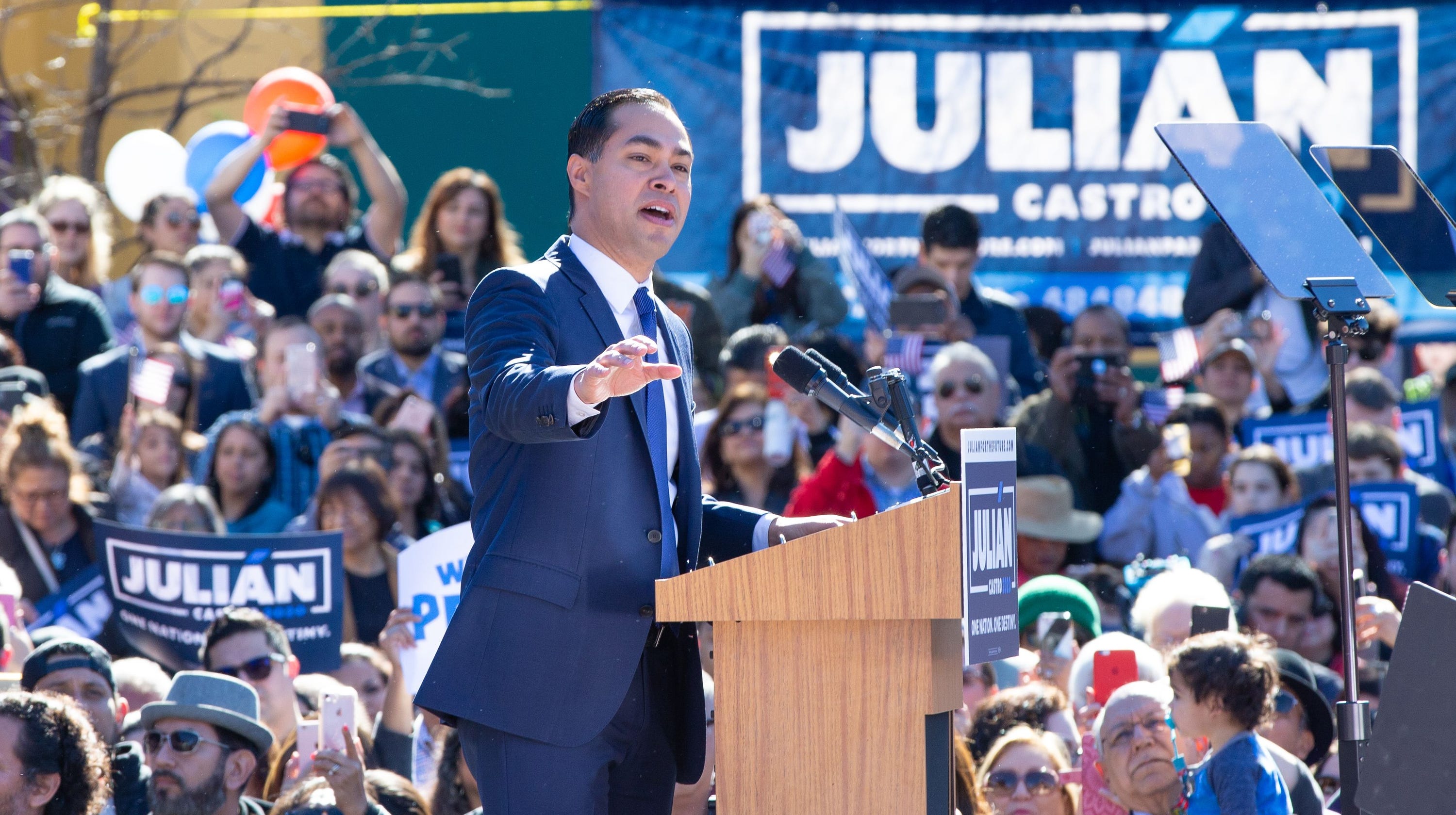
I'm proposing a 21st century Marshall Plan for Central and South America so people can find safety, security and opportunity in their home countries. We need to invest more, not less as Trump suggests, in order to lower the amount of families needing asylum. #PeopleFirst pic.twitter.com/3fHXJlgyOD
— Julián Castro (@JulianCastro) April 23, 2019
These are a good start. Globally, military expenditure in 2018 was over $1.8 trillion, and American spending made up a whopping $750 billion of that total. Reducing defense spending and developing a high bar for entering conflicts are vital steps towards building peace and collective security.
If incrementalism was in vogue, perhaps these proposals would suffice. But American progressives have worked tirelessly to push the policy agenda left, including on healthcare, student debt, immigration, and climate change. This momentum shows no signs of stopping: more and more young progressives are running for office, working to fix the country’s broken systems from the bottom up.
Reviving Old Vocabulary
If Democratic presidential candidates truly care about “progressive values,” they have a responsibility to practice what they preach in the international arena.
Where Trump has “America First,” they cannot just respond with nostalgia for a pre-Trump world. The challenges of the 21st century cannot be met through the same old loaded vocabulary of “intervention,” “national security,” “spreading democracy,” “defending human rights,” and “combating authoritarianism and extremism.”
Reviving old vocabulary is doomed to repeat old outcomes. And Democratic candidates must face the reality that to a lot of the world, business-as-usual has meant war, bloodshed, and ruthless pursuit of American interests over the lives of other human beings. This has also been to the detriment of many in the United States, who have experienced trauma and the brutality of our wars.
Repairing Past Harm and Looking Ahead
If a Democrat wins in 2020, they must commit to a bold vision for repairing past harms and pushing positive agendas forward, especially on peace, sustainable development, technology, migration, and human rights.
Next week ICE will begin the process of removing the millions of illegal aliens who have illicitly found their way into the United States. They will be removed as fast as they come in. Mexico, using their strong immigration laws, is doing a very good job of stopping people…….
— Donald J. Trump (@realDonaldTrump) June 18, 2019
The first year must consist of addressing immediate challenges and reversing Trump’s backsliding, especially on key alliances, climate change, the Iran nuclear deal and subsequent escalating tensions, the catastrophic Saudi-led war in Yemen, and the Middle East peace process.
Beyond that, Democrats need to be as creative as they have been on domestic issues, or risk making the same mistake as many predecessors: talking a big game on human rights, and then continuing the cycle of war once in office.
Stopping Endless Wars
Let’s start with war. Truly “stopping endless wars” is impossible without active, ongoing counter-investments in peacebuilding and conflict prevention.
First, the United States should pledge not to enter new wars, and prioritize ending existing conflicts, including the Korean War (yes, it’s still ongoing), and the wars in Yemen and Afghanistan. Crucially, this must be done through inclusive peace processes: peace negotiations that involve the meaningful participation of women are far more likely to result in lasting peace.
The next president should expand existing work to implement U.N. Security Council Resolution 1325 on Women, Peace and Security. Additionally, they should aim to facilitate inclusive humanitarian response and post-conflict reconstruction that address the specific needs of vulnerable groups, including women, children, and LGBTI+ people.
Second, the United States should reinvest money that was previously spent on defense into organizations and programs to make the world more peaceful, including in mediation networks, civil society organizations, and capacity-building. The U.S. could, for example, follow the lead of its neighbor Canada, which recently announced a $1 billion investment in global women’s organizations, including those focused on peace, development, and women’s health.
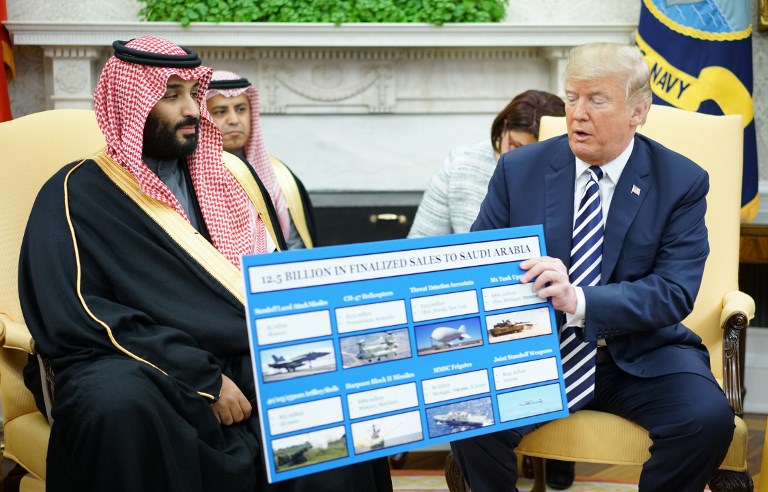
Lastly, the United States should stop arms trading and crack down on weapons flows. American weapons are being used in conflicts around the world, including in the catastrophic civil war in Yemen. It is crucial for the U.S. to recognize extraterritorial obligations and hold itself accountable for the indirect impacts of its actions.
In addition to saving lives in the United States, domestic gun control would have a tremendous impact on curbing the cycle of drug-related conflict in Mexico and Central America.
Restructuring American Security Sector
Beyond policy, institutional change on defense is vital. Political scientists have long argued that bureaucracies pursue their own interests regardless of broader policy trends. Nowhere is this argument clearer than with the Pentagon, intelligence agencies, and the U.S. military, which have long provoked conflicts in the name of national security.
Democrats should have a serious discussion about restructuring the American security sector, restricting or eliminating the use of private contractors, and reorganizing these bureaucracies to help better support mediation, peacebuilding, and post-conflict reconstruction.
This approach must involve justice and accountability for war crimes and sexual and gender-based violence, including retroactive accountability. Alongside this, the next Democratic president can form new alliances, as the Congressional Progressive Caucus has done, with civil society groups.
Sharing Power
In the face of a multipolar future, Democrats cannot rely on a vision of the United States as the sole world leader. Instead, they must take the courageous step to imagine what sharing power means and envision how the United States can respond to the world’s most pressing challenges alongside our allies.
A great opportunity to do this involves the U.N. Sustainable Development Goals, an agenda adopted in 2015 that prioritizes people and planet. Currently, the entire world is off-track towards achieving these goals. The U.S. must recommit to working towards the goals, especially on climate change, gender equality, reducing inequality, and decent work.
Immigration, Technology, and Corporate Power
Immigration has been a contested subject in the United States, particularly regarding the southern border with Mexico. But migration is also a global issue: currently, 68.5 million people are displaced worldwide, and there are rapidly rising numbers of so-called “climate refugees.” The U.S. must lead the charge on developing a global strategy to help those displaced by natural disasters and conflict.
Technology, too, requires global strategizing. Autonomous weapons, cybersecurity threats, and technologies such as artificial intelligence and blockchain need urgent attention and regulation.
And finally, alongside efforts to curb corporate power and influence domestically, it should similarly be ensured that corporations are accountable for their misdeeds abroad, including regarding environmental harms, labor rights, indigenous peoples’ rights, lack of supply chain transparency, and corruption and conflict. This is especially pertinent in industries such as natural resource extraction, fashion, and food.
For too long, American voters have been sold disastrous, destructive foreign policy that pretends to promote their own interests in the name of national security. It is high time for Democratic presidential candidates to recognize that. Because the United States is a superpower, it is their responsibility to foster compassion and empathy in American voters and use this country’s wealth and influence for good.
Disclaimer: The views and opinions expressed here are those of the author and do not necessarily reflect the editorial position of The Globe Post.