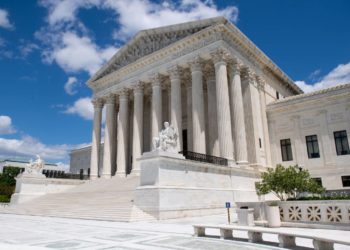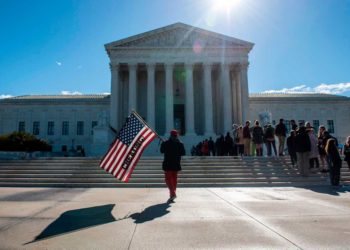


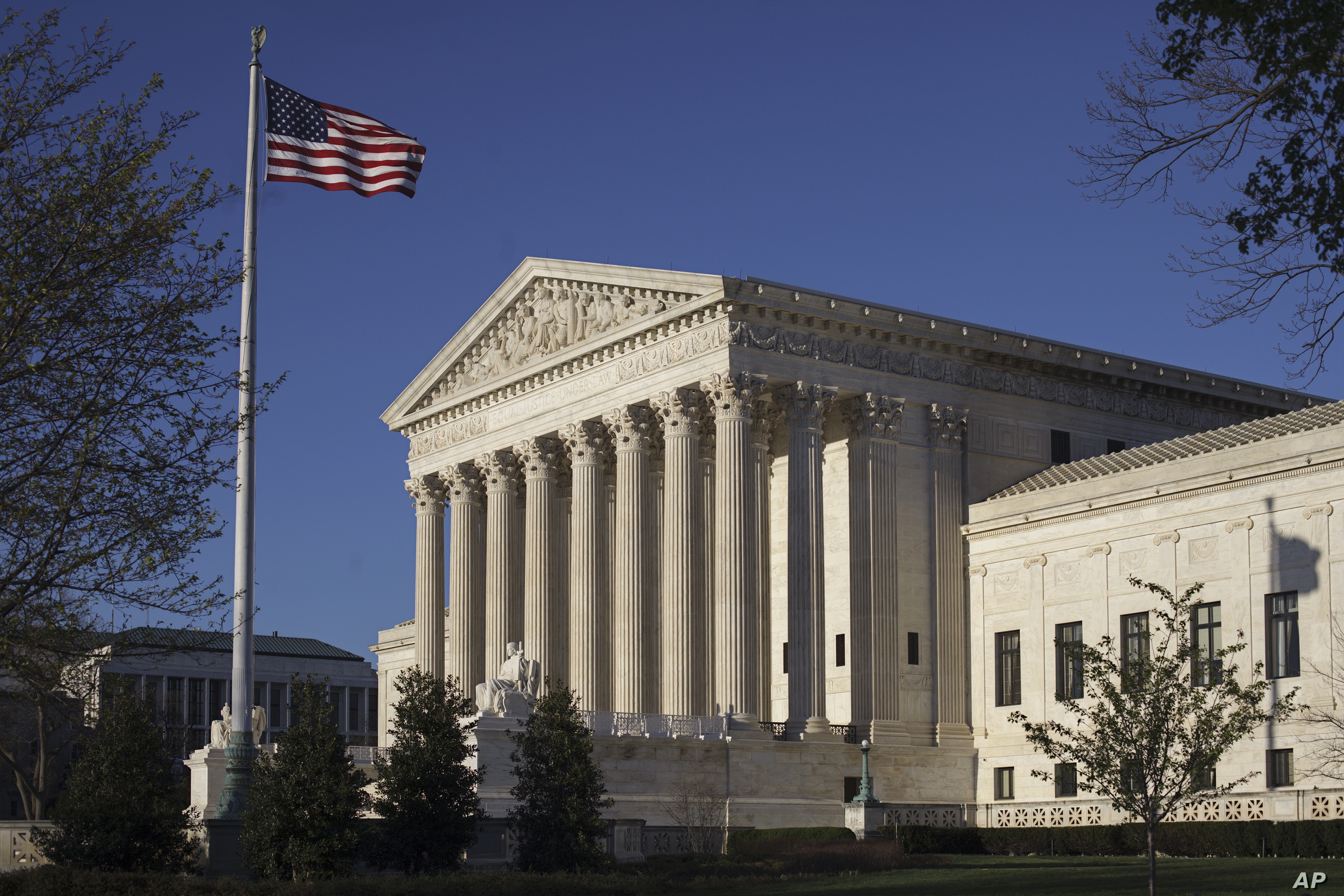
The Supreme Court ruled Thursday against adding a question about citizenship to the U.S. census, calling the rationale for it “contrived,” in a defeat for President Donald Trump on an issue with far-reaching political and economic implications.
In a separate ruling, the top court’s conservative majority refused to rule against electoral redistricting practices, known as gerrymandering, that unfairly favors the party in power in state governments.
But in one of its most closely watched decisions of the session, Chief Justice John Roberts sided with the court’s liberals to block the Trump administration’s bid to add a question about nationality to its 2020 census questionnaire.
It said the government’s arguments for making the change were insufficient.
The Commerce Department’s rationale for including the question “seems to have been contrived,” Roberts wrote.
“We are presented, in other words, with an explanation for agency action that is incongruent with what the record reveals about the agency’s priorities and decision-making process.”
Trump had ridiculed the idea that the citizenship question could not be asked, saying the census would be “meaningless” without it.
The American Civil Liberties Union hailed the decision as “a victory for immigrants and communities of color across America.”
BREAKING: In our case, the Supreme Court has struck the citizenship question from the 2020 census.
The Trump administration’s attempt to politicize and manipulate this fundamental pillar of our democracy has failed.
Our communities will be counted.
— ACLU (@ACLU) June 27, 2019
Held every 10 years, the census is instrumental in apportioning some $675 billion in federal funding to states and cities, and determines the number of seats allocated to each state in the House of Representatives.
U.S. Census Bureau experts estimate that adding a question about citizenship would push between 1.6 and 6.5 million immigrants, notably Hispanics, to avoid the census or lie to census takers.
Some 20 states including Democratic-led California and New York, as well as major cities like Chicago and San Francisco, filed legal actions against the move.
Mayors of big cities, which tend to vote Democratic, argue that an undercount would impact how much funding they receive from the federal government.
Courts in New York and elsewhere ruled against including the citizenship question, leading the Trump administration to ask the nation’s highest court to intervene.
In arguments before the court in April, Solicitor General Noel Francisco said a citizenship question “has been asked as part of the census in one form or another for nearly 200 years.”
Francisco was cut short by Justice Sonia Sotomayor who said the question was dropped in 1950 and was being reinstated by the Trump administration.
“There’s no doubt that people will respond less because of the census. That’s been proven in study after study,” she said.
In documents obtained by the daughter of deceased Republican strategist who urged Trump to add the question, the strategist outlined how the question’s inclusion could advantage Republicans. Previously ited in federal court, the documents offer the clearest evidence yet that the administration’s primary motivation was political.
Gerrymandering
In the second case decided Thursday, the court’s conservative majority turned down challenges to electoral maps drawn up by two states.
A North Carolina map had been criticized as too favorable to Republicans and a Maryland map as benefitting Democrats.
In a five to four decision, the justices ruled that the courts had no role to play under the Constitution in what the framers understood to be a political matter.
“We conclude that partisan gerrymandering claims present political questions beyond the reach of the federal courts,” Roberts wrote, in the majority opinion.
In state after state, GOP getting minority of votes but huge majority of seats. This is fundamentally undemocratic. Extreme partisan gerrymandering is election rigging & SCOTUS just gave it a huge green light https://t.co/hJRU8hvv7v pic.twitter.com/iqU6cEmjaf
— Ari Berman (@AriBerman) June 27, 2019
“There are no legal standards discernible in the Constitution for making such judgments, let alone limited and precise standards that are clear, manageable, and politically neutral.”
In the United States, electoral maps are redrawn in each state every 10 years when a new census is taken. The party in power often profits by concentrating opposition voters in certain districts in order to diminish their influence elsewhere.
Because most African Americans are registered as Democrats, the issue is also a racial one, as black voters in Republican-controlled states can have their voting power diminished.
The practice is known as “gerrymandering,” a word that compounds the name of an 18th-century governor, Elbridge Gerry, with salamander. Gerry had devised a district in his state so torturously that it took the shape of the lizard.
Facilitating the practice is the fact that in most states voters are encouraged to register as “Democrat,” “Republican” or “independent,” designations that enable them to take part in their party’s primaries.
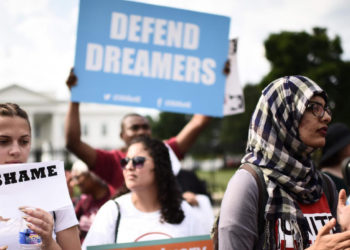
Criticism of gerrymandering has grown, however. Protesters gathered outside the court in March when the justices held hearings on the North Carolina and Maryland cases.
Former California governor Arnold Schwarzenegger called on the court to “terminate gerrymandering,” telling the protesters that the villain was not parties but politicians who “keep drawing the district lines to keep their jobs rather than representing the people.”
More on the Subject