

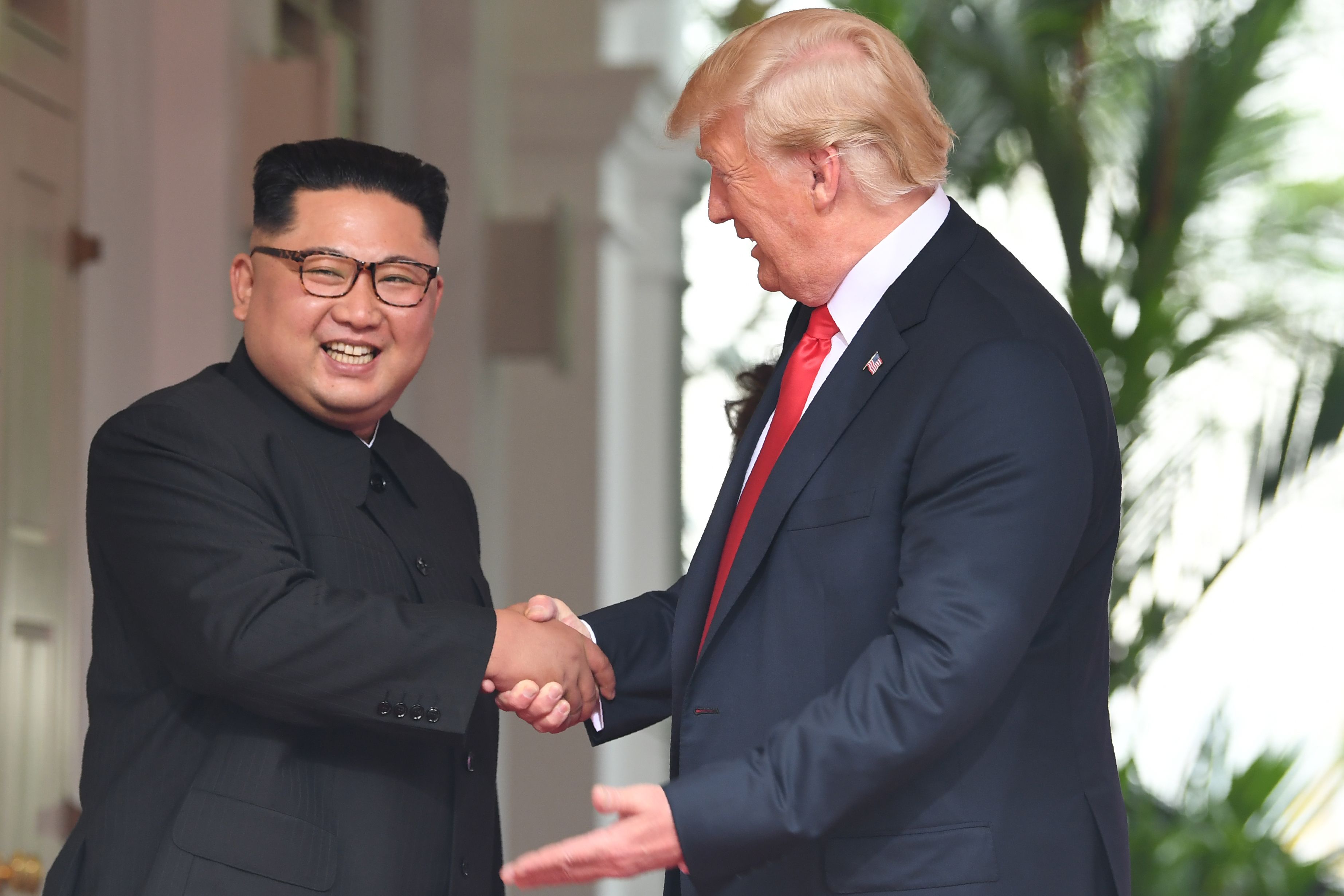
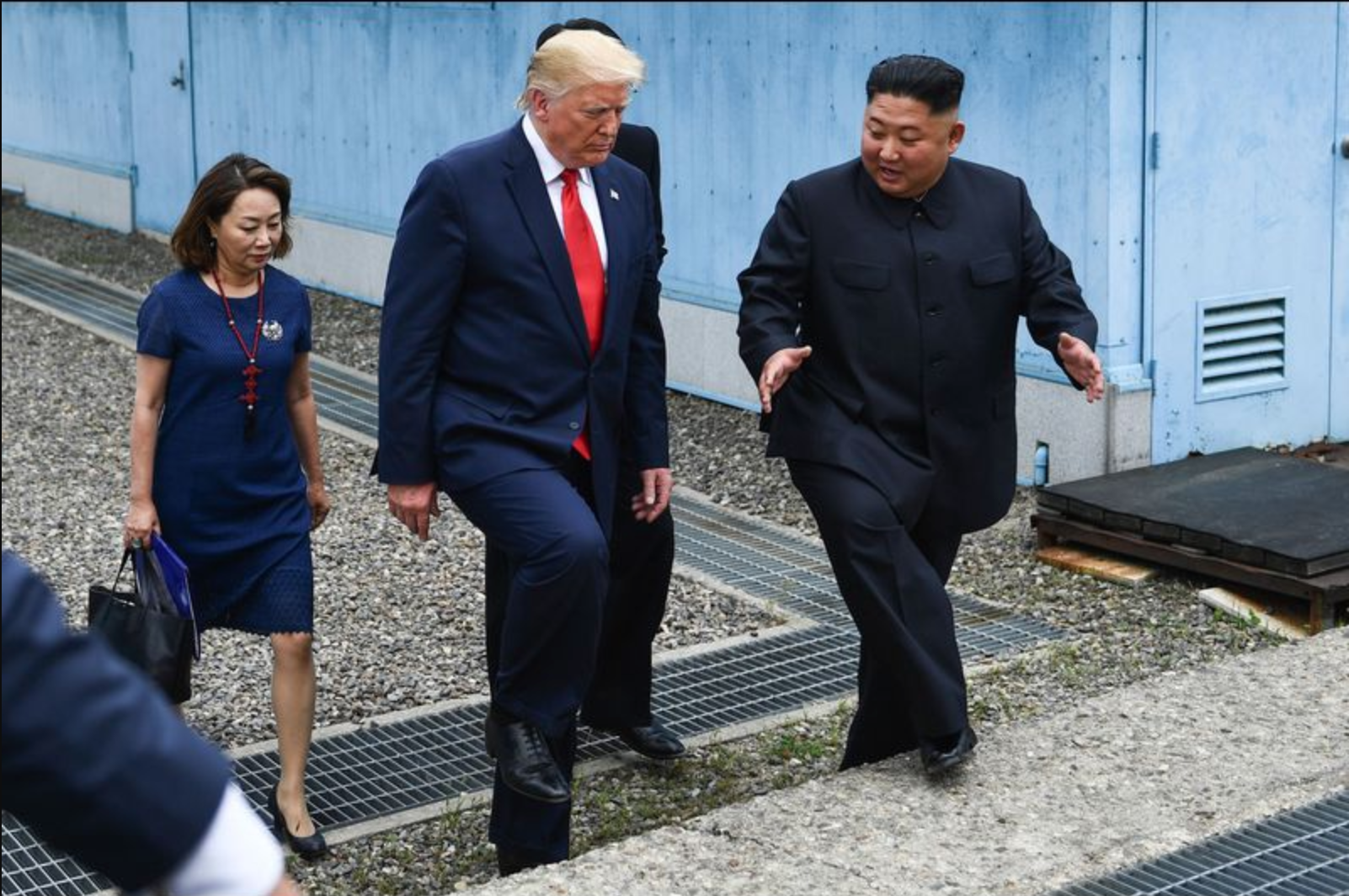
Sunday’s trilateral meeting at Panmunjom in the Demilitarized Zone (DMZ) between U.S. President Donald J. Trump, North Korean leader Kim Jong Un, and South Korean President Moon Jae-in is the latest act in a year-and-a-half of theatre in Korean Peninsula summit diplomacy.
When we consider that the drums of war were beating loudly only eighteen months ago, this latest meeting is indeed a dramatic reversal. It is unprecedented for the leaders of the United States, South Korea, and North Korea to have met together, let alone at Panmunjom in the DMZ. Trump became the first sitting U.S. president to set foot on North Korean soil.
On the other hand, critics argue that the DMZ meeting was just that, a heavily manicured photo-op. While heavy on symbolism, the meeting covered nothing substantive and signaled only that the parties are willing to re-start the negotiating process. A few small steps across the demarcation line hardly represent a giant leap for diplomatic progress when all of the key negotiating points remain contested.
Symbolism versus Substance
Given the abrupt failure of February’s U.S.-North Korea summit in Vietnam, even a made-for-television performance at the DMZ is a sign that the parties remain interested in dialogue.
The symbolism and pageantry of summit diplomacy are the rock upon which a more substantive negotiating process might move forward. The U.S. and North Korea in particular approach negotiations from a position of mutual distrust. Such symbolic acts form part of the patient state-to-state relationship building that will be required to facilitate a negotiated agreement between Washington and Pyongyang on the more substantive issues that remain on the table.
While the major question emerging from previous summits about the ultimate purpose of negotiations remains unanswered, the symbolism is important, not as an end in itself but as a legitimizing signal to domestic constituencies in all three countries.
Without support at home, ratification of any future negotiated agreements may be difficult, particularly in the United States and South Korea. While support for the summit process is strong in South Korea, this is not the case in the U.S. where there is significant disagreement about the merits of engagement with Pyongyang. Even in North Korea, the symbolism of such events is important in the court politics of the Kim regime.
Recognizing Patterns
To understand why this remains the case, we need to situate the details of the DMZ meeting within the context of broader patterns. Korean Peninsula summitry is nested within a series of parallel games in which the U.S., South Korea, and North Korea have differing interests.
It was great being with Chairman Kim Jong Un of North Korea this weekend. We had a great meeting, he looked really well and very healthy – I look forward to seeing him again soon….
— Donald J. Trump (@realDonaldTrump) July 1, 2019
The first of these games revolves around the integrity of the nuclear non-proliferation regime and the ability of the United States to maintain its nuclear weapons supremacy. North Korea’s nuclear weapons program threatens that supremacy, both in and of itself, as an example to other countries who might seek to develop their own nuclear weapons capability, and as a demonstration of the diminished power of the U.S. as a global hegemon.
These objectives have informed the long-standing U.S. policy of “complete, verifiable, and irreversible denuclearization,” which has formed the basis for U.S. policy on North Korea since 2002.
Economic Modernization and Regime Survival
The second game at play is Kim Jong Un’s drive to modernize and develop the North Korean economy. Kim’s economic program is important to the perpetuation of his leadership and the legitimacy of North Korea’s political system. The North’s nuclear weapons program is an umbrella beneath which the government can move forward with its economic agenda while minimizing the risk of state failure and foreign interference.
In this context, the understanding of denuclearization includes the full nuclear weapons relinquishment of all nuclear weapons powers, including the United States. With this in mind, the Kim government is committing to a process from which it can obtain sweeteners, not an end goal.
Negotiating goals for the North Koreans are likely to include an easing of sanctions and economic assistance to allow their economic development agenda to progress. Stretching out the negotiating process is how they might achieve these objectives, securing incentives for small concessions over a longer-term incremental negotiating process.
North Korea as Development Prize
The third parallel game relates to the potential opening of North Korea to foreign direct investment in infrastructure development. External players see Kim’s economic development agenda, coupled with the North’s significant infrastructure development needs, as a rare foreign investment opportunity.
Resolution of the nuclear question and the lifting of international sanctions could be the magic key that unlocks this great prize, decreasing the political and economic risk for investors. We can see the contours of North Korea as a development “prize” in the economic engagement elements of the inter-Korean Panmunjom Agreement, signed last year.
The Trump Effect
Finally, the fourth game relates to President Trump himself. Trump’s approach to diplomacy is divergent from long-standing practice in U.S. foreign policy, both in style and substance.
Trump’s business-like approach to negotiations and his penchant for policy-by-Twitter are far from standard diplomatic practice. His clear yearning to reach a settlement with Kim Jong Un has brought him to the brink of relinquishing complete, verifiable, and irreversible denuclearization. Trump’s willingness to make concessions on the denuclearization endgame places him at odds with many in key figures in the U.S. foreign policy establishment.
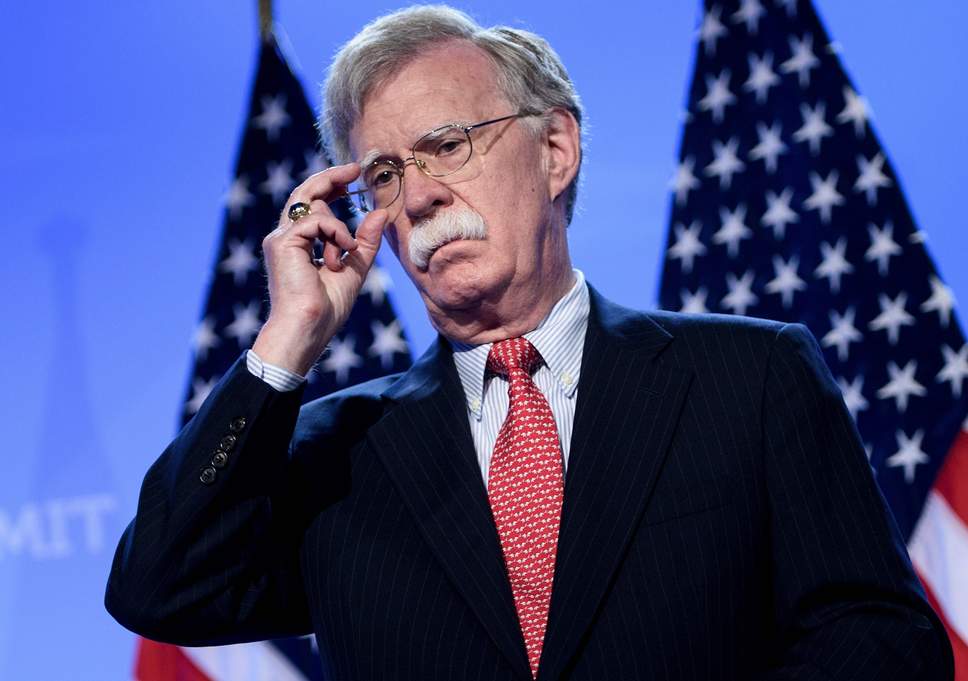
There was one notable absentee from Trump’s entourage in South Korea. National Security Advisor John Bolton was dispatched to Mongolia while the DMZ meeting took place. Bolton’s hardline stance on North Korea is well-known, with North Korean media criticizing Bolton for being a spoiler in the negotiations in Hanoi in February.
More Work to be Done
An ongoing engagement process between the U.S. and North Korea, in concert with inter-Korean engagement, is far preferable to an uneasy status quo on the Korean Peninsula that carries with it a heightened risk of conflict escalation. However, for this engagement process to sustain itself the parties involved need an agreed purpose to keep negotiations moving forward.
The DMZ leaders’ meeting demonstrates just how far apart the interests of the U.S., South Korea and North Korea lie, and how much work needs to be done to build trust and align the negotiating process around a lowest common denominator.
For Korea watchers, it is the pattern of diverging interests that is the key to interpreting the details of individual events in the diplomatic process.