
• About Us
  • Who Are We
  • Work With Us
Saturday, November 28, 2026
No Result
View All Result
The Globe Post
39 °f
New York
44 ° Fri
46 ° Sat
40 ° Sun
41 ° Mon
  • National
  • World
  • Business
  • Interviews
  • Lifestyle
  • Democracy at Risk
    • Media Freedom
  • Opinion
    • Editorials
    • Columns
    • Book Reviews
    • Stage
  • Submit Op-ed
  • National
  • World
  • Business
  • Interviews
  • Lifestyle
  • Democracy at Risk
    • Media Freedom
  • Opinion
    • Editorials
    • Columns
    • Book Reviews
    • Stage
  • Submit Op-ed
No Result
View All Result
The Globe Post
No Result
View All Result
Home Opinion

India Is a Secular Nation, So Why Aren’t Muslims Being Protected?

Saad Hafiz by Saad Hafiz
03/10/20
in Opinion
Relatives of Mohammad Mudasir, 31, who died in the recent sectarian riots, mourn during his funeral in New Delhi

Relatives of Mohammad Mudasir, 31, who died in the recent sectarian riots, mourn during his funeral in New Delhi. Photo: AFP

Share on FacebookShare on Twitter

The friction between Hindus and Muslims is a permanent feature of Indian life, and periodic bouts of bloody rioting are common. But since the rise of Prime Minister Narendra Modi and the BJP party, violence against Muslims has increased. Most recently, it surfaced during President Donald Trump’s visit to India, when Hindus beat and shot Muslims in Delhi, and Muslims fought back in defense.

In what appears to be a pattern of targeting Muslims, the government has imposed siege-like conditions on the Muslim residents of Indian Kashmir. It has also passed a new citizenship law that could open the door to legal discrimination against Muslims. At the same time, law enforcement agencies have looked the other way on bloody violence directed against Muslims.

https://twitter.com/NicolaCareem/status/1234687016534605824

There’s little doubt that Modi’s rule has emboldened the proponents of Hindutva, who believe that India should be a Hindu nation. It is a big challenge for Indian Muslims to deal with powerful sections of the Hindu majority, bent on mixing religion with politics and entrenching communalism.

Today, many Hindu nationalists seem to see it as their life’s mission to deprive Indian Muslims of equal rights or even expel them. They would also like to introduce Hindu religious writing into Indian law.

Muslims in India

It’s important to remember that Muslims are India’s largest minority, making up over 14 percent of the population. There was a time that Hindus and Muslims together, including my family, fought for freedom against British colonial rule. They firmly rejected the theory, propagated by power-hungry politicians, that Hindus and Muslims cannot live together in one country. Today, to suggest that Indian Muslims are anti-national and aliens, as some do, is preposterous.

Despite the threats of political and social exclusion, Muslims haven’t retreated into a shell or adopted violent means of resistance. Indian Muslims have the advantage that unlike other authoritarian Asian states, India is a democracy. It has a secular constitution, an impartial electoral process, an independent judiciary, a vibrant democracy, a relatively free press, and an army that stays away from politics. It is time for Muslims to test India’s institutions for legal redress and constitutional protection.

The fact is that Indian Muslims, like all Indians, are concerned about poverty, employment, and education. A slowing economy and increased joblessness hurt everyone. The Indian economy is expected to grow at its lowest rate in over a decade.

Social disharmony, economic slowdown, and rising poverty threaten India’s progress. They hurt Modi’s image as a strong, business-oriented leader. If the economy continues its downward slide, Modi may need to use all his charm to control a mob of disaffected followers. He must be hoping that the protests and violence die out, and it will be business as usual.

Secularism in Modi’s India

There are also encouraging signs that Indian secularism, which had been in retreat for some time, is finding momentum. The extraordinary India-wide campaign of civil disobedience against the new citizenship law is laudable. It brought together all Indians regardless of religion, including women and university students, as part of an anti-Hindutva counter mobilization. The serious threat posed to a secular and pluralist India, by the Hindu nationalist juggernaut, is being confronted.

When Modi won re-election in 2019, it seemed he could do no wrong. Few questioned the mode through which Modi acquired and retained power. It is an age-old tested script. In India, it meant appealing to the Hindu majority, blaming the Muslim minority and Pakistan for all ills, and using a pliant media to trumpet the BJP version of the truth. The formula worked until serious social and economic issues surfaced. And the opposition mounted a challenge, forcing Modi to defend his record.
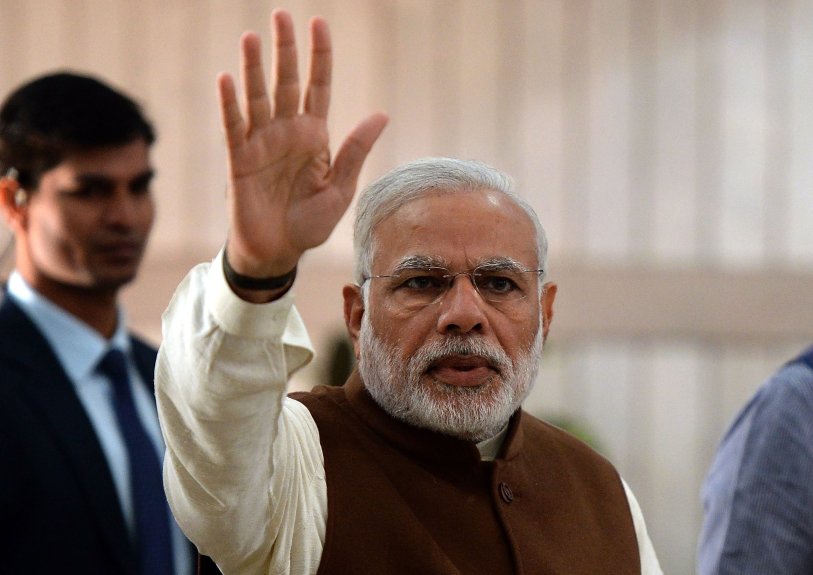
India's Prime Minister Narendra Modi
India’s Prime Minister Narendra Modi. Photo: Prakash Singh, AFP

Now, the situation has gone beyond just dismissing the opposition as “anti-national” and “termites” determined to derail India’s rise to the world stage. In fact, the government is paying a price for focusing less on urgent economic issues and more on its narrow social and political agenda. As a result, the hitherto disunited opposition has taken heart. It is exploiting the opening created by some contentious BJP policies. It’s heartwarming to see Indian Muslims playing an active role in the united democratic opposition.

Despite the recent setbacks, the BJP has a strong majority, enough to weather electoral challenges to its rule. But it may be time for some introspection and course correction. Modi and the BJP must reassure the country that they have no intention to drown dissent and subvert national institutions to gain political mileage.

At the same time, they should assure minorities, particularly Indian Muslims, that they are an integral part of Indian society, and that the government firmly opposes violence and discrimination aimed at vulnerable groups. Like never before, social harmony is important in India’s successful march to its rightful place in the world.

ShareTweet
Saad Hafiz

Saad Hafiz

Analyst and commentator on politics, peace, and security issues

Related Posts

Protesters stand with placards in front of the statue of India's independence leader Mahatma Gandhi in Parliament Square, central London, after a demonstration outside the US Embassy
Featured

Considering the Patience of Gandhi for These Troubled Times

by Stephen J. Lyons
August 5, 2022
India hijab ban
World

Protests Over Classroom Hijab Ban Grow in India

by Staff Writer
February 7, 2022
Around 2,500 people die in lightning strikes around India each year. Photo: Rakesh Bakshi/AFP/File
Environment

Climate Crisis Triggers Spike in Lightning Strike Deaths in India

by Staff Writer
September 3, 2021
Taj Mahal
Lifestyle

Taj Mahal Reopens as India Eases Pandemic Restrictions

by Staff Writer
June 16, 2021
Covid-19 in Brazil
Featured

No Pandemic End in Sight With Raging Outbreaks in India, Brazil

by Staff Writer
May 1, 2021
China Uyghurs
Democracy at Risk

China Targets Uighurs With More Prosecutions, Longer Prison Terms: HRW

by Staff Writer
February 24, 2021
Next Post
Stock market crash, OCtober 2018.

How Much of a Toll Will Coronavirus Take on the US Economy?

US Senator Bernie Sanders speaks at "The People's Summit" in Chicago, June 10, 2017.

Sanders Says Still in White House Fight, Will Pressure Biden on Key Issues

Recommended

The Fnideq (Morocco) - Ceuta (Spain) fence, located in northern Africa, is one of the main borders used by people on the continent to try to immigrate to the European Union. In September 2024, a massive attempt to cross the fence occurs, and the Moroccan police push back hundreds of people who head towards the Spanish exclave. In 2024, Spain receives 46,000 migrants.

Thousands Cross Into Spain’s North Africa Enclave in New Migrant Crisis

July 31, 2026
An armed Iranian police officer holding a rifle monitors the area as motorcyclists ride beneath a billboard depicting an AI-generated image of the Strait of Hormuz and an effigy of US President Donald Trump, displayed on the wall of a state building in downtown Tehran, Iran, on May 3, 2026.

US, Saudi Strike Iraq Alliance in Expanding War

July 29, 2026
Germany, Berlin, 26 july 2026, Gathering in tribute to the victims and all those affected by the attack on the 2026 CSD (Christopher Street Day/Pride) event, held at Pariser Platz.

Berlin LGBTQ Community Fears Far-Right ‘Exploitation’ of Pride Attack

July 27, 2026
AI chatbot applications.

Trump Under Pressure From All Sides Over Chinese AI Surge

July 24, 2026
Protesters gathered to condemn the detention of opposition leader of parliament, Rahul Gandhi, during a protest in New Delhi.

India Student Protests Keep Up Pressure on Modi Government

July 22, 2026
A southern Yemeni separatist fighter waves his rifle at the site of an anti-government protest in the port city of Aden, Yemen January 30, 2018.

Yemen’s Iran-Backed Houthis Announce Maritime Blockade of Saudi Arabia

July 20, 2026

Opinion

A Cuban street with a flag

Cuba Through a Pulse: Intimacy, Poverty, and the Shadow of Revolution

March 10, 2026
An Iranian walking in front of a wall painting of the Iranian flag in Tehran

Iran Can’t Dominate the Middle East Without Iraq

January 13, 2026
US President Donald Trump

Vladimir Trump and Blood for Oil

January 5, 2026
A trial COVID-19 vaccine

America’s Global Health Retreat Is a Gift to Its Rivals

November 12, 2025
Israeli Prime Minister Benjamin Netanyahu

UN Might Tolerate Netanyahu, and White House Might Welcome Him, But He’s Still Guilty of Genocide

September 30, 2025
Former President Donald Trump speaks at a Fox News Town Hall

Cruelties Are US

August 25, 2025
Facebook Twitter

Newsletter

Do you like our reporting?
SUBSCRIBE

About Us

The Globe Post

The Globe Post is part of Globe Post Media, a U.S. digital news organization that is publishing the world's best targeted news sites.

submit oped

© 2018 The Globe Post

No Result
View All Result
  • National
  • World
  • Business
  • Interviews
  • Lifestyle
  • Democracy at Risk
    • Media Freedom
  • Opinion
    • Editorials
    • Columns
    • Book Reviews
    • Stage
  • Submit Op-ed

© 2018 The Globe Post