

Trite. Hyperbolic. Alarmist. These are the words that come most readily to mind every time I hear another policy pontificator characterize something as an “existential threat.” The term has become such a mind-numbingly pervasive part of the lingua franca of national security affairs that it, well, numbs the mind – and, in the process, deadens the intellect.
Want just a few examples from an almost infinite number of rhetorical excesses?
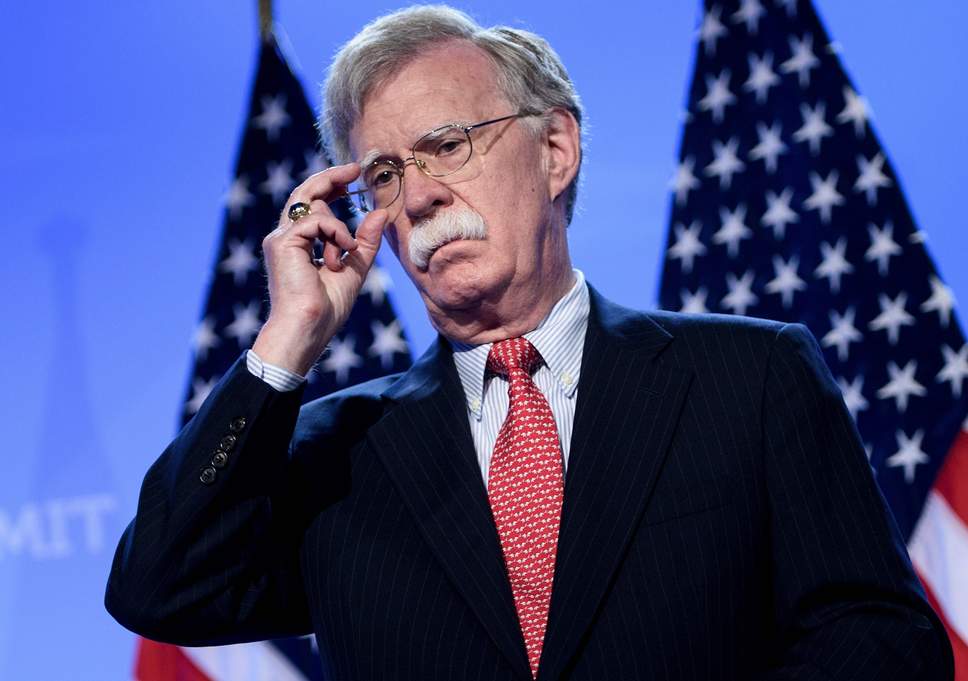
“It is a fact that when your national debt gets to the level that ours is … it constitutes an existential threat to the society.” National Security Adviser John Bolton
“[North Korea’s nuclear program] is an existential threat, potentially to the United States, but also to North Korea.” Director of National Intelligence Dan Coats
“If you want to talk about a nation that could pose an existential threat to the United States, I’d have to point to Russia.” Joint Chiefs of Staff Chairman Joseph Dunford
“Another existential threat, if Western man still sees himself as the custodian of the world’s greatest civilization, and one yet worth preserving, is the Third-Worldization of the West.” Political commentator Patrick Buchanan
“It’s not about politics, it’s about patriotism. It’s an existential threat, this administration, to our democracy, in terms of our Constitution.” Speaker of the House Nancy Pelosi
Climate Change poses an existential threat; the wonders of new technologies may bring serious dangers. Today I spoke to world leaders about these two grave and urgent challenges. https://t.co/ajcGN86oGa #UNGA pic.twitter.com/9ErGmlGhtN
— António Guterres (@antonioguterres) September 25, 2018
It isn’t enough to simply acknowledge the triteness of such statements. What is more important is the recognition of their meaninglessness and the underlying thoughtlessness of those who traffic in alarmist rhetoric to suit their political and ideological purposes – at the expense of the clueless rest of us. These “hooligans of hyperbole” are showing off, trying to display their (pseudo-sophisticated) erudition, all the while failing to grasp their own lack of understanding of the underlying meaning of what they’re selling.
Meaning of Existential Threat
Like their brethren who trumpet themselves as pragmatists without evincing any understanding of pragmatism, these promiscuous propagators of the existential label are, one suspects, oblivious to what existentialism is actually all about. They seem, implicitly, to be suggesting that an existential threat is one that threatens existence, whereas the truth might be simply that the threat – if it is a threat – simply exists.
There is confusion, to be sure: unknowing confusion. We owe such confusion to the founders of existentialist thought, who trafficked almost totally in self-indulgent obscurantism, dazzling the uninitiated with indecipherable circumlocution. So, it’s easy, even justifiable, to misuse and abuse the concept when most of us don’t understand what we don’t understand about its use.
The essence of existentialism, in my humble estimation, was the basic notion that existence precedes essence: “I am, therefore I think.” That, perhaps philosopher Jean-Paul Sartre’s only intelligible idea, leads me to err on the side of believing, when we hear of an existential threat, that it means nothing more than that the threat simply exists, not that our very existence – our being – is at stake.
Labeling Threats
Let’s say we can agree that something (e.g., terrorism), or someone (e.g., Vladimir Putin), or some place (e.g., Iran) is a threat – that it endangers or places at risk something of value or importance to us (our interests, so-called; or our way of life; or our survival). Whether you’re a realist who thinks threats objectively exist for the vigilant and discerning in our midst to apprehend, or you’re an idealist who considers threats to be socially constructed in our minds, this gets us only to the point of acknowledging that the threat, thus labeled, is.

That’s where we should stop. It’s hard enough just to determine that a threat exists. Is Islamism a threat? Is militarism a threat? Is nationalism a threat? Is globalization a threat? Are fragile and failing states a threat? Is the United States a threat? Is the United Nations a threat? Is Brexit a threat? As difficult as this is, if labeling something a threat is to have meaning, the question of existence resides where it properly ought to: on the threat itself.
To go beyond this to suggest that the question of existence properly concerns the prospective target of the threat is wrong-headed and alarmist.
Sophistry
Can we say with a clear conscience and a straight face that a nuclear-armed North Korea, for example, threatens humanity or the United States or the Asia-Pacific region with extinction? When John Kelly, then commander of U.S. Southern Command, says that undocumented immigrant flow is an existential threat to the United States, or when technology entrepreneur Elon Musk says artificial intelligence is an existential threat (presumably to humanity), should we worry that the very existence of either the United States or humanity is at stake? No. That’s ludicrous.
Moreover, it leaves open the question of exactly whose existence would be endangered: a civilization (Mayan civilization died, but Mesoamerican peoples live on)? an empire (the Austro-Hungarian empire died, but Austria and Hungary live on)? a country (Yugoslavia died, but Bosnia-Herzegovina, Croatia, Montenegro, Serbia, and Slovenia live on)?
“What makes a man a sophist,” said Aristotle, “is not his faculty, but his moral purpose.” Those who employ existential threat rhetoric are the sophists whose subliminal intent is to bamboozle us with alarmist hyperbole. We do ourselves a disservice if we don’t see their sophistry for what it is and put it in its place.
Disclaimer: The views and opinions expressed here are those of the author and do not necessarily reflect the editorial position of The Globe Post.